Installation guide
 Owner’s manual



Are microwaves with built-in air fryers any good?
Microwaves with built-in “air fry” features can be a good all-in-one option for convenience, but they typically do not crisp as fast or as evenly as a dedicated countertop air fryer. For the Jenn-Air JMC8130DDB, we recommend using the cooking modes and cookware guidance in the JMC8130DDB owner’s manual to get the best results.
What to expect from an “air fry” microwave combo
These units are best when you want one appliance to handle multiple jobs (reheat, bake, convection-style cooking, crisping) without adding another countertop appliance.
- Crisping is usually lighter than a basket-style air fryer
- Preheat time can be longer than a dedicated air fryer
- Batch size is often larger and flatter (better for pizza, nuggets, toast)
- Results depend heavily on cookware choice and spacing
- Convenience is the main win: fewer appliances, fewer cords
Cookware and safety basics that affect crisping
Even when using crisping or convection-style modes, cookware choice matters. For JMC8130DDB, avoid metal or metal-trimmed utensils during microwave cooking because metal can cause arcing (sparking). Use the utensil test method described in the manual when you are unsure.
- Never use metal or metal-trimmed utensils in microwave mode
- Use heat-resistant glass and many non-metal cookware types
- Avoid delicate glassware that can shatter as food warms
- Use paper products only for short cook times and low-fat foods
- If unsure, test the utensil next to a glass bowl of water (1 minute on HIGH)
Quick comparison: combo unit vs dedicated air fryer
| Feature | Air fry microwave combo | Dedicated air fryer |
|---|---|---|
| Speed to crisp | Moderate | Fast |
| Counter space | Low (one appliance) | Higher (extra appliance) |
| Best for | Multi-purpose cooking | Maximum crisping |
| Learning curve | Medium | Low |
Why it matters
If your priority is the crispiest fries and wings as quickly as possible, a dedicated air fryer usually wins. If your priority is flexibility (microwave plus oven-style cooking in one built-in unit), an air fry microwave combo can be a strong everyday choice.
Last updated: January 2026
Can you convert a countertop microwave to built-in?
Yes, but only when the manufacturer approves built-in installation (usually with a trim kit and a specified cabinet cutout). The Jenn-Air JMC8130DDB is already a built-in microwave; use the required cutout, ventilation, and electrical specs in the JMC8130DDB installation guide rather than trying to enclose a countertop-only unit.
What “convert to built-in” means
A safe built-in setup is not just sliding a countertop microwave into a cabinet. It requires a listed installation method that protects airflow and electrical safety.
- Manufacturer-approved built-in method (trim kit or built-in rated unit)
- Defined cabinet cutout dimensions and clearances
- Unblocked intake and outlet openings (venting)
- Properly grounded 120V/60 Hz outlet, typically on a dedicated circuit
- Solid support surface rated for the microwave’s weight
Built-in cutout sizing (common standards)
Many built-in microwave installations use one of these common cutout classes; confirm the exact measurements for your unit in the JMC8130DDB installation guide.
| Built-in class | Typical cutout width | Typical cutout height | Typical minimum depth |
|---|---|---|---|
| 27-inch class | 25-1/2 in + 1/16 in | 22-1/2 in + 1/16 in | 23-1/2 in min |
| 30-inch class | 28-1/2 in + 1/16 in | 22-1/2 in + 1/16 in | 23-1/2 in min |
How we recommend deciding for a countertop microwave
If you are starting with a countertop model (not JMC8130DDB), use this checklist before planning cabinetry.
- The rating label and manual explicitly allow built-in installation
- A trim kit is specified for your exact microwave model
- The installation method keeps vents open and unobstructed
- The outlet location and circuit match the microwave requirements
- The door swing clears adjacent cabinets and trim
Why it matters
Microwaves depend on airflow to keep internal components (high-voltage parts, controls, and thermal safety devices) within safe temperatures. Enclosing a countertop-only unit can trap heat, cause overheating shutdowns, and shorten component life.
Last updated: January 2026
What is the disadvantage of a built-in microwave?
A built-in microwave like the JMC8130DDB costs more to buy and install, and it is less flexible to replace later because the cabinet cutout and electrical setup must match. Poor installation can also restrict airflow and lead to performance problems.
Main disadvantages to plan for
- Higher total cost: cabinet work plus installation labor typically costs more than a countertop microwave.
- Harder replacements: you must match the existing cutout width, height, and minimum depth.
- More complex repairs: built-in units often require removal from the cabinet for service.
- Electrical requirements: it should be on a dedicated 120V/60 Hz circuit; sharing a circuit can blow fuses or increase cook times.
- Ventilation risk: blocking intake or outlet openings can damage the microwave.
Cutout and fit: why replacements are limited
The installation requirements for built-in microwaves are dimension-driven. For this style of unit, the guide calls out a 27-inch or 30-inch cabinet opening with specific width, height, and minimum depth targets.
| What must match | Why it matters | What to check |
|---|---|---|
| Cutout width and height | Prevents gaps and mounting issues | Cabinet opening measurements |
| Minimum cutout depth | Ensures the microwave fits and vents correctly | Depth behind the face frame |
| Outlet location and circuit | Prevents nuisance fuse blowing and power issues | Dedicated 120V/60 Hz outlet |
For the exact cutout and clearance requirements used for installation, follow the JMC8130DDB installation guide.
Why it matters
Built-in microwaves look clean and save counter space, but the tradeoff is commitment: once the cabinet is cut and the unit is installed, future swaps and service calls are more dependent on matching dimensions, access, and proper airflow.
If you are troubleshooting power issues
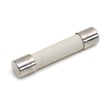
If the microwave goes dead or blows power during use, a common service item is the internal fuse. For model-matched replacement options, see the fuse WPM0805101.
Last updated: January 2026