 Owner’s manual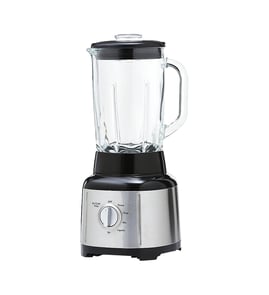

Can I put my KitchenAid blender in the dishwasher?
For the KitchenAid KSB560CU0 blender, we recommend unplugging the blender and cleaning parts by hand unless your KSB560CU0 owner's manual specifically lists a part as dishwasher-safe. The blades are sharp, and careful hand-washing helps prevent injury and protects seals from leaks.
What we recommend cleaning by hand
- Unplug the blender before removing parts or cleaning.
- Wash the jar, lid, and removable pieces in warm, soapy water.
- Use a non-abrasive sponge; avoid scouring pads that can haze plastic.
- Keep hands away from the blade area; blades are sharp.
- Dry parts fully before reassembling to help prevent leaks.
Dishwasher guidance (what to check first)
Dishwasher safety varies by part and material, so use the manual as the deciding factor.
| Part | Typical dishwasher risk | Best practice |
|---|---|---|
| Jar and lid | Warping, clouding, gasket wear | Hand-wash unless manual says dishwasher-safe |
| Blade area | Cut hazard during handling | Hand-wash carefully, avoid reaching under blades |
| Base (motor housing) | Electrical damage | Never submerge; wipe with a damp cloth |
If you are dealing with leaks after cleaning
A leak at the bottom of the jar is often tied to a worn or mis-seated seal.
- Inspect the jar bottom for cracks and residue buildup
- Make sure parts are seated evenly and tightened correctly
- Replace a worn gasket if it no longer seals
If you need a replacement, we stock the seal WP9709366 for this model.
Why it matters
Dishwashers combine heat, detergent, and forceful spray. Over time, that can shorten the life of jar seals and lids, and it increases the chance of leaks or poor blending performance on a 5-speed blender like the KSB560CU0.
Last updated: February 2026
How to fix a KitchenAid blender leak?
A leak on your KitchenAid KSB560CU0 blender almost always comes from the jar-to-base sealing area. We fix it by unplugging the blender, removing the jar base, cleaning the sealing surfaces, then reinstalling or replacing the jar seal so the jar assembly seats evenly.
Safety first
The manual is clear: unplug the blender before taking off parts or cleaning, and handle blades carefully. Use the KSB560CU0 owner's manual for the correct jar removal and reassembly steps.
Step-by-step: stop the leak
- Unplug the blender before touching the jar base or blade area.
- Remove the jar from the base; check that the jar is properly placed when operating.
- Disassemble the jar base and inspect the sealing surfaces for:
- Food residue or sticky buildup
- Nicks, cracks, or flattening on the seal
- Cross-threading or uneven seating of the base
- Wash and dry all mating surfaces; reassemble snugly and evenly (do not overtighten).
- If the seal is worn or deformed, replace it with the correct part for this model: seal WP9709366.
Quick diagnosis guide
| What you see | Most likely cause | What to do |
|---|---|---|
| Drips from under the jar base | Seal not seated, dirty, or worn | Clean and reseat; replace the seal if damaged |
| Leak only with hot liquids | Lid/venting issue or overfill | Follow hot-liquid lid guidance in the manual; reduce fill level |
| Leak after a drop/impact | Jar base or jar damage | Inspect jar and base for cracks; replace damaged parts |
Why it matters
A leaking jar can let liquid reach the blender base, which risks motor damage and creates a slip hazard on the counter. A clean, correctly seated seal also helps the blender run smoothly without strain.
Last updated: February 2026
How to remove blender drive coupling?
On the KitchenAid KSB560CU0 blender, we remove the drive coupling by unplugging the blender, securing the motor shaft from turning, then loosening the coupling (most couplings use a reverse thread, so it typically loosens by turning clockwise). Use controlled force so you do not crack the base.
Safety first (do this every time)
- Press OFF, then unplug the power cord before you touch the jar or base
- Remove the pitcher straight up off the base
- Keep hands clear of blades and moving parts
- Do not use an extension cord; plug into a grounded 3-prong outlet when testing
- If anything binds or smells hot, stop and let the motor cool
For model-specific handling and electrical safety notes, follow the KSB560CU0 owner’s manual.
Step-by-step: removing the drive coupling
- Unplug the blender and remove the jar.
- Access the coupling from the top of the base (where the jar sits).
- Hold the motor shaft so it cannot spin (common methods: holding the shaft from underneath after opening the base, or using a strap wrench on the coupling if accessible).
- Loosen the coupling:
- If it is a reverse-thread coupling (common), turn clockwise to loosen.
- If it is standard thread, turn counterclockwise to loosen.
- If it is stuck, apply penetrating oil sparingly to the threads (avoid plastic parts), wait a few minutes, then try again.
- Reinstall by threading it on by hand first, then snugging it (do not overtighten).
What to check while you are in there
- Cracks, rounding, or melting on the coupling teeth
- Wobble in the coupling (can indicate shaft or bearing wear)
- Leaks from the jar bottom that can drip into the base; replace the jar seal if needed using the seal WP9709366
Quick guide: symptoms and likely cause
| Symptom | Most likely issue | What we recommend |
|---|---|---|
| Motor runs but blades do not turn | Stripped coupling | Replace coupling (match by model) |
| Loud grinding or rattling | Coupling misaligned or worn | Inspect coupling and jar drive interface |
| Blender stops and lights flash | Overload or jam | Reset, reduce batch size, add liquid |
Why it matters
A worn or seized drive coupling can make the blender slip, grind, or overload. Removing it correctly protects the motor shaft and helps prevent base damage, especially on a 5-speed blender like the KSB560CU0.
Last updated: February 2026
How to disassemble a KitchenAid blender blade?
On the KitchenAid KSB560CU0 blender, we do not recommend disassembling the blade assembly for routine cleaning; the KSB560CU0 owner's manual explains how to clean the pitcher and blade without taking it apart, and it emphasizes unplugging the blender and handling sharp blades carefully.
Safe approach first (recommended)
- Unplug the power cord before touching the jar or blade area.
- Keep hands and utensils away from the blade area when the blender is running.
- Handle blades carefully; they are sharp.
- Clean the blade in the jar without disassembly: half-fill with warm (not hot) water, add 1 to 2 drops of dish soap, then run on STIR for 5 to 10 seconds.
- Rinse thoroughly; the jar can typically go in the bottom rack of a dishwasher.
If you still need to remove the blade assembly
Some KitchenAid jar designs use a bottom retaining nut or ring that loosens in the opposite direction of standard threads. Use heavy gloves and stabilize the jar firmly on a towel. If the blade assembly is stuck, do not force it with excessive torque; that can crack the jar or damage the seal.
What to inspect while it is apart
| What you see | What it usually means | What to do |
|---|---|---|
| Drips from the bottom of the jar | Worn or pinched seal | Replace the seal and reassemble evenly |
| Blade feels gritty or binds | Debris in the blade area | Clean thoroughly; avoid running dry |
| Leaks after reassembly | Seal not seated or overtightened | Reseat the seal; tighten snug, not extreme |
Parts that commonly affect leaks
If your jar leaks after blade removal and reassembly, the sealing surface is the first place we look. For this model, the seal WP9709366 is the common replacement part.
Why it matters
A properly seated seal prevents leaks that can drip into the blender base, which can lead to shutdowns, flashing lights, or motor protection trips when the blender is overloaded or jammed.
Last updated: February 2026