Owner’s manual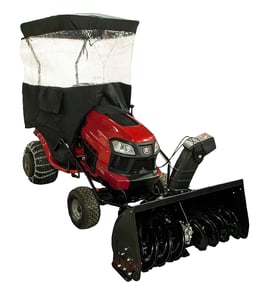



Are snowblower belts universal?
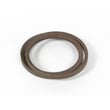
No. Snowblower belts are not universal; the correct belt depends on the exact belt length, width, and profile your setup requires. On the Craftsman 48625840 snowblower attachment, the manual even specifies different drive belt lengths depending on whether your tractor uses a manual or electric clutch.
The Craftsman 48625840 uses belts that must match the pulley system and clutch/idler assembly. The Craftsman 48625840 owner's manual calls out that using the wrong length belt can cause premature bearing or belt failure.
Common reasons belts are not interchangeable:
- Length matters: too long slips; too short over-tensions idlers and bearings.
- Width and profile matter: a V-belt must seat correctly in V-pulleys.
- Belt routing matters: belts must run inside belt keepers and around idler pulleys correctly.
- Clutch type matters: electric clutch vs manual attachment clutch can require different belt lengths.
For this attachment, we match the belt to your tractor clutch type and the belt’s application.
| Belt use | What it drives | Example part for this model | Notes |
|---|---|---|---|
| Drive belt | Transfers power from tractor PTO/clutch system to the attachment | Drive belt 46989 | Manual notes a 55-inch belt for tractors with electric clutches. |
| Auger drive belt | Turns the auger/impeller system | Auger drive belt 47846 | Must be routed correctly around pulleys and idlers. |
Before ordering, we recommend these quick checks:
- Confirm whether your tractor has an electric clutch or manual attachment clutch.
- Inspect the old belt for cracking, glazing, fraying, or stretching.
- Verify the belt rides correctly in the V-pulley grooves (not bottoming out).
- After installation, re-check belt routing and belt keepers per the manual.
- If the belt keeps coming off, inspect the pulley and idler pulley bracket for bending or wear.
A “close enough” belt can slip (poor throwing performance), overheat and shred, or overload bearings and idler arms. Using the correct belt helps the auger and impeller run at the right speed and protects the clutch/idler assembly.
Last updated: January 2026
Should I spray my snowblower with WD-40?
Yes; for the Craftsman 48625840 snow thrower attachment, we recommend using a light, slick coating on the inside of the discharge chute and housing to help prevent snow from sticking and reduce clogging. The manual specifically calls out applying a light coat of wax; WD-40 can be used lightly, but keep it off belts, pulleys, and friction surfaces. See the Craftsman 48625840 owner's manual.
Use a light coat only on surfaces where snow slides.
- Inside of the upper and lower discharge chute
- Inside of the auger housing (where snow moves toward the impeller)
- Painted metal surfaces that tend to ice up
- Do not spray the auger drive belt, drive belt, pulleys, or idler arms
- Do not spray areas you intentionally lubricate with oil (pivot points, control cables)
The goal is a slick, water-resistant film that does not attract grit.
| Product type | Best use | Notes |
|---|---|---|
| Paste wax (as the manual suggests) | Prevents sticking in chute and housing | Long-lasting, clean finish |
| Silicone spray | Quick in-season anti-stick | Very slick; apply lightly |
| WD-40 (light coat) | Short-term moisture displacement | Reapply more often; avoid overspray |
When snow sticks inside the chute or housing, the attachment can clog and force you to stop and clear it. The manual also warns to shut off the tractor engine and use a wooden stick to clear jams, not your hands.
A “clogging” complaint is often made worse by worn wear parts or incorrect clearance.
- Confirm skid shoes are adjusted for the surface being cleared
- Inspect the scraper plate and skid shoes for wear and replace before wear is excessive
- Check shear bolts; replace any that have sheared with the correct hardware
- Keep pivot points and chute controls lubricated as outlined in the manual
If you need replacement wear parts, common items include the snowblower attachment skid shoe 24279BL1 and the snowblower shear bolt 42849.
Last updated: January 2026
Why are there two holes on a snowblower tire?
On many snowblower setups (including tractors used with the Craftsman 48625840 snow thrower attachment), the two holes in the wheel hub let you choose between locked traction (wheel drives the axle for maximum push) and free-wheeling (wheel spins independently for easier turning).
Most wheel hubs use a hitch pin or bolt through one of two aligned holes.
- Inner hole (locked drive): the wheel is pinned to the axle so both wheels help propel the tractor.
- Outer hole (free-wheeling): one wheel can spin without driving, which reduces tire scrub and makes steering easier.
- Mixed setup (common): one wheel locked and the other free-wheeling for a simple “differential-like” effect.
Use the hole position that matches the snow conditions and how much steering control you need.
| Condition | Best setting | Why |
|---|---|---|
| Deep snow, icy spots, uphill | Locked traction | Maximizes grip and forward drive |
| Tight turns, clearing near buildings | Free-wheeling on one side | Easier pivoting and less steering effort |
| Gravel or uneven surfaces | Usually locked, go slow | Helps maintain steady push without spinning |
This Craftsman 48625840 attachment relies on the tractor for traction. The manual calls out traction add-ons as required for stability and grip.
- Install rear wheel weights for better stability and bite.
- Use tire chains to reduce wheel spin on packed snow.
- Keep the scraper and skid shoes adjusted so the housing is not digging in.
- If the augers jam, shut off and clear with a wooden stick (never hands).
For setup and operating guidance, follow the Craftsman 48625840 owner’s manual.
Choosing the correct hole position helps you balance traction vs. maneuverability. Locked drive improves throwing performance in heavy snow, while free-wheeling reduces steering strain and helps you turn the tractor smoothly.
Last updated: January 2026