Error Codes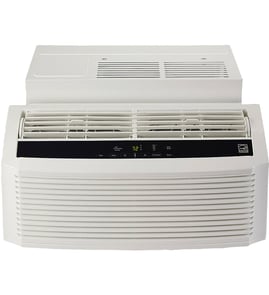

Which type of AC is best for a room?
For most single rooms, a window (room) air conditioner like the Quasar HQ2121MH is the best fit because it is sized for one space, costs less to install than a split system, and is easy to maintain. The “best” type ultimately depends on room size, insulation, and how often you run it.
Quick way to choose the right type
- Window (room) air conditioner: Best for cooling one room; simplest install and service.
- Split air conditioner: Best for quieter operation and frequent daily use; higher install cost.
- Portable air conditioner: Best when you cannot use a window unit; typically less efficient.
- Mini-split (ductless): Best for multiple rooms/zones; highest upfront cost.
Size it correctly (what matters most)
Correct capacity matters more than brand or “type.” Use these practical rules of thumb:
- Start around 20 BTU per square foot for an average room.
- Add capacity for strong sun exposure, high ceilings, or poor insulation.
- Avoid oversizing; it can cool fast but remove less humidity, making the room feel clammy.
| Room size (sq ft) | Typical capacity range (BTU) | Best fit |
|---|---|---|
| 100 to 250 | 5,000 to 6,000 | Window unit |
| 250 to 400 | 7,000 to 10,000 | Window unit |
| 400 to 650 | 12,000 to 14,000 | Window unit or small split |
| 650 to 1,000 | 18,000 to 24,000 | Split or mini-split |
Features worth paying for
- Inverter/variable-speed (more consistent temperature, often quieter)
- Dehumidify/dry mode (better comfort in humid climates)
- Washable filter access (easier routine maintenance)
- Energy Saver mode and a programmable timer
Why it matters
Choosing the right AC type and capacity reduces energy use, improves humidity control, and helps prevent common issues like icing, short-cycling, and uneven cooling. For performance and upkeep tips that apply to room units like the HQ2121MH, use room air conditioner installation and operation tips.
Last updated: February 2026
Which AC is best for a 12 * 12 room?
For a 12 ft x 12 ft room (about 144 sq ft), we recommend a room air conditioner in the 5,000 to 6,000 BTU range for efficient, steady cooling. If your space gets strong sun, has high ceilings, or poor insulation, moving up to 6,000 to 8,000 BTU prevents long run times.
Quick sizing guide (what to buy)
Use room size first, then adjust for real-world conditions.
- 144 sq ft (12x12): 5,000 to 6,000 BTU
- Hot/sunny room: add about 10% BTU
- High ceilings (over 8 ft): add about 10% BTU
- Kitchen or heavy heat sources: add about 4,000 BTU
- Very shaded room: you can often reduce about 10% BTU
BTU recommendations at a glance
| Room size | Typical BTU range | Best fit for a 12x12? |
|---|---|---|
| 100 to 150 sq ft | 5,000 to 6,000 | Yes |
| 150 to 250 sq ft | 6,000 to 8,000 | Only if hot/sunny or high ceilings |
| 250 to 350 sq ft | 8,000 to 10,000 | No |
Why correct sizing matters
A correctly sized window AC removes heat and humidity without short-cycling. Oversizing can cool the air too fast and leave the room clammy; undersizing can run constantly, struggle on hot days, and increase wear on the compressor.
Installation tips that improve cooling (any brand)
Even the right BTU unit performs poorly if warm air leaks in.
- Tilt the unit slightly outward so condensate drains outside.
- Seal side panels and gaps to stop hot air infiltration.
- Clean the air filter regularly to keep airflow strong.
- Keep curtains/blinds closed during peak sun.
- Avoid blocking the front grille with furniture.
If you are maintaining a Quasar HQ2121MH
If your Quasar HQ2121MH is not cooling like it used to, start with airflow and drainage checks before replacing parts. For common performance issues and fixes, use our guide: window air conditioner running but not cooling.
Last updated: February 2026
How do I choose the right AC spare parts?
For your Quasar HQ2121MH room air conditioner, the right spare part is the one that matches your model and the exact part ID for the failed component. We recommend identifying the symptom, confirming the part’s fit for HQ2121MH, and then ordering the exact replacement from the model’s parts list (for example, a seal like the gasket CWB811008 when you’re fixing an air leak).
Step-by-step: how we pick the correct part
- Confirm the model number on the rating label: HQ2121MH
- Identify what’s failing (leak, vibration, noise, poor cooling, won’t start)
- Match the part by part ID and description, not by looks alone
- Compare where it installs (cabinet seal, control area, chassis protection)
- Replace any damaged seals or protectors during reassembly to prevent repeat issues
Common part types to match carefully
| Part type | What it affects | What to verify before ordering |
|---|---|---|
| Gasket/seal | Air leaks, water leaks, rattles | Exact part ID, location, and thickness style |
| Protector/insulator | Wire and component protection | Mounting points and coverage area |
| Bracket/bar | Fit, alignment, vibration | Hole pattern and orientation |
Parts on this model page you can use as examples
- Gasket CWB811008: helps seal panels or air paths when a gasket is torn, flattened, or missing
- Protector CWA121126: used to shield or isolate components where rubbing or heat can cause damage
- Panasonic bar CWE26177: used for support or alignment where a bar/bracket is required
Why it matters
Using the exact matched part for Quasar HQ2121MH prevents air bypass (reduced cooling), water intrusion, and vibration noise. Correct fit also reduces the chance of stripping screws, cracking plastic panels, or creating new leaks during installation.
Helpful troubleshooting before you buy
- Clean the air filter and coils; restricted airflow can mimic a “bad part”
- Check for obvious gaps, torn foam, or loose panels that point to a gasket issue
- If cooling is inconsistent, use our guide: window air conditioner running but not cooling
Last updated: February 2026
How much do AC spare parts usually cost?
AC spare parts for your Quasar HQ2121MH room air conditioner range from a few dollars for small items (like gaskets) to hundreds of dollars for major electrical or motor components; sealed-system parts (compressor or coils) are typically the most expensive and often drive the repair decision.
Typical price ranges (parts only)
These are common ranges for room or window air conditioner parts; exact pricing depends on brand, model, and availability.
- Small seals, gaskets, and clips: $5 to $30
- Sensors and thermistors: $10 to $60
- Fan blades and small hardware: $10 to $80
- Control boards and user interface boards: $80 to $300
- Fan motors: $100 to $400
- Sealed-system repairs (compressor, coils): $300 to $1,500+ (parts only)
Real examples for model HQ2121MH
Here are a few parts currently listed for this model, which shows how inexpensive some common items can be:
| Example part (HQ2121MH) | What it’s used for | Typical cost impact |
|---|---|---|
| Gasket CWB811008 | Helps seal panels or air paths to prevent leaks and vibration | Low |
| Panasonic bar CWE26177 | Small structural or mounting piece | Low |
| Protector CWA121126 | Helps shield or protect a component from damage | Low to medium |
What else to budget for (beyond the part)
Parts cost is only one piece of the total repair.
- Labor time (disassembly, diagnosis, reassembly)
- Service call or diagnostic fee
- Extra supplies (tape, fasteners, insulation, cleaning)
- Shipping time and return policy considerations
- Whether the repair involves refrigerant handling (sealed system)
Why it matters
Room air conditioners often make the most sense to repair when the issue is a wearable or bolt-on part (gasket, sensor, control). When the problem points to the sealed system, total cost can approach replacement value, so comparing total repair cost to the unit’s age and condition is the practical next step.
For common failure patterns and realistic expectations, we recommend what are the most common window air conditioner replacement parts.
Last updated: February 2026
What AC parts are most commonly replaced?
For the Quasar HQ2121MH room air conditioner, the most commonly replaced items are the parts tied to airflow, sealing, and temperature sensing, plus electrical controls that handle starting and cycling. On this model page, common service-type items include a gasket CWB811008 and protective hardware like a protector CWA121126.
Most common room air conditioner parts that get replaced
These are the parts we see replaced most often across window and room air conditioners:
- Air filter (cleaned often, replaced when damaged or won’t come clean)
- Thermistor (temperature sensor) (causes wrong temperature readings or short cycling)
- Electronic control board or user interface board (dead display, won’t respond, random operation)
- Fan motor or fan blade (no airflow, loud grinding, vibration)
- Capacitor (hums, struggles to start, fan or compressor won’t kick on)
- Seals and gaskets (air leaks, water leaks, rattles)
What’s available for HQ2121MH on this page
These parts are listed for your Quasar HQ2121MH and are typical of “small but important” replacements:
| Part on this page | What it typically affects | Common symptom |
|---|---|---|
| Gasket CWB811008 | Sealing between panels or air path | Air leaks, water seepage, vibration noise |
| Protector CWA121126 | Protects wiring/components from heat or abrasion | Intermittent operation, visible wear |
| Panasonic bar CWE26177 | Small hardware/support piece | Rattling, loose fit, panel alignment issues |
How to tell which part you likely need
Use these quick checks before ordering:
- Runs but not cooling: clean filter and coils first; then suspect thermistor, control board, or capacitor.
- Water leaking inside: check unit tilt and drain path; then look for damaged seals or a misfit gasket.
- No fan or loud fan: inspect fan blade for damage; motor bearings may be failing.
- Dead or unresponsive controls: suspect the electronic control board or user interface.
Related DIY help: window air conditioner running but not cooling
Why it matters
Replacing the right “wear” part restores airflow and proper temperature control, which reduces icing, improves comfort, and helps prevent compressor strain (the most expensive component in a room air conditioner).
Last updated: February 2026