
How do I identify my McLane edger model number?
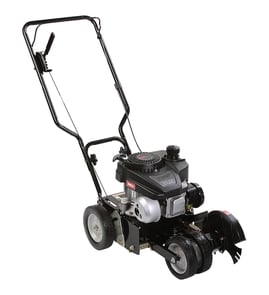
For your Mcclane lawn edger, the model number is printed on an ID tag or label attached to the machine. On many edgers, it’s on the engine/motor housing, the frame near the wheels, or underneath the unit; record every letter, number, and dash exactly (for example, 801-3-5T).
Check these common spots first (wipe off dirt and grass so the tag is readable):
- Front or side of the engine/motor casing
- Frame rail near the wheels or belt/chain guard area
- Rear of the unit near the handle mount
- Underside of the deck (tip the edger safely and keep the spark plug wire disconnected)
- Near the throttle/control panel area
Model tags can include multiple identifiers. Capture them all:
- Model number (example format: 801-3-5T)
- Serial number (helps confirm production run)
- Engine model (if your edger uses a separate engine tag)
- Any type or spec code printed next to the model
| Item on tag | Why it matters | Example |
|---|---|---|
| Model number | Matches the correct parts breakdown | 801-3-5T |
| Serial number | Confirms version changes within a model | 123456 |
| Engine model | Helps with engine-specific parts | GCV160 |
Mcclane edgers can have small design changes across production runs. Using the exact model number (including dashes) helps us match the right belts, blades, wheels, and hardware the first time.
Once you have the model number, use it to search and filter parts faster on Sears PartsDirect.
Last updated: February 2026
How do I adjust the cutting depth on a McLane edger?
On a Mcclane 801-3-5T lawn edger, cutting depth is adjusted by changing the height relationship between the front wheel and the blade; raising the wheel makes a shallower cut, and lowering it makes a deeper cut. Make small changes and test on a short section first.
- Shut the engine off and let all moving parts stop.
- Disconnect the spark plug wire so the edger cannot start accidentally.
- Locate the front wheel height adjustment hardware (typically a bracket with holes or a slotted adjuster).
- Move the wheel up for a shallower edge; move it down for a deeper edge.
- Tighten all fasteners firmly, then test-cut 3 to 6 feet and fine-tune.
| Goal | Typical setting approach | What you should see |
|---|---|---|
| Clean up an existing edge | Shallow cut | Minimal soil, mostly grass trimmed back |
| Re-establish a buried edge | Medium cut | Some soil, crisp trench line |
| Cut back overgrown turf | Deeper cut in passes | Wider trench, more soil; may need 2 passes |
- Make two lighter passes instead of one very deep pass to reduce scalping and kickback.
- Slightly tilt the edger so the blade trims the turf wall cleanly, not the sidewalk.
- Keep the blade vertical for straight edges; slow down in thick roots.
- If the edger chatters, reduce depth and check for a bent blade or loose wheel hardware.
Correct cutting depth helps the Mcclane 801-3-5T track straight, reduces vibration, and prevents excessive trenching that can damage turf and overload the engine.
For general DIY safety practices before adjusting or servicing equipment, review are diy appliance repairs safe.
Last updated: February 2026
What are the safety precautions for using a McLane edger?
For the Mcclane 801-3-5T lawn edger, we recommend basic outdoor power equipment safety every time you edge: operate outdoors only, start the engine with the blade disengaged, keep a stable two-hand grip, and keep hands and feet well away from the cutter blade.
- Wear eye protection and sturdy closed-toe shoes (boots are best).
- Use hearing protection; edgers run loud at operating speed.
- Avoid loose clothing and tie back long hair.
- Clear the edging path of rocks, wire, and debris that can become projectiles.
- Check that all guards and fasteners are in place and tight.
- Never run the edger inside a building; engine exhaust can build up quickly.
- Start the engine on level ground with the blade disengaged.
- Hold the handle with both hands and keep a balanced stance.
- Keep bystanders and pets away from the work area.
- Shut the engine off before clearing jams, adjusting depth, or moving across gravel/driveways.
| Step | What we do | Why it matters |
|---|---|---|
| Blade control | Start with blade disengaged | Prevents sudden blade movement at startup |
| Body position | Two hands, stable stance | Reduces kickback and loss of control |
| Work area | Clear debris first | Prevents thrown objects and blade damage |
| Service/adjust | Engine off before touching blade area | Prevents accidental contact injuries |
Most edger injuries happen from blade contact, thrown debris, or loss of control. A disengaged blade at startup, a clear work zone, and keeping hands and feet away from the cutter area are the biggest risk reducers.
For general DIY safety guidance, we also recommend reviewing are diy appliance repairs safe.
Last updated: February 2026