 Owner’s manual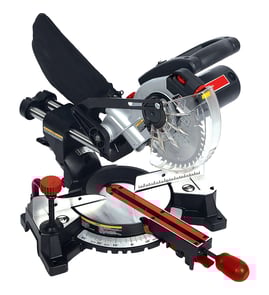


What is the best mitre saw for a DIY?
For most DIYers, the “best” miter saw is the one that matches your typical cut size and space. If you already own the Craftsman 315212240, it is a strong DIY-capable 12-inch compound miter saw (15A, 4,000 RPM) with up to 7-7/8 in. crosscut capacity at 0° miter and 0° bevel; confirm setup and safe-use details in the 315212240 owner's manual.
What to choose for DIY (quick guide)
- 10-inch compound miter saw: best all-around for trim, baseboard, and smaller projects
- 10-inch sliding miter saw: best when you need wider crosscuts but still want a manageable size
- 12-inch compound miter saw (like model 315212240): best when you want more blade capacity and versatility
- 12-inch sliding miter saw: best for frequent wide boards (more cost and more space)
- Cordless miter saw: best for punch-list work and portability (battery platform matters)
How the Craftsman 315212240 fits typical DIY needs
This model is a 12-inch compound miter saw designed for common DIY crosscuts and angled cuts. Here are the key specs we use to size it to projects:
| Spec | Craftsman 315212240 | Why it matters for DIY |
|---|---|---|
| Blade diameter | 12 in. | Handles thicker stock and common trim sizes |
| Motor | 15A | Power for repeated cuts in framing lumber and hardwood trim |
| No-load speed | 4,000 RPM | Clean cuts when paired with the right blade |
| Crosscut capacity (0° miter, 0° bevel) | 7-7/8 in. x 2-1/2 in. | Helps you judge max board width and thickness |
| Crosscut capacity (45° miter, 0° bevel) | 5-1/2 in. x 2-1/2 in. | Real-world capacity for miters |
Features that matter most (what we recommend prioritizing)
- Accurate detents and a solid miter lock so angles repeat reliably
- Stable fence and table so long trim stays square
- Workpiece clamping support to reduce movement and kickback risk
- A quality blade matched to your material (fine-tooth for trim, general-purpose for framing)
- Dust collection you will actually use (even a basic dust bag helps)
Why it matters
DIY results depend more on repeatable accuracy and safe workholding than on brand name. A saw that holds its settings, supports the workpiece, and uses the correct blade will produce cleaner miters, tighter joints, and fewer do-overs.
If you need to replace parts for your Craftsman 315212240, start with the model-specific parts list, or search by model number on Sears PartsDirect.
Last updated: February 2026
What should you never cut with a miter saw?
On our Craftsman miter saw model 315212240, never make freehand cuts, never cut tiny pieces you cannot clamp, and never cut materials the saw and blade are not designed for. Always keep hands out of the cutting path and keep all guards installed.
Never cut these materials (or in these ways)
- Never cut ferrous metal (iron or steel) unless you have a blade specifically rated for that material.
- Never cut masonry (brick, concrete, tile); this tool is intended for crosscutting wood and plastic.
- Never rip-cut boards (cutting with the grain); a miter saw is for crosscuts and miter/bevel cuts.
- Never cut more than one piece at a time (no stacking workpieces).
- Never cut freehand; the workpiece must be firmly against the fence and secured.
- Never cut pieces too small to clamp; keep hands out of the “no hands zone” near the blade.
Safe-use rules that prevent kickback and binding
The 315212240 manual calls out several high-risk situations that lead to binding, stalling, and kickback.
- Clamp the workpiece on one side of the blade only so the offcut can move freely.
- Lock the miter table and bevel settings before starting the cut.
- Let the motor reach full speed before contacting the work.
- Do not reach within 3 inches of the blade path; wait for the blade to stop before lifting.
- Never remove or defeat blade guards.
Quick capacity check (so you do not overload the saw)
If the material exceeds these capacities, do not cut it on this saw.
| Setting | Max width x height |
|---|---|
| Miter 0° / Bevel 0° | 7-7/8 in. x 2-1/2 in. |
| Miter 45° / Bevel 0° | 5-1/2 in. x 2-1/2 in. |
| Miter 0° / Bevel 45° | 7-7/8 in. x 1-3/4 in. |
Why it matters
Most miter saw injuries happen when the workpiece shifts, binds the blade, or pulls a hand into the cutting path. Clamping correctly, using the fence, and staying within the saw’s rated cutting capacity keeps cuts accurate and prevents kickback.
For model-specific safety labels, “no hands zone” markings, and approved applications, use the 315212240 owner's manual. For parts and diagrams for this saw, search by model number on Sears PartsDirect.
Last updated: February 2026
How do I find the model number on my 315212240?
The model number for your Craftsman miter saw is printed on a rating plate attached to the motor housing. On this saw, the plate shows the model as 315.212240; use that full number anytime you look up diagrams, manuals, or replacement parts in the [315212240 owner's manual].
Where to look on the saw
The rating plate is on the motor housing. Check these common spots around that area:
- Side of the motor housing near the handle
- Back of the motor housing facing the operator
- Near the blade guard pivot area (still on the motor housing)
- Close to the power cord entry point
- On a flat section of the housing where a label can sit flush
What the label looks like (and what to copy)
The plate typically includes several fields. Copy the model number exactly as shown.
| Label item | What it’s used for | What to write down |
|---|---|---|
| Model | Identifies the exact saw version | 315.212240 (often shown as 315212240 online) |
| Serial number | Tracks production run | The full serial number |
| Electrical rating | Confirms power requirements | 120V AC, 15A (typical for this model) |
Why it matters
Craftsman tools often have multiple versions that look similar. Using the exact model number from the motor-housing plate ensures we match the correct parts list, diagrams, and safety information for your specific 315212240 compound miter saw.
Quick tips if the label is hard to read
- Wipe dust off with a dry cloth; avoid soaking the label
- Use a flashlight at an angle to make faint printing stand out
- Take a close-up photo and zoom in
- Record both the model and serial number before the label wears further
Last updated: March 2026