


How to find snowblower model number?
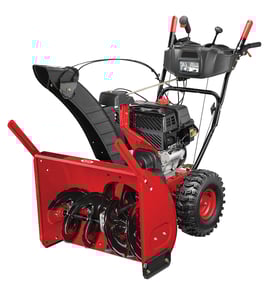
For a Craftsman snowblower like model 536918700, the model number is typically on a sticker or metal tag on the rear frame between the wheels, on the auger housing, or near the engine mounting area. Use that exact number to match the correct parts list.
Where to look on a Craftsman 22" snow blower
Check these common spots first (wipe off snow, salt, and grime so the tag is readable):
- Rear frame between the wheels (most common)
- Side or rear of the auger housing (near the front bucket)
- Near the engine mounting area on the frame
- Under or behind the handlebar panel area
- On the engine itself (engine model, not the snowblower model)
Model number vs. engine number (why it matters)
Snowblowers often have two different IDs:
| What you find | What it identifies | What to use it for |
|---|---|---|
| Snowblower model number (example: 536918700) | The whole Craftsman machine | Ordering auger, drive, and chassis parts |
| Engine model/type/code | The engine only | Ordering engine-specific parts (carb, ignition, gaskets) |
Tips to read the tag correctly
- Copy the model number exactly, including any leading zeros.
- If the sticker is damaged, look for a stamped plate on the frame.
- Take a clear photo before ordering parts.
Next step after you find the model number
Once you confirm the model number, match it to the parts diagrams and common wear items such as the snowblower shear bolt 51430MA (used to protect the auger/impeller if it jams).
Why it matters
Using the exact model number prevents ordering the wrong Craftsman snowblower parts, especially for drive system items like pulleys, bushings, and gear case components.
Last updated: February 2026
How to tell year of Craftsman snowblower by serial number?
For a Craftsman snowblower like model 536918700, the year is usually encoded in the serial number or date label on the machine, and sometimes on the engine tag. We match the serial format to a known pattern (often a date-style code) to identify the build year.
Where to find the serial number (and other date clues)
Check these common locations on a 22-inch Craftsman snow blower:
- On the frame near the engine or recoil starter area
- On the rear frame between the handles
- Near the auger housing (side plate area)
- On the underside of the control panel area
- On the engine itself (engine model/type and a separate date code)
If the snowblower label is worn, the engine tag is often the easiest to read and still gives you a reliable manufacture date for the engine.
How to decode common Craftsman serial number formats
Craftsman snowblower serial numbers are not all the same; the format depends on who built the unit and the production era. Use this quick guide:
| Serial number pattern (typical) | What it usually means | Example of how to read it |
|---|---|---|
| 6 digits like YYMMDD | Year, month, day | 150923 = Sept 23, 2015 |
| 6 digits like MMDDYY | Month, day, year | 092315 = Sept 23, 2015 |
| Letter + numbers (varies) | Letter can represent year in some newer systems | Use the letter as the year key, then read remaining digits as date/sequence |
Practical decoding steps
- Write down the full serial number exactly as shown.
- Look for a clear 6-digit block that resembles a date.
- If there is a letter in the first 1 to 2 characters, treat it as a possible year code and the remaining digits as month/day or a production sequence.
- Compare the result to the engine date code; the snowblower build date is typically the same year as the engine, or slightly later.
Why it matters
Knowing the correct year helps us match the right Craftsman 536918700 snowblower parts and revisions, especially for wear items like belts, pulleys, and auger hardware.
Parts that commonly depend on the exact build
- Idler pulley 1502120MA (drive/auger belt tensioning)
- Snowblower shear bolt 51430MA (protects the auger/gearcase)
- Bushings, seals, and gearcase components
Last updated: February 2026
Who repairs Craftsman snow blowers?
For a Craftsman 536918700 22" snow blower, repairs are typically handled by small-engine repair shops and outdoor power equipment service centers. We also support DIY repairs by helping you match the exact replacement parts for common wear items and drive or auger issues.
Repair options that work well
- Local small-engine repair shops (snow blowers, lawn mowers, generators)
- Outdoor power equipment service centers that work on multiple brands (including Craftsman)
- Independent mechanics who service carburetors, friction drive systems, and auger gearcases
- DIY repair at home when the issue is a wear part (belt drive, pulleys, shear bolts)
What to check before you schedule service
These quick checks help you describe the problem accurately and avoid unnecessary labor.
- Confirm the model number is 536918700 (from the ID tag on the machine)
- Note whether the engine runs but the unit will not move (drive issue) or will not throw snow (auger issue)
- Inspect for broken shear bolts on the auger
- Listen for grinding or popping from the auger gearbox area
- Check for a loose, squealing, or slipping belt or pulley
Common repairs and the parts that usually fix them
| Symptom | Most common area | Parts often involved (examples) |
|---|---|---|
| Auger stops when it hits packed snow | Auger protection | Snowblower shear bolt 51430MA |
| Poor throwing, grinding in auger housing | Auger gearcase | Worm gear 51405MA, bushings, seals |
| Drive or auger engagement feels weak | Belt and idler system | Idler pulley 1502120MA |
Why it matters
Snow blowers use sacrificial parts (like shear bolts) to protect expensive components (like the worm gear and gearcase). Replacing the correct wear part first often restores performance and prevents bigger damage.
Last updated: February 2026
Is it cheaper to repair or replace a snowblower?
Repairing a Craftsman snowblower like model 536918700 is cheaper when the problem is a normal wear item (belt drive, pulley, shear bolt, bushings) and the machine still starts and runs strong. Replacing the snowblower makes more sense when the engine or auger gearbox needs major work and total cost approaches about half the price of a comparable new unit.
A practical way to decide (cost vs. reliability)
Use this quick checklist before you spend money:
- Repair when it needs routine parts and basic labor (common on well-running machines).
- Replace when the engine has low compression, heavy oil burning, or repeated no-start issues after proper fuel-system service.
- Repair when the auger stopped because a shear bolt broke (it is designed to fail first).
- Replace when the auger gearbox is noisy, leaking badly, or has stripped gears and the machine is also showing other major wear.
- Repair when the drive system slips due to an idler or linkage issue.
Common “repair” scenarios for this model
These are typical fixes that usually cost far less than replacing the whole snowblower:
- Replace a broken auger fastener with a snowblower shear bolt 51430MA
- Fix drive belt tension or squeal by inspecting the idler pulley 1502120MA
- Address wobble or play in moving assemblies by replacing a worn bushing 50304MA
- Restore chute/auger drive function when internal gearing is worn (more involved) with a worm gear 51405MA
Quick comparison table
| Situation | Typical best choice | Why |
|---|---|---|
| Starts and runs well; drive or auger issue is isolated | Repair | Wear parts are straightforward and restore performance |
| Multiple systems failing; frequent breakdowns | Replace | You avoid repeated downtime and stacked repair costs |
| Gearcase or worm gear failure only | Repair if the rest is solid | Targeted repair can extend life significantly |
| Engine is failing (hard start, smokes, low power) | Replace | Engine work often becomes the cost driver |
Why it matters
A 22-inch snow blower is all about reliability when the snow hits. Repairing the right component (like a shear bolt, idler pulley, or bushing) keeps your Craftsman 536918700 clearing consistently without paying for a full replacement.
Last updated: February 2026
What is the average lifespan of a snowblower?
Most snowblowers, including a Craftsman 536918700 22" snow blower, typically last 10 to 20 years with normal residential use and routine maintenance. Units that are stored dry, kept adjusted, and repaired promptly often reach the high end of that range.
What affects lifespan the most
- Maintenance habits: regular oil changes, lubrication, and end-of-season cleaning
- Snow conditions: heavy, wet snow and icy plow berms increase wear
- Storage: moisture and salt exposure accelerate rust and cable corrosion
- Drive and auger wear items: belts, pulleys, bushings, and shear bolts take the most abuse
- Operator practices: avoiding gravel ingestion and clearing jams safely prevents major damage
Typical lifespan ranges (what we see most often)
| Snowblower type | Typical lifespan | Notes |
|---|---|---|
| Single-stage (light duty) | 8 to 15 years | More sensitive to heavy, wet snow |
| Two-stage (residential) | 10 to 20 years | Most common range for 22-inch units |
| Heavy-duty / well-maintained | 15 to 25 years | Depends heavily on storage and upkeep |
Parts that commonly extend the life of this model
Replacing worn wear-items early helps prevent bigger failures (like stripped gears or damaged housings). Common examples for Craftsman 536918700 include:
- Snowblower shear bolt 51430MA (protects the auger gearbox when you hit an obstruction)
- Idler pulley 1502120MA (helps maintain correct belt tension for drive/auger operation)
- Bushing 50304MA (reduces play and wear in rotating linkages)
- Worm gear 51405MA (key drivetrain component when chute/auger drive systems wear)
Why it matters
A snowblower usually becomes unreliable long before the engine is truly “worn out.” Keeping the auger and drive systems adjusted, replacing shear bolts after impacts, and fixing wobble or belt slip early can add years of dependable service.
Last updated: February 2026