Error Codes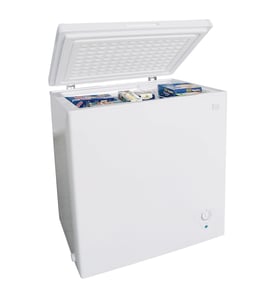






What are the common chest freezer problems?
For the Hotpoint HCM9STBWW chest freezer, the most common problems are not freezing or freezing too warm, heavy frost buildup, the compressor running too long, water leaking during defrost, and unusual noises. Many issues start with airflow restrictions, a lid that is not sealing, or a temperature control problem.
- Too warm or not freezing: temperature control setting, poor lid seal, overloading, or a cooling-system fault
- Freezing too cold: thermostat/temperature control not regulating correctly
- Excessive frost: lid left ajar, weak gasket seal, frequent openings, humid room air
- Runs constantly: warm room location, dirty condenser area, lid seal leak, low refrigerant, or compressor issue
- Water on floor: normal meltwater during manual defrost, drain not managed, unit not level
- Clicking, buzzing, rattling: normal compressor cycling, loose panels, or compressor electrical issues
- Confirm power and temperature setting: make sure the control is not set to “off” or warm.
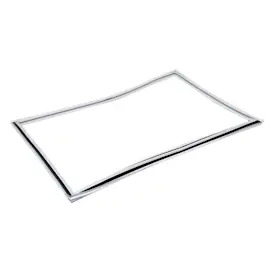
- Check the lid seal: close the lid on a sheet of paper; if it slides out easily, sealing is weak.
- Reduce load and improve airflow: avoid packing food tightly against interior walls.
- Defrost if frost is thick: heavy frost acts like insulation and reduces cooling.
- Listen for compressor behavior: repeated clicking with no steady run often points to a start or electrical problem.
| Symptom | Common suspect | Example part for HCM9STBWW |
|---|---|---|
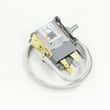
| Too warm or too cold | Temperature control not regulating | Thermostat WR09X27830 |
| Runs but won’t cool well | Sealed system or compressor issue | Compressor WR87X37830 |
| No power or intermittent power | Power supply issue | Power cord WR55X38965 |
Catching a lid-seal or temperature-control issue early helps prevent food spoilage and reduces compressor run time, which lowers energy use and wear on major components.
For step-by-step repair visuals and safety prep, use our how to defrost a freestanding freezer guide.
Last updated: January 2026
Why is my Hotpoint freezer not freezing properly?
If your Hotpoint HCM9STBWW chest freezer is running but not freezing properly, the most common causes are poor airflow from dirty condenser coils, a temperature control problem, or a sealed-system issue (refrigerant restriction or compressor trouble). Start with cleaning and basic checks before replacing parts.
- Confirm the control is set colder and the control knob - white WR01X42207 is not cracked or slipping on the thermostat shaft.
- Make sure the lid closes fully and nothing is holding it open.
- Check for heavy frost or ice buildup on interior walls (can indicate airflow or moisture issues).
- Verify the freezer is not overpacked; leave space for air circulation.
- Listen for the compressor: steady hum is normal; repeated clicking can point to a start or electrical problem.
- Clean the condenser area: Dust and pet hair reduce heat release and can cause warm temps.
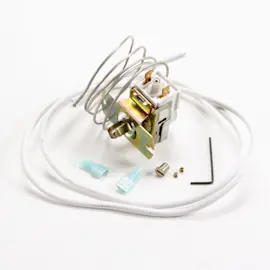
- Check temperature control operation: If turning the control does not change compressor cycling, the thermostat can be failing. For this model, the temperature control is the thermostat WR09X27830.
- Look for sealed-system symptoms: If the compressor runs a lot but temps stay warm, you may have a restriction or low refrigerant. Sealed-system repairs involve refrigerant handling and should be done by a qualified technician.
- Check basic power and wiring: A damaged cord or loose connection can cause intermittent cooling; the correct cord for this model is the power cord WR55X38965.
| Symptom | Most common cause | What to do next |
|---|---|---|
| Runs constantly, still warm | Dirty condenser or sealed-system issue | Clean first; then schedule service if no change |
| Clicks on/off, won’t start | Start device or compressor electrical issue | Have electrical components tested |
| No change when adjusting temp | Temperature control thermostat issue | Replace thermostat |
| Power light off, no operation | Power supply/cord issue | Verify outlet, inspect cord |
A freezer that cannot shed heat (dirty condenser) or cannot control cycling (bad thermostat) often warms gradually and can lead to food spoilage. Catching the cause early also helps prevent compressor overwork.
Last updated: January 2026
Does a chest freezer use a lot of electricity?
A Hotpoint chest freezer like model HCM9STBWW typically uses a moderate amount of electricity, and it is usually cheaper to run than an upright freezer of similar size. Your real cost depends most on room temperature, lid seal condition, and how often the lid is opened.
Most modern chest freezers are efficient because cold air stays in the cabinet when you open the lid.
- Many ENERGY STAR certified chest freezers use about 215 kWh per year
- That often works out to roughly $30 per year (at typical electric rates)
- Upright freezers are commonly higher, around 395 kWh per year (often about $60 per year)
- A warmer garage, frequent openings, or heavy frost buildup can raise usage
- A poor lid seal can make the compressor run longer
| Freezer type | Typical annual use (ENERGY STAR examples) | Typical annual cost |
|---|---|---|
| Chest freezer | ~215 kWh/year | ~$30/year |
| Upright freezer | ~395 kWh/year | ~$60/year |
These are the most common causes of higher-than-normal run time:
- Warm location (garage or utility room that gets hot)
- Frost buildup on interior walls (acts like insulation in the wrong place)
- Overpacked airflow (items blocking cold circulation near the walls)
- Damaged lid or hinge alignment that prevents a tight close
- Worn temperature control that does not cycle correctly
If the temperature seems unstable or the freezer runs constantly, the temperature control system is a good place to start. For this model, the thermostat WR09X27830 is the temperature control part commonly associated with cycling the compressor.
Lower electricity use usually means steadier temperatures and less compressor wear. Keeping the lid sealing well and defrosting when frost builds up helps your Hotpoint HCM9STBWW stay efficient and protect frozen food quality.
Last updated: January 2026
How long should a chest freezer last?
A Hotpoint chest freezer like model HCM9STBWW typically lasts 10 to 20 years, with many units landing in the 12 to 16 year range when the lid seals well, airflow is good around the cabinet, and the temperature control is kept stable.
- Room temperature and ventilation: Hot garages and tight alcoves make the compressor run longer.
- Lid seal condition: Air leaks cause heavy run time and frost buildup.
- Thermostat accuracy: Wide temperature swings add wear.
- Defrosting and cleaning: Heavy frost acts like insulation and reduces efficiency.
- Power quality: Frequent outages or surges can stress electrical components.
- Keep the freezer reasonably full (cold mass helps stabilize temperature).
- Defrost when frost reaches about 1/4 inch.
- Keep the lid closing squarely; avoid overloading the rim with packages.
- Verify the control knob turns smoothly and settings hold; replace a cracked knob such as the control knob - white WR01X42207 if needed.
- If temperatures drift or the freezer runs constantly, test and replace the thermostat WR09X27830 when it is the confirmed cause.
| Freezer age | What’s normal | What’s a warning sign |
|---|---|---|
| 0 to 5 years | Steady temps, short cycles | Warm spots, loud clicking, heavy frost |
| 6 to 12 years | Slightly longer run times | Runs nonstop, sweating around lid |
| 13 to 20 years | More run time, higher energy use | Won’t reach 0°F, repeated tripped breaker |
A chest freezer can keep food safer and use less energy when it holds a steady 0°F. When seals, controls, or airflow issues force constant run time, the compressor works harder and overall life drops.
For step-by-step help on temperature control repairs, use our how to replace a freezer temperature control thermostat guide.
Last updated: January 2026