Owner’s manual
 Error Codes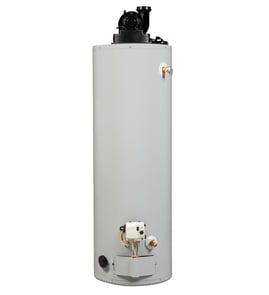



What is the average lifespan of a gas water heater?
A tank-style gas water heater typically lasts 8 to 12 years. For your American FG6240T403NO, regular maintenance (especially flushing sediment and inspecting the anode rod) helps the tank and burner system run efficiently and reach the upper end of that range.
Typical lifespan and what changes it
Most gas water heaters fall into a predictable range, but water conditions and maintenance make a big difference.
- Typical average: 8 to 12 years
- Often shorter when: hard water, heavy usage, poor venting/combustion air, or heavy sediment buildup
- Often longer when: tank is flushed regularly and the anode rod is maintained
Quick reference
| Condition | What you’ll usually see | Impact on lifespan |
|---|---|---|
| Heavy sediment in tank | rumbling/popping, slower recovery | Shortens tank life |
| Anode rod depleted | rusty water, odor, faster corrosion | Shortens tank life |
| Good maintenance | steadier temps, fewer burner issues | Extends tank life |
Maintenance that extends life (most important)
The manual for this model calls out anode-rod inspection as a key corrosion-control step.
- Inspect the anode rod about every 3 years; replace it if it’s more than 50% depleted
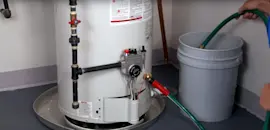
- Flush the tank periodically to reduce sediment
- Keep the burner area clean and make sure combustion air and venting are not blocked
- Fix small leaks quickly so corrosion does not accelerate
- If the heater has been unused for 2+ weeks, run hot water at a faucet for several minutes before using appliances connected to hot water (hydrogen gas safety)
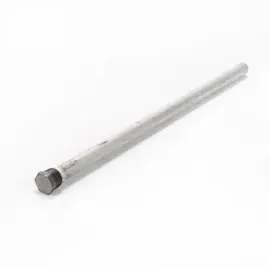
If you’re due for an anode replacement, the model’s parts list includes an anode rod 100108260.
Why it matters
Once the tank starts corroding through, replacement becomes the practical fix. Staying ahead of sediment and anode-rod wear is the most reliable way to get full life from a gas water heater like the FG6240T403NO.
For model-specific maintenance intervals, safety warnings, and operating steps, use the owner's manual.
Last updated: February 2026
What brand of gas water heater is the most reliable?
For long-term reliability in a gas tank water heater, we look for proven burner and gas valve design, strong tank corrosion protection, and easy access to service parts. For your American FG6240T403NO, reliability also comes from correct installation, safe combustion air, and routine maintenance outlined in the owner's manual.
What “most reliable” usually means for gas water heaters
Reliability is less about a single brand name and more about build quality and how the heater is installed and maintained.
Common reliability factors:
- Tank protection: anode rod condition and water chemistry
- Combustion safety: correct venting and adequate combustion air
- Gas control quality: stable thermostat and safety shutoffs
- Serviceability: availability of common repair parts
- Maintenance habits: periodic draining and inspection
Brand guidance (what to prioritize when comparing)
When you compare brands, focus on these decision points first:
- Correct size and recovery rate for your household
- Warranty length and coverage (tank vs. parts)
- Parts availability for items like gas controls, pilot assemblies, and gaskets
- Installer quality (a great heater installed poorly fails early)
Quick comparison checklist
| What you compare | What “reliable” looks like | What to avoid |
|---|---|---|
| Tank protection | Replaceable anode rod, good lining | No maintenance plan for anode/sediment |
| Gas controls | Stable temperature control, common replacement parts | Hard-to-source controls |
| Venting/air | Matches your home’s venting and air supply | Improper venting or tight closet installs |
| Service parts | Pilot/igniter and gas valve readily available | Proprietary parts with long lead times |
How to keep your FG6240T403NO reliable
Your American FG6240T403NO is a Category I, non-direct vented gas water heater; it relies on proper combustion air and venting. Following the setup and safety steps in the manual prevents nuisance shutdowns and premature component wear.
We recommend:
- Verify the gas type matches the data plate before operation
- Keep the burner area clean and airflow unobstructed
- Flush sediment periodically; replace a sticking drain valve if needed (see drain valve 100109106)
- Inspect and replace the anode rod on schedule (see anode rod 100108260)
- If ignition becomes unreliable, check the pilot/igniter assembly (see water heater pilot igniter 100110936)
Why it matters
A “reliable” gas water heater is one that runs safely and consistently. Correct gas supply piping, leak checks, and proper combustion air reduce shutdowns, soot, and component stress, which extends the life of the tank and controls.
Last updated: February 2026
Why are gas water heaters being phased out?
Some regions are moving away from gas water heaters to reduce air pollution and greenhouse-gas emissions from burning natural gas. For your American FG6240T403NO gas water heater, the practical impact is usually local code and permitting rules, not a sudden change in how your current heater operates; check the safety and installation requirements in the owner's manual.
What is driving the phase-out
Policies vary by city, county, and state, but the most common reasons are:
- Cutting nitrogen oxides (NOx) that contribute to smog
- Lowering carbon monoxide risk from venting and backdraft conditions when installation is poor
- Reducing overall fossil-fuel use in homes (electrification goals)
- Improving indoor air quality in tightly sealed homes
- Meeting regional climate and air-quality targets
What it means for homeowners
In most areas, “phase-out” affects new installations more than existing equipment.
| Situation | What typically happens | What you should do |
|---|---|---|
| Existing working gas water heater | You can keep using it | Maintain it and follow safety guidance |
| Repair vs. replace decision | Some repairs remain allowed | Price out repair parts and labor early |
| New or replacement installation | May require different equipment type | Confirm local requirements before buying |
Safety and operation still matter (especially on gas)
Your FG6240T403NO manual highlights several safety points that remain important regardless of policy:
- Keep flammable liquids and vapors away from the heater area
- Maintain required clearances and keep controls accessible
- Avoid locating the heater near strong air-moving devices (fans, dryers) that can cause flue-gas reversal
- If the unit has been under water, the heater and gas controls require replacement
- Follow the lighting instructions exactly to prevent fire, explosion, or carbon monoxide hazards
Parts that commonly come up during “keep it running” decisions
If you are maintaining an existing unit, these model-matched parts are often involved in ignition or control issues:
- Water heater pilot igniter 100110927
- Water heater gas control valve 100093753
- Water heater natural gas control valve 100093755
Why it matters
A phase-out is mainly about future compliance and air-quality goals, but for owners it changes the timing and cost of replacement decisions. Keeping your current gas water heater operating safely, with correct venting and ignition, helps you avoid nuisance shutdowns and safety risks.
Last updated: February 2026
What is the cost of replacing a 40 gallon gas water heater?
Replacing a 40-gallon gas water heater like the American Water Heaters FG6240T403NO typically costs $1,500 to $3,500 installed. Total price depends on labor rates and whether the job needs venting changes, gas-line updates, permits, or code-required safety upgrades.
Typical cost breakdown
Most replacement quotes include these items:
- New 40-gallon gas water heater (unit)
- Removal and disposal of the old tank
- New water and gas connectors, fittings, and sealant
- Startup, leak testing, and relighting
- Permit and inspection (where required)
| Cost item | Typical range | What changes the price |
|---|---|---|
| Water heater (unit only) | $600 to $1,500 | Efficiency level, warranty tier |
| Labor | $600 to $1,800 | Access, time on site, local rates |
| Materials and venting | $150 to $800 | Vent connector, valves, piping parts |
| Permit/inspection | $50 to $300 | Local requirements |
What commonly increases the installed price
These are the add-ons that most often move a quote higher:
- Venting modifications to meet draft and clearance requirements
- Gas piping work (new shutoff, sediment trap, resizing)
- Water piping changes (shutoff valve replacement, corrosion, tight spaces)
- Thermal expansion control in closed plumbing systems (expansion tank or other approved method)
- Drain pan and drain line when the heater is located where leakage could damage property
Why it matters
A correct installation protects your home and helps the new heater run safely. The FG6240T403NO safety and installation requirements, including location, venting, and gas supply guidance, are covered in the FG6240T403NO owner's manual.
When repair makes more sense than replacement
If the tank is sound and the problem is ignition or control related, replacing a service part can restore operation at a much lower cost than a full swap. Common parts for this model include:
Last updated: February 2026
What is the most common problem with gas water heaters?
The most common problem we see with gas water heaters is ignition trouble: the pilot will not light, will not stay lit, or the burner will not fire. On American model FG6240T403NO, that usually points to the pilot/ignition parts, the gas control valve, or a safety shutdown.
Most common issues (and what you notice)
- Pilot will not light or will not stay lit (no steady flame in the viewport)
- Burner will not come on (no hot water or long recovery time)
- Rumbling or popping sounds (sediment in the tank)
- Water temperature swings after short hot-water draws (stacking)
- Rotten egg odor (anode rod reaction with certain water conditions)
Safe checks that help narrow it down
Follow the lighting and safety steps in the FG6240T403NO owner's manual before you do anything.
- Confirm the temperature dial is set above the lowest setting
- If you smell gas, do not attempt to light the pilot; ventilate the area and follow the warning instructions
- If the heater has not been used for 2 weeks or more, run hot water at a sink for several minutes first (hydrogen gas can be present)
- If any part has been under water, the manual directs replacement of the water heater
- If overheating occurs or the gas supply fails to shut off, turn off the manual gas control valve and use a qualified technician
Parts that commonly fix “won’t light” or “won’t stay lit”
These are common model-matched parts to inspect when ignition or control is the issue:
| Symptom | Part to inspect | What it affects |
|---|---|---|
| Pilot will not light or will not stay lit | Water heater pilot igniter 100110927 | Pilot ignition and pilot flame stability |
| Burner will not run or temperature control is erratic | Water heater gas control valve 100093753 | Gas flow and thermostat control |
| Igniter button will not click/actuate reliably | Water heater piezo igniter bracket 100093718 | Igniter mounting and actuation |
Why it matters
Ignition failures can indicate a control problem or a safety system shutdown; repeated relighting attempts can create unsafe conditions. Temperature settings also matter for comfort and scald prevention; use the temperature guidance in the manual.
Last updated: February 2026