Installation guide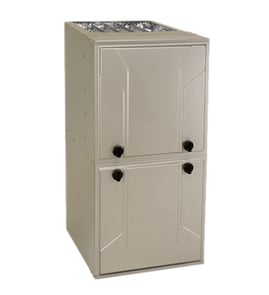



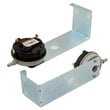
What does an inducer fan do on a furnace?
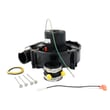
On the Icp N9MP2050B12C1 90+ single-stage gas furnace, the inducer fan (draft inducer) starts the heating cycle by pulling combustion air through the burners and pushing exhaust gases out through the vent. It also helps the pressure switch close so ignition can begin.
What the inducer fan does during a heat call
When your thermostat calls for heat, the furnace control board turns on the inducer first. In this model’s normal sequence, the inducer runs, the pressure switch closes, and then the igniter warms up before the gas valve opens and the burners light.
Key jobs the inducer handles:
- Creates draft so combustion products move safely through the venting
- Helps prove venting is working by allowing the pressure switch to close
- Clears the heat exchanger/vent with a short pre-purge before ignition
- Runs briefly after the burners shut off (post-purge) to clear remaining exhaust
- Supports accessories like a humidifier output that energizes when the inducer is energized
Common symptoms when the inducer is failing
If the inducer is weak, noisy, or not starting, the furnace often will not light at all because the pressure switch never proves draft.
Typical signs include:
- Inducer hums but will not spin, or starts then stops
- Rattling, scraping, or loud whine from the inducer housing
- Burners never ignite even though the thermostat is calling for heat
- Short cycling (starts, then shuts down before heating)
- Intermittent heat, especially in cold or windy conditions
Quick checks (safe, homeowner-friendly)
We recommend turning off power to the furnace before inspecting anything.
| What to check | What you’re looking for | Why it matters |
|---|---|---|
| Vent/intake terminations | Blockage from debris, snow, nests | Blockage prevents proper draft and pressure switch closure |
| Inducer area | Loose mounting screws, vibration | Mechanical issues can prevent steady draft |
| Wiring connections | Loose plug or damaged wires | Inducer needs solid power and control signals |
For electrical testing steps, use the installation guide.
Parts that are often involved
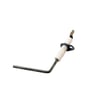
If diagnosis points to a failed inducer assembly on this model, the matching replacement is the Icp furnace inducer vent motor assembly 1172823. If the inducer runs but ignition still fails, a related ignition-proving part to check is the furnace burner flame sensor 1172827.
Why it matters
The inducer is a safety-critical part of the ignition sequence. Without proven draft, the furnace control will not allow the gas valve to open, which prevents unsafe combustion and venting conditions.
Last updated: February 2026
What is the most common part to fail on a furnace?
On an Icp N9MP2050B12C1 90+ single-stage gas furnace, the most common failure item is the hot surface igniter because it heats to extreme temperatures on every call for heat and becomes brittle over time. A weak igniter often causes “no heat” or repeated ignition attempts.
What you’ll usually notice when the igniter is failing
- Inducer runs, but burners never light
- Igniter does not glow at all, or glows inconsistently
- Furnace tries to light several times, then stops heating (lockout)
- You may see a diagnostic code for ignition failure or flame sense loss
- Heat starts briefly, then shuts down and retries
Quick checks that help confirm the cause (safe, basic steps)
- Set thermostat to heat and raise the setpoint.
- Watch the startup sequence through the burner view area (do not remove safety panels while operating).
- If the igniter never glows, inspect the igniter and its wiring for cracks, white spots, or loose connections.
- If the igniter glows but burners still do not stay lit, the issue is often flame sensing or airflow safety shutdown.
For diagnostic flash codes and the normal ignition sequence timing, use the installation guide.
Common “no heat” parts compared
| Symptom | Most likely part | What it affects |
|---|---|---|
| Inducer runs, no ignition glow | Igniter | Lights the burners |
| Burners light then shut off quickly | Flame sensor | Proves flame to the control |
| Furnace shuts down on overheating | Limit switch | Protects against high temperature |
| Draft issues, pressure switch errors | Inducer assembly | Moves combustion gases and proves draft |
Model-specific parts we see tied to these symptoms
- Furnace burner igniter 1172533 (most common wear item)
- Furnace burner flame sensor 1172827 (common if burners light then drop out)
- Furnace temperature limit switch 1013102 (common if overheating or restricted airflow)
- Icp furnace inducer vent motor assembly 1172823 (common with draft/pressure switch problems)
Why it matters
Ignition-related failures can trigger safety lockouts and leave the home without heat. Your furnace is designed to shut down under unsafe conditions, so fixing the root cause (ignition, flame proving, airflow, or venting) restores reliable heating and safe operation.
Last updated: February 2026
What is the most expensive part to fix on a furnace?
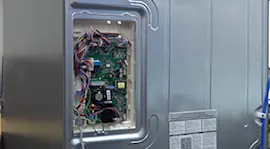
On an Icp N9MP2050B12C1 90+ single-stage gas furnace, the most expensive repair is typically a major motor or control component, or a heat exchanger. On this model’s parts list, the highest-priced common replacement is the blower motor (mtr blr 1009052) and the electronic control board (Icp furnace electronic control board 1172550).
Most expensive furnace repairs (what usually tops the list)
These are the repairs that most often drive the highest total cost (part plus labor):
- Heat exchanger (primary or secondary): often the priciest component because it is labor-intensive to replace
- Blower motor: high part cost and moderate labor (airflow and wiring must be set up correctly)
- Electronic control board: high part cost; diagnosis matters to avoid replacing the wrong component
- Inducer vent motor assembly: moderate-to-high part cost; affects safe venting and ignition sequence
- Gas valve: can be expensive; requires careful setup and safety checks
What’s most expensive on this model (parts you’ll commonly see priced highest)
Based on the parts available for model N9MP2050B12C1, these are typically among the biggest-ticket items:
| Component | Example part on this model | Why it’s costly |
|---|---|---|
| Blower motor | Mtr Blr 1009052 | Large motor assembly; drives all heated airflow |
| Control board | Icp Furnace Electronic Control Board 1172550 | Central “brain” for ignition, blower timing, and safety circuits |
| Inducer | Icp Furnace Inducer Vent Motor Assembly 1172823 | Critical for venting and pressure switch operation |
Why it matters
High-cost furnace repairs are usually tied to core operation or safety (airflow, venting, ignition control). The installation guidance also emphasizes annual inspection and safe servicing practices, which helps catch issues early and avoid secondary damage.
Before you replace an expensive part
We recommend these practical checks first (many “big part” symptoms are caused by smaller issues):
- Turn off power before servicing; label wires and reconnect correctly
- Check for a dirty filter or blocked return/supply airflow (can trigger limit switch trips)
- Inspect the flame sensor for buildup if you have ignition failures (furnace burner flame sensor 1172827)
- If the furnace overheats, test the limit circuit (furnace temperature limit switch 1013102)
- Use the wiring and setup guidance in the installation guide to confirm venting, combustion air, and control wiring are correct
Last updated: February 2026
How old is my furnace by model number?
You typically cannot determine the exact age of an Icp furnace from the model number alone. For Icp model N9MP2050B12C1, the reliable way to date the unit is to read the serial number and rating plate on the furnace cabinet, then match that information using the identification details in the installation guide.
Where to find the information you need
Look for the furnace data label (rating plate) and record:
- Serial number (this is the key for age)
- Model number: N9MP2050B12C1
- Manufacturer number (often listed as “Mfr No.”)
- Gas type (Natural gas or LP)
- Input and output BTUH (helps confirm you are reading the correct label)
How to estimate age when you only have the model number
Model numbers like N9MP2050B12C1 mainly describe configuration (series, efficiency family, cabinet size, and capacity class). They are useful for ordering parts and confirming specifications, but they are not a dependable “date code.”
Quick model-number clues (helpful, not a date)
For this model family, the installation specs list:
| Spec item | What you can confirm for N9MP2050B12C1 | Why it helps |
|---|---|---|
| Furnace type | 90+ single-stage gas furnace | Confirms product family |
| Input | 50,000 BTUH | Confirms capacity class |
| Output | 45,500 BTUH | Confirms expected performance |
| Electrical | 115V / 60Hz | Confirms power requirements |
Why it matters
Knowing the furnace’s age helps us choose the right repair approach: older units are more likely to need ignition and safety-control maintenance (like a flame sensor cleaning) or replacement of common wear parts such as an igniter or control board.
Parts that commonly come up during age-related troubleshooting
If you are diagnosing ignition or cycling issues on N9MP2050B12C1, these are common suspects:
- Furnace burner flame sensor 1172827
- Furnace burner igniter 1172533
- Icp furnace electronic control board 1172550
Last updated: February 2026
What are the most common furnace repairs?
For the Icp N9MP2050B12C1 90+ single-stage gas furnace, the most common repairs involve airflow and safety shutoffs (dirty filter, limit switch trips), ignition and flame proving (igniter or flame sensor), venting/condensate issues (inducer problems or frozen drain), and electrical controls (wiring or control board faults). See the installation guide for safety and service cautions.
Most common repairs we see (and what they look like)
- Dirty/clogged air filter: weak airflow, overheating, frequent shutdowns.
- Flame sensor dirty or failing: burners light then shut off after a few seconds.
- Igniter failure: no ignition, repeated tries, then lockout.
- Limit switch opening: furnace starts then stops; often tied to restricted airflow.
- Inducer vent motor issues: no draft, pressure switch problems, ignition never completes.
- Control or wiring problems: intermittent operation, no response to thermostat.
Parts that commonly fix these symptoms (for N9MP2050B12C1)
If your troubleshooting points to a failed component, these are common replacements listed for this model:
| Symptom | Likely area | Example part for this model |
|---|---|---|
| Burners shut off quickly after lighting | Flame proving | Furnace burner flame sensor 1172827 |
| No ignition / no flame | Ignition | Furnace burner igniter 1172533 |
| Overheats or short cycles | Safety limit / airflow | Furnace temperature limit switch 1013102 |
| Won’t start draft cycle | Venting | Icp furnace inducer vent motor assembly 1172823 |
| Random shutdowns / no call-for-heat response | Controls | Icp furnace electronic control board 1172550 |
Quick checks that prevent repeat breakdowns
- Replace the filter regularly; restricted airflow is a top cause of limit trips.
- Keep supply registers open and return grilles unblocked.
- Listen for inducer startup before ignition; a stalled inducer stops the heat cycle.
- Inspect the condensate drain and trap for blockage; in freezing locations, protect the drain trap and drain line.
- If you service any controls, disconnect power first and label wires before removing them.
Why it matters
This furnace uses multiple safety devices designed to shut the system down under unsafe conditions. Many “no heat” calls are the furnace protecting itself from overheating, venting problems, or flame-sensing issues. Fixing the root cause (airflow, venting, condensate drainage, or wiring) prevents repeated lockouts and nuisance shutdowns.
Last updated: February 2026