Owner’s manual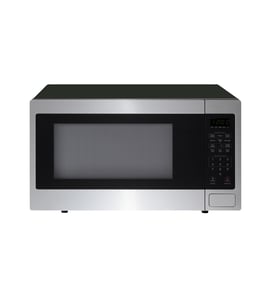



What is the most reliable countertop microwave?
If you want the most reliable countertop microwave, we recommend choosing a proven, mainstream model from a brand with a long track record and then matching the size and features to how you actually cook. For a GE countertop microwave like model JES1657DM1WW, reliability also depends on correct placement, ventilation, and everyday use habits; see the JES1657DM1WW owner's manual for the setup and safety basics.
What “reliable” means for a countertop microwave
Reliability usually comes down to consistent heating, durable door and latch operation, and fewer electrical failures over time.
Common reliability indicators we see:
- Even heating results across different foods and container types
- A door that closes smoothly and latches firmly every time
- A turntable system that rotates without slipping or wobbling
- Controls that respond consistently (no intermittent keypad issues)
- No repeated fuse trips or sudden loss of power
Practical buying checklist (what to prioritize)
When comparing countertop microwaves, we focus on these factors first:
- Right capacity for your dishes (common range: about 1.1 to 1.6 cu. ft.)
- Power output that fits your cooking style (common range: about 900 to 1200 watts)
- Simple controls if you want fewer “extra” features to maintain
- Turntable design that is easy to clean and replace if damaged
- Clearance and placement so the unit is stable and vents properly
Quick comparison table
| What you care about | What to look for | Why it helps reliability |
|---|---|---|
| Even heating | Inverter-style power control or strong sensor cooking | Reduces hot spots and overcooking stress |
| Long-term durability | Fewer complex features, solid door feel | Less to fail over time |
| Easy upkeep | Smooth interior, easy-to-remove turntable parts | Cleaning prevents arcing and odors |
Why it matters for JES1657DM1WW owners
Even a reliable microwave can have problems if it is used or positioned unsafely. For example, GE’s guidance includes placing the front of the door at least 3 inches back from the countertop edge to reduce tipping risk. Following the cookware and foil rules also helps prevent arcing and burn marks.
If your current unit is otherwise working well but the turntable system is worn, replacing common wear items can restore smooth operation:
For heating-performance concerns, use our troubleshooting steps in why is my microwave not heating.
Last updated: February 2026
What is the average life of a countertop microwave?
Most countertop microwaves, including the GE JES1657DM1WW, typically last 7 to 10 years with normal household use. Lifespan drops fastest when the oven is run empty, overheated repeatedly, or used with unsafe items; good cleaning and proper use help it reach the high end of that range.
Typical lifespan and what changes it
A microwave’s life is mainly driven by heat stress on internal components (especially when airflow is restricted or the unit is operated incorrectly).
- Normal use: 7 to 10 years
- Heavy daily use: often closer to 5 to 7 years
- Poor use habits: can shorten life quickly (for example, running with no food inside)
- Good care: keeps performance steady longer (clean cavity, clear vents, correct cookware)
Signs it is near end of life
If you see these symptoms repeatedly, repair vs. replace becomes a practical decision.
- Food heats slowly or unevenly
- Sparking/arcing inside the cavity
- Loud buzzing, grinding, or rattling that is new
- Keypad or controls become intermittent
- Turntable stops rotating (check the coupler, ring, and tray)
Quick care tips that extend life
The GE manual specifically warns that operating with no food inside can overheat components and shorten the oven’s life.
- Do not run the microwave empty; always heat food or a microwave-safe cup of water
- Keep the air vents clear and do not store items on top while operating
- Wipe spills promptly to prevent burned-on residue and odors
- Use microwave-safe containers; avoid metal and foil contact
- If the turntable binds, inspect and clean the turntable support parts
Common turntable parts (when rotation issues affect usability)
| What you notice | Likely area to check | Example part for JES1657DM1WW |
|---|---|---|
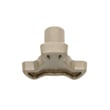
| Tray wobbles or slips | Drive connection | Coupler WB06X10861 |
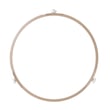
| Tray drags or squeaks | Support ring/rollers | Rotating ring WB06X10862 |
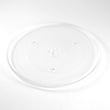
| Tray is chipped or broken | Glass tray | Microwave glass turntable tray WB39X10032 |
Why it matters
A microwave that is overheating, arcing, or heating poorly can waste time and stress internal components. Following the safety and use guidance in the owner's manual helps protect performance and maximize the expected 7 to 10 year service life.
Last updated: February 2026
Are GE countertop microwaves good?
Yes. GE countertop microwaves like model JES1657DM1WW are a solid choice for everyday reheating and cooking because they are designed for straightforward operation, common convenience features, and routine maintenance. For the best experience, follow the safety, placement, and cleaning guidance in the JES1657DM1WW owner's manual.
What “good” means for a countertop microwave
A good countertop microwave consistently heats, runs quietly, and holds up with normal use. For GE countertop units, “good” also includes using the correct setup and care practices.
- Place the microwave so the front of the door is 3 inches or more back from the countertop edge to reduce tipping risk.
- Use only a properly grounded outlet (avoid adapters and loose outlets).
- Keep the cavity clean; baked-on grease can cause odors and uneven heating.
- Avoid abrasive cleaners and sharp tools on interior surfaces.
- Never use commercial oven cleaner inside the microwave.
Quick care checklist (helps performance and longevity)
Regular care is one of the biggest factors in whether a microwave feels “good” over time.
| Task | What to use | How often |
|---|---|---|
| Wipe interior | Mild soap and water or baking soda solution | Weekly or as needed |
| Clean door surfaces | Mild, nonabrasive soap and soft cloth | Weekly |
| Wash turntable parts | Warm, soapy water; dry fully | As spills happen |
| Check placement/venting space | Clear airflow around unit | Monthly |
Common “not good” symptoms and what they usually point to
If your microwave seems disappointing, the issue is often a specific failure or a simple maintenance problem.
- Runs but does not heat: heating circuit issue; use our why is my microwave not heating guide for troubleshooting.
- No power at all: blown fuse, door switch issue, or outlet problem.
- Loud grinding or turntable not rotating: worn turntable drive parts such as the coupler WB06X10861 or rotating ring WB06X10862.
- Tray wobble or poor rotation: damaged or incorrect tray; replace with microwave glass turntable tray WB39X10032 if needed.
Why it matters
A countertop microwave can perform well for years when it is placed safely, kept clean, and repaired with the correct GE replacement parts for JES1657DM1WW.
Last updated: February 2026
What are common problems with GE JES1657DM1WW microwaves?
Common problems with the GE JES1657DM1WW countertop microwave include “runs but won’t heat,” “won’t start,” turntable not rotating, unusual noises, sparking/arcing, and normal-looking symptoms that are actually expected (like steam around the door or a dull thump while running). Use the owner's manual troubleshooting and “things that are normal” guidance first.
Most common symptoms and what they usually point to
- Not heating: high-voltage system issue (magnetron, diode, capacitor) or a door interlock problem
- Won’t start or goes dead: door switches, blown fuse, or power supply issue (outlet, breaker)
- Turntable not turning: coupler, rotating ring, or glass tray not seated correctly
- Loud grinding or thumping: turntable support parts misaligned, debris under the tray, or a worn coupler
- Sparking/arcing: metal/foil use, food splatter, or damaged interior/waveguide area
Quick checks we recommend before replacing parts
- Power reset: unplug for 2 minutes, then plug back in.
- Outlet check: try a different outlet or circuit (the manual notes TV/radio interference can be reduced by using a different circuit).
- Door close test: open and close the door firmly; a mis-latched door can prevent cooking.
- Turntable seating: re-seat the tray and ring; clean crumbs under the tray.
- Stop sparking causes: remove any metal, clean splatter, and avoid foil.
Turntable parts that commonly fix rotation and noise
If the tray wobbles, slips, or stops, these model-compatible parts are the first place we look:
| Symptom | Likely turntable-area cause | Part to check |
|---|---|---|
| Tray won’t rotate | Stripped drive interface | Coupler WB06X10861 |
| Tray drags or chatters | Ring rollers dirty/worn | Rotating ring WB06X10862 |
| Tray rocks or doesn’t sit flat | Tray damaged or wrong fit | Microwave glass turntable tray WB39X10032 |
What’s normal (and not a failure)
The GE manual lists several normal behaviors, including:
- Steam or vapor escaping around the door
- Light reflection around the door or outer case
- Dimming oven light and blower sound changes at lower power levels
- A dull thumping sound while operating
Why it matters
Microwave “no heat” and “won’t start” symptoms can involve high voltage and door interlock safety circuits. Correctly identifying whether you have a normal condition, a turntable issue, or a heating circuit problem helps you avoid unnecessary parts and reduces safety risk.
For deeper symptom-based help, we use the steps in why is my microwave not heating when the unit runs but food stays cold.
Last updated: February 2026