Owner’s manual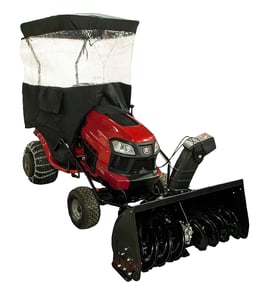


What is the life expectancy of a snowblower?
A typical snowblower lasts 10 to 20 years with normal residential use and regular maintenance. For the Craftsman 48624853 snow thrower attachment, lifespan depends most on off-season storage, lubrication, and replacing wear items before they damage larger components (see the 48624853 owner's manual).
Typical lifespan ranges
Most snowblowers and snow thrower attachments fall into these ranges:
| Type | Typical life expectancy | What usually ends life first |
|---|---|---|
| Gas snowblower (good maintenance) | 15 to 20 years | Engine wear, rusted housing, gearbox issues |
| Gas snowblower (minimal maintenance) | 8 to 12 years | Belts, bearings, corrosion, neglected lubrication |
| Electric snowblower | 5 to 10 years | Motor wear, switch/cable damage |
| Tractor-mounted attachment (like 48624853) | 10 to 20 years | Belts, shear bolts, bearings, scraper and skid wear |
What to do to reach the high end of the range
We see the longest life when owners treat the attachment like seasonal equipment and service it before storage.
- Inspect and lubricate per the maintenance schedule in the manual
- Keep engine speed high for throwing snow, but use a slow ground speed to reduce shock loads
- Adjust skid shoes so the scraper plate is not grinding into the surface
- Replace shear bolts immediately after they break (they protect the auger and gearbox)
- Store dry and covered to prevent rust in the housing, chute, and fasteners
Wear parts that commonly shorten lifespan
These parts are designed to wear first; replacing them early prevents expensive damage.
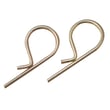
- Skid shoes: snowblower attachment skid shoe 24279BL1
- Shear bolts: snowblower shear bolt 42849
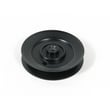
- Belts and pulleys (slipping belts overheat and wear faster)
Why it matters
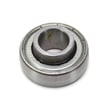
A snow thrower attachment can run for decades, but only if the “sacrificial” parts (shear bolts, skid shoes, scraper plate, belts, bearings) are kept in good shape. That prevents bent augers, damaged housings, and drivetrain failures.
Last updated: January 2026
How to read Craftsman snowblower serial number?
On the Craftsman snow thrower attachment model 48624853, the serial number is on the product identification decal attached to the snow thrower. Record the serial number and your purchase date so you can match the correct parts and hardware later.
Where to find the serial number decal
We look for the decal on the snow thrower attachment itself (not on the tractor). Use the diagrams and notes in the 48624853 owner's manual to confirm the decal location and the correct model identification.
- Check the snow thrower housing area where decals are commonly placed
- Wipe off packed snow, salt residue, and dirt so the numbers are readable
- Use a flashlight and take a photo for your records
- Write down both the model number and serial number exactly as shown
- Keep the information with your maintenance notes and receipts
How to read and use the serial number
We use the serial number mainly for identification and service history, while the model number is what drives parts lookup.
| What you have | What it’s used for | What to do with it |
|---|---|---|
| Model number (48624853) | Selecting the correct parts list and diagrams | Use it when searching parts and assemblies |
| Serial number (from the decal) | Identifying the specific unit and production run | Record it for reference when ordering or servicing |
| Date of purchase | Warranty and service reference | Record it with the serial number |
Why it matters
Using the correct model and serial information helps us match wear items and assemblies correctly, such as belts, pulleys, and auger components. For example, if you are replacing a belt, confirming the model helps ensure you choose the right size and routing parts like the auger drive belt 47846.
Last updated: January 2026
Are snowblower belts universal?
No. Snowblower belts are not universal; the correct belt depends on the exact belt length, width, and V-profile required by your Craftsman snow thrower attachment model 48624853. Using the wrong belt can slip, jump off pulleys, or fail quickly under load.
What “not universal” means for model 48624853
This attachment uses V-belts that must seat correctly in multiple pulleys. Our manual instructions call out correct routing details such as keeping the V side seated in the pulley grooves and twisting the belt 1/4 turn at specific points, which only works when the belt size and profile are correct (see 48624853 owner's manual).
- Match the belt by model, not by “looks close”
- Confirm belt width and length (even small differences matter)
- Confirm the belt profile (V-belt shape and angle)
- Replace belts that are glazed, cracked, stretched, or oil-soaked
- Recheck belt tension and routing after installation
Belts commonly used on this model
For Craftsman 48624853, we list model-matched belts such as:
| Belt purpose | Example part name | Example part ID |
|---|---|---|
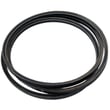
| Auger drive belt | Auger drive belt, 5/8 x 114-in | 47846 |
| Drive belt | Drive belt, 1/2 x 56-in | 48138 |
If you are replacing the auger belt, use the correct routing and 1/4-turn twist described in the manual and consider the model-matched agri-fab lawn tractor snowblower attachment auger drive belt, 5/8 x 114-in 47846.
Quick checks before you buy a “universal” belt
- The belt rides fully down in the pulley grooves (not on the rim)
- The belt does not bottom out in the groove (too narrow)
- The belt does not ride high and slip (too wide)
- The belt can be tensioned correctly without over-stretching
- The augers turn without squeal or burning rubber smell
Why it matters
A belt that is even slightly off-size changes tension and pulley contact. That reduces throwing performance and can contribute to problems like augers not turning (often caused by loose/broken V-belts or sheared shear bolts).
Last updated: January 2026
Can you put a snowblower attachment on a zero turn mower?
A Craftsman snow thrower attachment like model 48624853 is designed to mount to the front frame of a compatible lawn tractor using side plates, mounting plates, and an attachment pin system. Most zero-turn mowers use a different front-frame and lift design, so this attachment typically is not a direct fit without a model-specific mounting kit.
What compatibility depends on
To use a snow thrower attachment safely, the mower must support the same style of front mounting and belt routing described in the 48624853 owner's manual. Key fit factors include:
- Correct side plate and mounting plate locations on the tractor frame
- Ability to remove the mower deck and front attachments during installation
- Proper belt routing over the drive pulley and idler pulleys
- A lift mechanism that can raise the attachment and align mounting notches to shoulder bolts
- Adequate clearance for chute rotation and control cables
What we recommend for zero-turn owners
If you have a zero-turn mower, use this checklist before buying parts or attempting installation:
- Confirm your mower has a manufacturer-approved snowblower attachment option
- Verify there is a dedicated mounting bracket kit for your exact zero-turn model
- Compare the attachment connection style (pins, shoulder bolts, side plates) to your mower’s front frame
- Plan for deck removal and safe access to the front frame
- Make sure the mower has enough traction and stability for snow work (tires, weights, chains)
Quick comparison: lawn tractor vs. zero-turn (typical)
| Feature | Lawn tractor setup (typical for 48624853) | Zero-turn setup (typical) |
|---|---|---|
| Front mounting points | Side plates and mounting plates | Varies by brand, often different geometry |
| Lift method | Lift handle/cable style | Often dedicated lift kit or hydraulic option |
| Belt drive routing | Routed to pulleys and idlers | Often different PTO/belt path |
Why it matters
A snow thrower attachment relies on precise mounting alignment and correct belt seating in pulley grooves. If the frame brackets or lift geometry do not match, the attachment can bind, throw belts, or fail to lift and lock securely.
Last updated: January 2026