





What are common Briggs & Stratton engine problems?
Common problems on the Briggs 125K02-0500-E1 lawn and garden engine are no-start, hard starting, surging, stalling, and loss of power; most trace back to stale fuel, restricted airflow, or fuel delivery issues such as a clogged carburetor or cracked fuel line.
Most common symptoms and likely causes
- Won’t start: stale gas, fouled spark plug, clogged carburetor, sheared flywheel key
- Starts then dies: restricted fuel flow, dirty float bowl, sticking needle valve
- Surges or hunts: lean fuel mixture from varnish in carburetor, air leak at gasket
- Runs rough or lacks power: dirty air intake, fuel restriction, governor linkage/spring issue
- Fuel smell or leaks: cracked fuel line, loose clamps, leaking tank or carburetor bowl gasket
Quick checks we recommend (fast, low-cost)
- Drain old fuel and refill with fresh gasoline (use fuel stabilizer for storage).
- Inspect the fuel line for cracks, soft spots, or kinks; replace if questionable using the Briggs & statton fuel line (red) 791766.
- Check for carburetor seepage; a damaged bowl seal often points to the Briggs & stratton lawn & garden equipment engine carburetor float bowl gasket 693981.
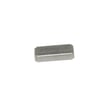
- If the engine backfires or the starter rope jerks, inspect the flywheel key; a partially sheared key can throw off timing (see Briggs & statton key 222698S).
- If the engine surges after sitting, the float and needle can stick; service the Briggs & stratton lawn & garden equipment engine carburetor needle valve 398188 and float.
Parts that commonly solve these issues
| Symptom | Part to inspect/replace | What it affects |
|---|---|---|
| Fuel leak, won’t stay running | Fuel line | Fuel delivery to carburetor |
| Fuel seepage at carb bowl | Float bowl gasket | Seals bowl to carb body |
| Flooding or fuel starvation | Needle valve and float | Controls fuel level in bowl |
| Kickback, no-start after impact | Flywheel key | Ignition timing reference |
Why it matters
Small engines like the Briggs 125K02-0500-E1 are sensitive to fuel quality and airflow. Fixing a minor fuel restriction or air leak early prevents hard starting, plug fouling, and repeated carburetor contamination.
Last updated: January 2026
How much oil does a Briggs & Stratton 125K02-0500-E1 take?
The Briggs 125K02-0500-E1 lawn and garden engine typically takes about 15 oz (0.44 L) of engine oil when filling from empty. For the most accurate fill, we add oil slowly and use the dipstick to confirm the level is at the full mark.
How to check and fill oil correctly
- Park the equipment on a level surface and let the engine cool.
- Remove the dipstick, wipe it clean, then reinsert fully.
- Pull it back out and read the level; add oil only if it is below full.
- Add oil in small amounts (about 1 to 2 oz at a time), then recheck.
- Do not overfill; too much oil can cause smoking, hard starting, and leaks.
What oil to use (typical for this engine type)
Most Briggs small 4-cycle lawn and garden engines run best on standard small-engine oil:
| Temperature range | Common oil choice |
|---|---|
| Above 40°F | SAE 30 |
| 0°F to 100°F | 10W-30 |
| Below 0°F | 5W-30 synthetic |
Quick capacity reference
Use this as a practical guide when you are refilling after a drain:
- From empty (dry fill): about 15 oz
- After a normal oil change: often slightly less than dry fill (some oil remains inside)
- If the engine was tipped: check oil level before starting; oil can migrate into the air intake
Why it matters
Oil capacity and oil level directly affect lubrication and engine temperature. Keeping the 125K02-0500-E1 at the correct level helps prevent premature wear on internal parts like the camshaft and connecting rod.
Related parts that can be affected by oil issues
If you see oil leaks or oil in the wrong place, these parts are commonly involved:
- Dipstick tube o-ring 692296 (oil seepage around the dipstick tube)
- Air cleaner gasket 795629 (oil mist or blow-by reaching the air box)
Last updated: January 2026
How to start Briggs & Stratton 125K02-0500-E1?
To start a Briggs 125K02-0500-E1 lawn and garden engine, we use fresh fuel, set the choke (if equipped), prime only if your carburetor has a primer bulb, then pull the recoil starter smoothly until it fires; once it starts, move the choke toward RUN as it warms up.
Quick start steps (most common setup)
- Move the equipment to a flat, well-ventilated outdoor area.
- Check engine oil level; low oil can prevent safe operation.
- Turn the fuel valve ON (if your tank has one).
- Set the throttle to FAST or START (if equipped).
- Set the choke to CHOKE (cold start).
- Prime 2 to 3 pushes only if your engine has a primer bulb.
- Pull the starter rope briskly; repeat until it starts.
- After it starts, gradually move choke toward RUN.
If it will not start: fast checks that fix most problems
These checks apply directly to the Briggs 125K02-0500-E1 and similar walk-behind mower style engines.
- Old fuel: Drain and refill with fresh gasoline; stale fuel is the top no-start cause.
- Flooded engine (gas smell, wet plug): Set choke OFF, hold throttle FAST, pull several times to clear.
- Fuel not reaching carburetor: Inspect the Briggs & statton fuel line (red) 791766 for cracks, kinks, or loose connections.
- Carburetor bowl leak or restriction: A damaged bowl gasket can cause hard starting; consider the Briggs & stratton lawn & garden equipment engine carburetor float bowl gasket 693981.
- Recoil will not pull or slips: A worn rope or starter can prevent a strong pull; check the Briggs & stratton lawn & garden equipment engine recoil starter rope 697316.
What “prime” and “choke” should look like
| Control | Cold engine | Warm engine | If flooded |
|---|---|---|---|
| Choke | ON/CHOKE | OFF/RUN | OFF/RUN |
| Primer bulb | 2 to 3 pushes (if equipped) | 0 to 1 push | 0 pushes |
| Pull technique | Brisk, full stroke | Brisk, full stroke | Several pulls to clear |
Why it matters
Correct choke and priming prevent flooding, reduce pull-start effort, and help the carburetor deliver the right fuel-air mix so the engine starts quickly and runs smoothly.
Last updated: January 2026
What spark plug for Briggs & Stratton 125K02-0500-E1?
For the Briggs 125K02-0500-E1 lawn and garden engine, the correct spark plug is the exact plug specified for your engine’s type and trim; the most reliable way to choose it is to match the plug currently installed (thread size, reach, and seat style) and set the gap to the spec for your engine family.
How we recommend identifying the correct plug
Use the plug you remove from the cylinder head as your “source of truth” for fit.
- Read the plug number printed on the ceramic insulator and stamped on the metal shell
- Match the seat type (gasket seat vs. taper seat)
- Match thread diameter/pitch and reach (threaded length)
- Match the terminal style (solid terminal vs. removable terminal nut)
- Set the gap to the engine’s specification (use a wire feeler gauge)
What to match (quick checklist)
| Item to match | What you check on the old plug | Why it matters |
|---|---|---|
| Seat style | Gasket or taper | Prevents compression leaks |
| Thread size | Diameter and pitch | Protects cylinder head threads |
| Reach | Threaded length | Prevents poor combustion or internal contact |
| Heat range | Same as original | Avoids fouling or overheating |
If you are chasing a hard-start or misfire
A new spark plug helps, but fuel and carburetion issues are just as common on small engines.
- Replace cracked or soft fuel hose; use the Briggs & statton fuel line (red) 791766
- If the bowl gasket seeps or the carb floods, replace the Briggs & stratton lawn & garden equipment engine carburetor float bowl gasket 693981
- If fuel flow is inconsistent, inspect the Briggs & stratton lawn & garden equipment engine carburetor needle valve 398188
Why it matters
Using the wrong reach or seat style can cause compression leaks, damaged threads, or poor ignition performance. Matching the original plug’s physical specs ensures proper sealing and reliable starting on the 125K02-0500-E1.
Last updated: January 2026