


What is the most common part to fail on a furnace?
Restricted airflow from a dirty air filter is the most common cause of a gas furnace shutdown, but the most commonly replaced parts are usually ignition and airflow components. On an Icp gas furnace model NUGK100DH03, frequent failures involve the blower system (motor, wheel, capacitor) or a safety switch that stops heat when conditions are unsafe.
Most common furnace failures (what we see most often)
- Clogged air filter causing overheating and a safety shutdown
- Blower problems: weak airflow, squealing, or no air movement
- Ignition/sensing issues: furnace tries to light, then shuts off
- Safety switch trips (door switch, pressure-type switch, rollout-type safety)
- Electrical issues: loose wiring, blown fuse, tripped breaker
Parts on NUGK100DH03 that commonly get replaced
If your furnace runs but airflow is weak or the blower will not start, these are the first parts we check on this model’s parts list:
- Capacitor 12907 (run capacitor for a motor circuit)
- Furnace blower fan motor 613209 (moves heated air through the ductwork)
- Furnace blower fan wheel 600587 (the wheel that actually pushes air)
- Switch 611872 (a safety or control switch that can prevent operation)
Quick symptom-to-part guide
| Symptom | Most likely area | Common next step |
|---|---|---|
| Furnace heats briefly, then shuts off | Airflow restriction or safety limit | Replace filter; check vents and blower airflow |
| Blower hums but will not spin | Capacitor or motor | Test capacitor; inspect motor |
| Loud rattling or vibration | Blower wheel | Inspect wheel for damage or looseness |
| No blower at all (but furnace has power) | Control/safety circuit | Check door switch, wiring, and control relay |
Why it matters
A furnace is designed to shut down when it cannot move enough air or when a safety circuit detects a problem. Fixing the root cause (often airflow) prevents repeat shutdowns and protects major components like the heat exchanger.
Last updated: February 2026
What is the most expensive part to fix on a furnace?
For an Icp gas furnace like model NUGK100DH03, the most expensive repair is typically a heat exchanger replacement because it is labor-intensive and tied to safe combustion. Among common serviceable parts, a blower motor or inducer (draft) motor assembly is often the priciest.
Most expensive furnace repairs (typical)
These are the repairs that usually drive the highest total cost (part plus labor):
- Heat exchanger: often the highest-cost repair due to disassembly and safety checks
- Inducer (draft) motor assembly: high part cost; affects venting and ignition
- Blower motor: high part cost; affects airflow and comfort
- Control board (if equipped): can be expensive and requires careful diagnosis
- Gas valve: moderate-to-high cost; must be set up and tested correctly
What that means for NUGK100DH03 parts on this page
On this model’s parts list, the highest-priced items are major motors. If you are comparing “most expensive part” strictly by part price, these are the usual top contenders:
| Component type | Example part on this model page | Why it gets expensive |
|---|---|---|
| Inducer/vent motor assembly | Furnace blower 1011350 | Critical for safe venting; larger assembly cost |
| Circulating blower motor | Furnace blower fan motor 613209 | High-horsepower motor; higher replacement cost |
Quick checks before replacing an expensive part
We recommend confirming the failure first; many “bad motor” symptoms are caused by simpler issues.
- Turn off power to the furnace before inspecting wiring or components
- Check the air filter and supply/return vents for restrictions (overheating can mimic motor problems)
- Inspect wiring connections for looseness, heat damage, or corrosion
- If the blower will not start, test the run capacitor (a common, lower-cost failure)
- If the inducer will not run, verify the pressure switch and venting are not blocked
Helpful DIY skill for diagnosis: how to use a multimeter to test electrical parts video
Why it matters
The “most expensive part” is not always the right part to replace first. Accurate diagnosis prevents repeat breakdowns, protects comfort and safety, and avoids spending on a motor or assembly when the real issue is a capacitor, switch, or wiring problem.
Last updated: February 2026
What are the most common furnace repairs?
The most common repairs on an Icp gas furnace like model NUGK100DH03 involve airflow problems (dirty filter or blower issues), ignition or flame-sensing problems, and electrical control failures. Many “no heat” calls trace back to a few serviceable parts and basic checks.
Most common repairs we see (and what they look like)
- Dirty air filter or blocked return vents: weak airflow, overheating shutdowns, short cycling.
- Flame sensor cleaning or replacement: furnace ignites then shuts off within seconds.
- Ignition problems (hot surface igniter or pilot system, depending on design): no flame, repeated tries.
- Blower motor or capacitor failure: no air movement, humming, intermittent starts.
- Inducer/vent motor issues: pressure switch errors, won’t start, loud draft motor.
- Control or relay problems: blower runs at the wrong time, won’t energize heat call.
Quick checks before replacing parts
- Set thermostat to Heat and raise the setpoint 3 to 5 degrees.
- Replace the furnace filter and open all supply registers.
- Check the furnace door switch is fully engaged and the access panel is seated.
- Verify the circuit breaker is on; if it trips again, stop and investigate wiring.
- If the blower will not start, test the run capacitor with a meter.
For safe electrical testing basics, use our guide how to use a multimeter to test electrical parts video.
Common parts involved on NUGK100DH03
| Symptom | Likely area | Example part on this model |
|---|---|---|
| Blower hums, won’t start | Run capacitor | Capacitor 12907 or capacitor 12910 |
| No airflow or noisy blower | Blower motor/wheel | Furnace blower fan motor 613209, furnace blower fan wheel 600587 |
| Draft/venting problems | Inducer assembly | Furnace blower 1011350 |
| Blower timing issues | Fan relay/control | Furnace fan control relay 1000742 |
Why it matters
Catching airflow, ignition, and control issues early prevents nuisance shutdowns, reduces strain on the blower and heat system, and helps avoid repeated limit trips that can shorten component life.
Last updated: February 2026
What are the parts of the furnace?
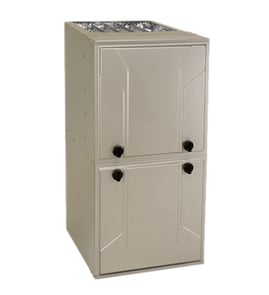
An Icp gas furnace like model NUGK100DH03 is built around a heat-making section (burners and heat exchanger) and an air-moving section (blower and controls). Common service parts include motors, capacitors, switches, relays, and burner components.
Main furnace components and what they do
- Burner assembly: mixes gas and air and lights to create heat
- Heat exchanger: transfers heat to the air without mixing combustion gases into your airflow
- Inducer (draft) motor: pulls combustion air in and pushes exhaust out through the vent
- Blower (circulating) motor and wheel: moves heated air through ductwork
- Ignition system: ignitor and flame-sensing components that prove safe ignition
- Controls and safeties: relays, switches, and sensors that manage operation and shut the furnace down if unsafe
Parts you may see listed for NUGK100DH03
These are examples of real replacement parts commonly tied to airflow and control issues:
| Part type | What it affects | Example part on this model |
|---|---|---|
| Run capacitor | Helps a motor start and run smoothly | Capacitor 12907 |
| Blower motor | Airflow through vents | Furnace blower fan motor 613209 |
| Fan control relay | Turns blower on and off at the right time | Furnace fan control relay 1000742 |
| Blower wheel | Air movement and noise/vibration | Furnace blower fan wheel 600587 |
| Switch | Safety or operational control input | Switch 611872 |
Why it matters
Knowing the major furnace parts helps you troubleshoot symptoms faster. For example, weak airflow often points to the blower motor, blower wheel, or a failing capacitor, while no-heat problems can involve burner and safety controls.
Quick safety note before checking parts
- Turn off electrical power at the furnace switch or breaker
- Shut off the gas supply valve if you are opening the burner compartment
- Let the furnace cool before touching internal components
- Take a photo of wiring connections before removing any electrical part
Last updated: February 2026