Owner’s manual
 View engine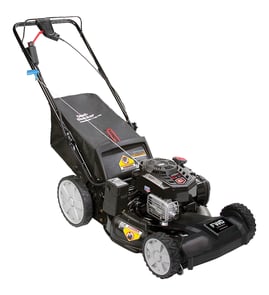





Are gas lawn mowers being phased out?
Gas walk-behind mowers like the Jonsered 967957301-00 are not being phased out everywhere at once, but the market is steadily shifting toward battery-electric equipment due to emissions and noise concerns. Your existing gas mower can still be used, maintained, and repaired with normal service and replacement parts.
What this means for Jonsered 967957301-00 owners
Even where new gas equipment sales are restricted, owners typically keep using and servicing existing mowers. For the 967957301-00, the practical focus is safe operation, routine maintenance, and replacing wear items when performance drops.
- Check engine oil level regularly; change oil on schedule.
- Use fresh unleaded gasoline (minimum 87 octane) and avoid long fuel storage.
- Keep the blade sharp and the underside of the deck clean.
- Inspect the drive system if self-propel speed feels slow.
- Record the model and serial number from the mower housing decal for accurate parts matching.
For model-specific safety rules, fuel handling, and maintenance intervals, use the 967957301-00 operator’s manual.
Why gas mowers are declining (general trends)
The shift is mostly about convenience and policy, not because gas mowers stop working or become unserviceable.
| Topic | Gas mower (like 967957301-00) | Battery mower |
|---|---|---|
| Upkeep | Oil changes, fuel system care | Battery care, fewer engine services |
| Runtime | Quick refuel | Limited by battery capacity, recharge time |
| Noise and emissions | Higher | Lower |
| Repair approach | Many mechanical parts are serviceable | Electronics and batteries can be costlier |
Parts support example: bagging components
If you need to restore bagging performance on this model, the listed replacement grass bag assembly is grass bag as 587100402 (part number 587100417). If the bag fits but won’t hold shape, also inspect the bag frame and mounting points.
Why it matters
Knowing the direction of the market helps you decide whether to invest in maintenance. For the Jonsered 967957301-00, routine service and timely replacement of wear parts are the best way to protect cut quality and extend mower life.
Last updated: January 2026
Should I use 87 or 89 gas for lawn mower?
For the Jonsered model 967957301-00, we recommend using fresh, clean regular unleaded gasoline with a minimum of 87 octane. Using 89 octane is fine, but it is not required for normal operation on this mower; do not mix oil with the gasoline (see the 967957301-00 operator’s manual).
What to use (and what to avoid)
- Use: Regular unleaded gasoline, 87 octane minimum
- OK to use: 89 octane (no harm, just typically no added benefit)
- Do not use: Old or contaminated fuel
- Do not do: Mix oil into the gas (this is not a 2-cycle fuel mix)
- Avoid for storage: Fuel that will sit longer than about 30 days without stabilizer
Quick comparison: 87 vs 89 for this mower
| Fuel choice | Works in 967957301-00? | When it makes sense |
|---|---|---|
| 87 octane (regular) | Yes | Everyday mowing; what the manual calls for (minimum 87) |
| 89 octane (mid-grade) | Yes | If it is what you already have; no special benefit expected |
Fuel freshness and storage tips
If you want fewer starting and running issues, fuel handling matters as much as octane.
- Buy only what you can use in about 30 days
- Store fuel in an approved container and keep it sealed
- Let the engine cool before refueling
- For storage, either drain the tank or use fuel stabilizer and run the engine briefly so treated fuel reaches the carburetor
Why it matters
Using the correct octane and, more importantly, fresh fuel helps prevent hard starting, rough running, and fuel-system deposits. It also supports consistent power when the engine is under load.
Last updated: January 2026
What are the most common issues with 967957301-00?
The most common problems we see on the Jonsered 967957301-00 gas lawn mower are drive and wheel issues (self-propel not pulling), poor cutting or vibration, and bagging or discharge problems. Most fixes start with a quick safety check, cleaning, and inspecting the blade, drive parts, and controls listed in the owner's manual.
Common symptoms and what usually causes them
- Mower will not self-propel or slips: worn or damaged drive control parts, loose linkage, or transmission-related wear (check the drive control and pulleys).
- Hard to pull back or wheels drag: wheel debris buildup, damaged wheel hardware, or missing retainers.
- Poor cut quality or heavy vibration: bent, loose, or damaged blade; debris packed under the deck; loose fasteners.
- Clumping or poor bagging: clogged deck, damaged baffles, or a worn/warped bag frame.
- Control bar issues (engine won’t stay running): bail/control bar not engaging properly or cable problems.
Quick checks we recommend first (before replacing parts)
- Shut off engine, disconnect the spark plug wire, and tip the mower safely (air filter and carburetor side up).
- Clean packed grass from the underside of the deck and around the discharge opening.
- Inspect the blade for bends, cracks, and tight mounting.
- Check that the drive control engages smoothly and returns freely.
- Verify wheel height adjusters match side-to-side so the deck sits level.
Parts on this model that often relate to these issues
| Symptom | Part to inspect | Example part on this model |
|---|---|---|
| Vibration, poor cut | Blade and blade mounting hardware | Blade.21.rea 586859604, lawn mower nut 532409149 |
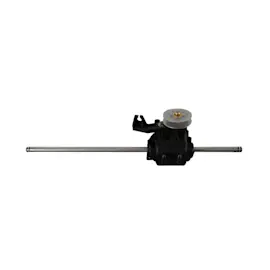
| Weak or no self-propel | Drive control and drive system | Lawn mower drive control assembly 589813207, lawn mower drive pulley 586963002, lawn mower idler pulley 587973001 |
| Bagging problems | Bag and airflow components | Husqvarna lawn mower grass bag frame 586929102, grass bag as 587100402 |
Why it matters
Catching wear early prevents bigger failures like damaged transmission components, uneven cutting, and excessive vibration that can loosen hardware and shorten the life of the deck and drive system.
Last updated: March 2026