Owner’s manual
 Error Codes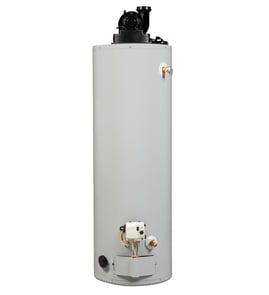



How to tell year of water heater by serial number?
For Kenmore model 153331360, the year is determined by decoding the serial number on the rating plate (typically on the tank). We use the decoding format shown in the 153331360 owner's manual to match the serial number pattern to a manufacture date.
Look for the rating plate label on the water heater jacket.
- Check the side of the tank near the gas control valve/thermostat area
- Look for a label that lists model number, serial number, and gas type
- Write the serial number exactly as shown (include letters and dashes)
- Take a clear photo before you start any service work
Kenmore water heaters can use different serial formats depending on the manufacturer that built the unit. These are the most common patterns you will see:
- YYWW: first 2 digits are the year, next 2 are the week (example: 1220 = week 20 of 2012)
- MMYY: first 2 digits are the month, next 2 are the year (example: 0915 = September 2015)
- Letter + numbers: a letter may represent the month, followed by a year code
| What you see in the serial | What it often means | Example result |
|---|---|---|
| 4 digits at the start | Week/year or month/year | “1220” = 2012 week 20 |
| Starts with a letter | Month code + year code | “A15…” = month A, year 2015 |
| Long numeric string | Manufacturer-specific | Use the manual’s chart |
Knowing the manufacture year helps us choose the right replacement parts (like a gas control valve, flame sensor, or anode rod) and it also helps you plan maintenance such as tank flushing and anode inspection.
If you are calling for parts or service, have these ready:
- Model number (153331360)
- Serial number
- Gas type (natural gas or propane)
Last updated: January 2026
What is the life expectancy of a Kenmore water heater?
Most Kenmore gas water heaters, including model 153331360, typically last 8 to 12 years with normal household use and routine maintenance. Water quality, temperature setting, and maintenance items like flushing and anode-rod replacement have the biggest impact on how long the tank lasts.
- Water hardness and sediment: more buildup means more stress on the tank and burner.
- Temperature setting: higher settings accelerate wear and mineral scaling.
- Maintenance frequency: periodic draining and inspection helps prevent premature failure.
- Anode rod condition: a depleted anode rod speeds up tank corrosion.
- Venting and combustion health: poor draft or burner issues can reduce efficiency and reliability.
We recommend using the maintenance schedule and safety steps in the 153331360 owner's manual. Practical upkeep usually includes:
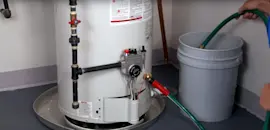
- Drain a few gallons periodically to reduce sediment.
- Test the temperature and pressure relief valve for proper operation.
- Inspect for moisture around fittings, the burner access area, and the base of the tank.
- Check the flame appearance and keep the burner area clean.
- Replace the anode rod when it is heavily worn (a common life-extending repair).
| Maintenance item | What it protects | Example part for this model |
|---|---|---|
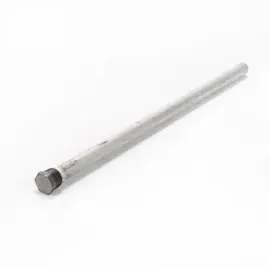
| Anode rod replacement | Tank from internal corrosion | Water heater anode rod 100109594 |
- The tank is leaking from the body of the heater (not a fitting).
- Hot water output keeps dropping even after basic maintenance.
- Repeated ignition or burner-related problems occur.
- The unit is past the 10-year mark and repairs are becoming frequent.
A water heater near end-of-life can still run, but efficiency and reliability typically drop. Staying ahead of sediment and corrosion helps protect the tank, reduces “no hot water” surprises, and can delay a full replacement.
Last updated: January 2026
How do I read my water heater model number?
For Kenmore gas water heater model 153331360, use the rating plate on the tank to find the model number and serial number; those are the two identifiers we use for parts lookup and service. The other data (like BTU input) is helpful for technicians but not required to identify your unit.
Look for the rating plate sticker on the tank jacket (often on the side near the gas control area). In the manual, the rating plate is called out as a labeled component.
- Check the tank’s side for a rectangular label with printed text
- Look for fields labeled Model No. and Serial No.
- Write the model number exactly as shown: 153331360
- Take a clear photo of the label before ordering parts
- If the label is worn, use a flashlight and read at an angle to reduce glare
Reference: 153331360 owner's manual
The model number identifies the exact design family so we can match parts like the gas control valve, burner components, and safety sensors.
| Label item | What we use it for | Example on your unit |
|---|---|---|
| Model number | Correct parts and diagrams | 153331360 |
| Serial number | Production date tracking and service history | Varies |
| Capacity | Confirms tank size | 40 or 50 U.S. gal (varies by model listing) |
| BTU/hr input | Sizing and combustion specs | Varies |
Using the exact model number prevents ordering the wrong gas valve, igniter, or manifold door parts, which can cause fit issues and unsafe operation.
When you contact service or order parts, have these ready:
- Model number: 153331360
- Serial number (from the same rating plate)
- Gas type (natural gas or propane)
- Part name you need (example: water heater gas control valve 100112652)
Last updated: January 2026
What is the most common problem with a gas hot water heater?
The most common gas water heater problem is loss of heat because the burner does not ignite or stay lit (often tied to ignition/flame-sensing and air/venting conditions). On Kenmore model 153331360, also watch for combustion issues like sooting and normal-to-excessive condensation symptoms described in the 153331360 owner's manual.
- Ignition or flame-sensing trouble: burner will not light, lights then shuts down, or you get repeated attempts to ignite.
- Airflow or venting problems: weak combustion, burner shutdowns, or error indications; the manual notes many failures trace back to installation and ventilation issues.
- Sooting (combustion not correct): black soot around the burner area; the manual says sooting is not normal and needs correction before further use.
- Sediment and scale in the tank: popping or rumbling during heat-up and reduced hot-water output.
- Gas control/thermostat issues: water stays lukewarm, temperature swings, or the burner cycles oddly.
- Confirm the heater is full of water before operating; water should flow steadily from a hot faucet before gas is turned on.
- Look through the burner view area for flame quality: a steady soft blue flame is typical; lazy yellow flame points to combustion/air issues.
- Check for sooting; if present, keep the unit off until the cause is corrected.
- Verify venting is attached and secured and that combustion air openings are not blocked.
- If you have an LED flash code, match it to the diagnostic chart in the Kenmore gas water heater error codes.
| Symptom | Likely cause | What to check first |
|---|---|---|
| No hot water | Ignition/flame-sensing issue | Flame quality, wiring, error code flashes |
| Burner lights then shuts off | Flame not proven | Consider the flame sensor 100112678 if cleaning/reseating does not help |
| Water around heater | Condensation or a fitting/valve leak | Relief valve discharge, anode fitting, vent drainage |
| Popping/sizzling | Normal expansion or condensation | Compare to manual “strange sounds/condensation” notes |
Combustion and venting problems can create unsafe operation (sooting, poor combustion) and also cause nuisance shutdowns that leave you without hot water. Keeping temperature set appropriately also reduces scald risk; the manual warns that water over 125°F can cause severe burns.
Last updated: January 2026