
What does tpi mean for reciprocating saw blades?
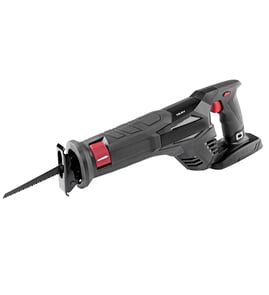
TPI means teeth per inch on a reciprocating saw blade. For your Craftsman 31510703 sabre saw, TPI mainly controls how fast the blade cuts and how smooth the cut looks: lower TPI cuts faster and rougher, higher TPI cuts slower and cleaner.
How TPI affects the cut
- Low TPI (about 4 to 8): aggressive, fast cutting; rougher finish
- Medium TPI (about 10 to 14): balanced speed and finish for general-purpose work
- High TPI (about 18 to 24): slower cutting; smoother finish and better control on thinner material
- Variable TPI: tooth spacing changes along the blade to reduce vibration and improve performance across mixed materials
Quick TPI guide by material
| Material you are cutting | Typical TPI range | What you get |
|---|---|---|
| Wood (demolition, pruning) | 4 to 8 | Fast cuts, rough edges |
| Wood with nails (demo blades) | 6 to 10 (often variable) | Better durability in mixed material |
| Metal pipe, angle iron | 14 to 24 | Cleaner cuts, less snagging |
| Thin sheet metal | 18 to 24 | Smoother cut, less tearing |
| Plastic, PVC | 10 to 18 | Less chipping and grabbing |
Choosing the right blade beyond TPI
TPI is important, but blade design matters just as much for performance and safety.
- Match the blade material (bi-metal, carbide-tipped) to what you cut most
- Use the right blade length so teeth stay engaged through the full stroke
- Pick the right tooth style (demo, metal-cutting, pruning) for the job
- Let the saw do the work; excessive force bends blades and increases vibration
- Replace blades when teeth look rounded or the cut starts wandering
Why it matters
Using the right TPI helps your Craftsman 31510703 cut faster, track straighter, and reduce kickback, overheating, and premature blade wear, especially when switching between wood, metal, and nail-embedded lumber.
For help finding the correct model number when ordering parts or looking up diagrams, use how to find your appliance model number (and what it means for parts).
Last updated: February 2026
Is there a difference between a reciprocating saw and a sawzall?
A Sawzall is Milwaukee’s trademarked name for a reciprocating saw; “reciprocating saw” is the generic tool type. Your Craftsman 31510703 is a reciprocating (sabre) saw, and people often use “Sawzall” the way they use a brand name to describe the whole category.
What the terms mean
- Reciprocating saw: The general name for a saw that cuts with a blade moving back and forth (reciprocating motion).
- Sawzall: A brand name Milwaukee uses for its reciprocating saw line.
- Sabre saw: Another common term used for a reciprocating saw (especially in parts listings and older documentation).
Practical differences you might notice in the real world
Even though the tool type is the same, people sometimes use “Sawzall” to imply a certain style or use case:
- Heavier-duty demolition work (framing, nails, pruning)
- Larger, more powerful corded models (common on jobsites)
- More vibration control features on some pro-grade tools
- Wider blade selection marketed for “Sawzall” use (but blades are generally interchangeable by shank style)
Quick comparison
| Term you hear | What it actually is | What to check before buying blades/parts |
|---|---|---|
| Reciprocating saw | Generic tool category | Blade shank style, length, TPI, material |
| Sawzall | Milwaukee brand name for a reciprocating saw | Same checks; brand name does not guarantee fit |
| Sabre saw | Another name for reciprocating saw | Same checks; confirm clamp style |
Why it matters
Using the correct generic term helps you match the right blade type, stroke length expectations, and clamp/shoe style when troubleshooting performance on a Craftsman 31510703. For electrical issues (no power, intermittent running), testing the cord, switch, and internal wiring is the fastest path to a correct repair.
Helpful DIY reference
For diagnosing power and wiring problems safely, we recommend: how to use a multimeter to test electrical parts video.
Last updated: February 2026
What should you not do with a reciprocating saw?
You should not use your Craftsman 31510703 reciprocating (sabre) saw in ways that increase kickback, blade breakage, or loss of control. Avoid forcing the cut, running the tool with damaged parts, or cutting materials you cannot secure and support.
Don’ts that prevent injuries and tool damage
- Don’t use a dull, bent, cracked, or wrong-type blade for the material (wood, metal, demolition).
- Don’t start a cut with the blade already touching the workpiece; start the motor first, then ease into the cut.
- Don’t force the saw; if it stalls or chatters, back off and let the blade do the work.
- Don’t cut without securing the workpiece; clamp it so it cannot shift, pinch the blade, or fall.
- Don’t cut into unknown areas (walls, floors, cabinets) without checking for wiring, plumbing, or fasteners.
- Don’t operate with loose screws, a damaged shoe/base, a sticking trigger, or a frayed power cord.
- Don’t remove or defeat safety features; keep guards and covers in place.
Quick safety checklist before you cut
- Unplug the corded saw (or remove the battery on cordless models) before changing blades or adjusting the shoe.
- Use eye protection and hearing protection; add gloves when handling blades.
- Keep two hands on the tool when possible; keep your body out of the blade line.
- Support long stock on both sides of the cut to reduce binding.
Common “bad cut” symptoms and what they usually mean
| Symptom | Most common cause | What to do |
|---|---|---|
| Blade keeps bending | Forcing the cut, wrong blade | Use the correct blade and reduce pressure |
| Heavy vibration | Loose blade clamp, worn blade | Reseat blade, replace blade |
| Saw stalls | Material too thick, blade pinched | Reposition support, change blade |
| Rough, wandering cut | Dull blade, shoe not braced | Replace blade, keep shoe firmly against work |
Why it matters
A reciprocating saw is designed for aggressive cutting, but it is safest and most accurate when the blade is sharp, the work is clamped, and the shoe is braced against the material. These habits reduce kickback, overheating, and premature wear on the motor and blade clamp.
For general DIY safety practices, we recommend reviewing are diy appliance repairs safe.
Last updated: February 2026
Are all reciprocating saw blades universal?
No. Reciprocating saw blades are not all universal, even on a Craftsman 31510703 sabre saw. Many blades share common shank styles, but the blade shank type, length, thickness, and tooth pattern must match your saw’s clamp and the material you’re cutting.
What “universal” usually means for reciprocating saw blades
Most compatibility comes down to the shank (the part that locks into the saw). In practice, “universal” often means the blade fits many saws that use a common shank style, but it does not guarantee a perfect fit or best performance.
Common reasons a blade is not interchangeable:
- The shank style does not match the saw’s blade clamp (for example, different tang shapes).
- The blade is too thick for the clamp to lock securely.
- The blade is too long for the cut you’re making (or it flexes excessively).
- The tooth pattern is wrong for the material (wood vs metal vs demolition).
- The blade is designed for a specialty application (flush cut, pruning, carbide grit).
Quick blade selection guide (what to match)
Use this as a practical checklist for your Craftsman 31510703:
| What to match | What to look for | Why it matters |
|---|---|---|
| Shank type | Same shank profile as your current blade | Ensures the clamp locks safely |
| Blade length | Typically 4 to 12 inches | Controls reach and stability |
| TPI (teeth per inch) | Lower for wood, higher for metal | Affects speed and cut quality |
| Blade material | Bi-metal, carbide, high-carbon | Impacts durability and heat resistance |
How we recommend confirming blade fit on model 31510703
- Remove the current blade and compare shank shape to the new blade.
- Insert the new blade fully and tug-test it (unplugged tool) to confirm it locks.
- Verify the blade clears the shoe and does not bind through the full stroke.
- Choose a blade length that keeps the shoe supported on the workpiece.
- Match TPI to the material to reduce overheating and premature dulling.
Why it matters
Using the wrong blade can cause poor cutting, excessive vibration, blade breakage, or a blade that will not lock securely in the clamp. Matching the shank and choosing the right TPI and blade length protects the saw and improves cut control.
For help identifying the exact model number before ordering parts or accessories, use how to find your appliance model number (and what it means for parts).
Last updated: February 2026
Can a reciprocating saw cut a 2x4?
Yes, a reciprocating saw can cut a standard 2x4. For the Craftsman model 31510703 specifically, it is a sabre saw (jig saw style), not a reciprocating saw; it can still cut a 2x4, but it is slower and best for controlled cuts rather than demolition.
What to use for the cleanest cut
- Reciprocating saw: fastest for rough cuts and demolition; least precise.
- Jig saw (Craftsman 31510703): controlled cutting; slower in thick lumber.
- Circular saw: best all-around for straight, square 2x4 cuts.
- Miter saw: best for repeatable, perfectly square crosscuts.
Blade choice and technique (works for a 2x4)
- Use a wood-cutting blade; choose coarser teeth for speed, finer teeth for a cleaner edge.
- Clamp the 2x4 so it cannot vibrate or pinch the blade.
- Start at a slower speed to establish the cut line, then increase speed.
- Keep the saw’s base/shoe flat on the wood (or the jig saw’s shoe fully supported) to reduce chatter.
- Let the blade do the work; pushing hard causes wandering and bent blades.
Quick comparison
| Tool | Speed on a 2x4 | Cut quality | Best use |
|---|---|---|---|
| Reciprocating saw | Fast | Rough | Demolition, rough framing |
| Jig saw (31510703) | Medium to slow | Fair to good | Controlled cuts, notching |
| Circular saw | Fast | Good | Straight cuts |
| Miter saw | Fast | Excellent | Square crosscuts |
Why it matters
Using the right saw and blade reduces splintering, binding, and crooked cuts. If you are trying to build anything that needs tight joints, a circular saw or miter saw saves time and rework.
For general DIY safety practices before inspecting or repairing any power tool, use are diy appliance repairs safe.
Last updated: February 2026