Error Codes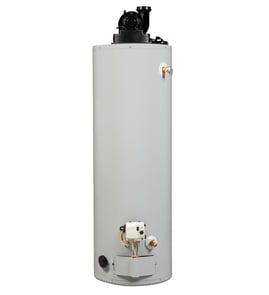

What is the average cost of a 50 gallon gas water heater?
A 50-gallon gas water heater typically costs $600 to $2,000+ for the unit, and $1,000 to $3,000+ installed once you include labor and common installation materials. For an Ao Smith GPVH50100, total cost often trends higher if it uses power venting or higher-efficiency components.
What drives the price up or down
- Venting type: standard atmospheric vent units usually cost less than power-vent models.
- Efficiency level: higher efficiency generally costs more up front.
- Warranty length: longer warranties often mean a higher purchase price.
- Installation complexity: tight spaces, code upgrades, or venting changes add labor.
- Local labor rates: installation pricing varies widely by region.
Typical cost ranges (quick guide)
| Type of 50-gallon gas water heater | Typical unit cost | Typical installed cost |
|---|---|---|
| Standard (atmospheric vent) | $600 to $1,100 | $1,000 to $2,200 |
| Power vent / high-efficiency | $1,100 to $2,000+ | $1,800 to $3,000+ |
Parts that can affect repair vs. replace decisions
If your GPVH50100 is leaking, not heating, or having ignition/venting issues, comparing repair cost to replacement cost helps. These model-matched parts are common cost drivers:
- Water heater exhaust vent blower assembly 100109785 (power-vent systems)
- Water heater burner igniter assembly 100110771 (ignition and burner lighting)
- Water heater temperature and pressure relief valve 100108279 (safety valve)
- Drain valve 100263839 (draining and service)
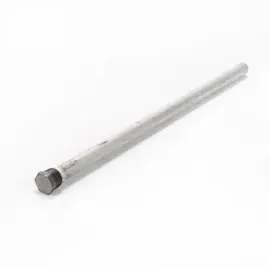
- Anode 33 in 100108260 (tank corrosion protection)
Why it matters
A “cheap” unit can become expensive if installation requires venting changes or if the old heater has failing components (like an igniter or blower). Knowing the installed range helps you budget realistically and decide whether a targeted repair makes more sense.
Last updated: February 2026
What is the average labor cost to install a 50 gallon electric water heater?
Labor to install a 50-gallon electric water heater typically runs $200 to $600 for a straightforward replacement. Costs rise when permits, tight access, new shutoff valves, or electrical upgrades are needed. Ao Smith model GPVH50100 is a gas water heater, but the same labor cost drivers apply to most tank swaps.
Typical labor-only price ranges
| Install situation | What usually changes | Typical labor range |
|---|---|---|
| Basic replacement | Reuse existing wiring and plumbing connections | $200 to $600 |
| Replacement plus updates | Minor plumbing changes, new shutoff, expansion tank, bonding | $500 to $1,000 |
| Complex install | Panel work, relocation, major re-pipe, difficult access | $1,000+ |
What affects labor cost the most
- Permit and inspection requirements
- Electrical updates (breaker size, wire gauge, disconnect)
- Plumbing corrections (shutoff valve, dielectric fittings, expansion tank)
- Access and location (attic, crawlspace, tight closet, stairs)
- Old tank removal and disposal
- After-hours or emergency scheduling
Planning tips before you book an installer
- Confirm the heater’s electrical requirements (voltage and amperage) before purchase.
- Ask for an itemized quote that separates labor, permit fees, and disposal.
- Plan on 2 to 3 hours for a basic swap; code updates add time.
- If you are also pricing a gas-water-heater install for Ao Smith GPVH50100, labor can increase for venting and combustion-air work; on some systems, components like the water heater exhaust vent blower assembly 100109785 are part of the power-vent setup.
Why it matters
Most cost surprises come from code compliance and access, not tank size. Defining the scope up front helps control labor charges and supports safe operation.
Last updated: February 2026
What is the life expectancy of an A. O. Smith gas water heater?
Most A. O. Smith gas tank water heaters, including model GPVH50100, typically last 8 to 12 years. With consistent maintenance and good water quality, it’s common to reach the upper end of that range; neglected maintenance and hard water usually shorten service life.
Typical lifespan and what changes it
A gas tank water heater’s lifespan is mainly driven by corrosion control, sediment buildup, and how hard the unit works.
- Water quality: hard water accelerates scale and sediment
- Maintenance: periodic flushing and anode checks extend tank life
- Temperature setting: higher temps increase stress and scale
- Usage: larger households cycle the burner more often
- Venting/combustion health: poor airflow can overheat components
Maintenance that most improves lifespan
These are the highest-impact steps we recommend for a GPVH50100-STYLE tank heater:
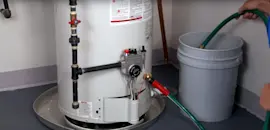
- Flush a few gallons from the tank periodically to reduce sediment
- Test the temperature and pressure relief valve for proper operation
- Inspect and replace the anode rod when it’s significantly depleted
- Keep the air intake area clean and unobstructed
- Address small leaks early (valves and fittings) before they cause damage
Helpful parts for common longevity-related fixes
| What you’re addressing | What it affects | Example part for GPVH50100 |
|---|---|---|
| Tank corrosion protection | Extends tank life | Anode 33 in 100108260 |
| Sediment draining and service | Easier maintenance | Drain valve 100263839 |
| Overpressure safety | Safe operation | Water heater temperature and pressure relief valve 100108279 |
| Restricted combustion air | Cleaner burn, less stress | Water heater air intake screen 100109216 |
Signs it’s near end of life
- Rust-colored water or metallic odor that returns quickly
- Water around the base of the tank (not just at a fitting)
- Rumbling or popping that persists after flushing
- Frequent pilot/ignition issues plus declining hot water performance
Why it matters
Once the tank itself starts leaking internally, replacement becomes the practical solution. Staying ahead of sediment and corrosion (especially by maintaining the anode rod) is the most reliable way to get the full expected lifespan from an A. O. Smith gas water heater.
Last updated: February 2026
What is the most common problem with gas water heaters?
The most common gas water heater problem is “no hot water” caused by ignition or flame-sensing issues (pilot/igniter, thermocouple-type sensing, or gas control problems). On Ao Smith model GPVH50100, heavy sediment buildup is also a frequent root cause because it reduces efficiency, shortens run time, and can create rumbling or popping noises.
Most common symptoms and what they usually mean
- No hot water: ignition system not lighting or not proving flame
- Water is warm but runs out fast: sediment insulating the burner heat transfer, or a damaged dip tube
- Rumbling, popping, or banging: sediment and scale in the tank bottom
- Sooting or poor combustion: restricted air intake or venting issues
- Water around the heater: leaking drain valve, fittings, or (worst case) tank leak
Quick checks we recommend first (safe, no disassembly)
- Confirm the gas shutoff valve is fully open and other gas appliances work.
- Check for error lights/codes on the control (if equipped) and note the pattern.
- Look for lint, dust, or blockage at the intake; clean the screen if dirty.
- Listen for the exhaust blower (power-vent models) during a call for heat.
- If you hear rumbling, plan a tank flush and consider anode maintenance.
Common causes and the parts that often solve them
| Problem | What you notice | Parts that commonly apply on GPVH50100 |
|---|---|---|
| Sediment buildup | Rumbling, reduced hot water | Anode 33 in 100108260 (helps slow corrosion and sediment-related issues) |
| Restricted combustion air | Sooting, shutdowns | Water heater air intake screen 100109216 |
| Ignition failure | No hot water, won’t light | Water heater burner igniter assembly 100110771 |
| Leaking at drain | Drips at drain outlet | Drain valve 100263839 |
| Venting/pressure switch issues (power vent) | Blower runs poorly or not at all | Water heater exhaust vent blower assembly 100109785 |
Why it matters
Gas water heater “common problems” usually trace back to combustion reliability (lighting and proving flame) or maintenance (sediment and corrosion control). Fixing the root cause restores hot water faster and helps protect the tank and gas components.
Last updated: February 2026