




What is the life expectancy of a KitchenAid wall oven?
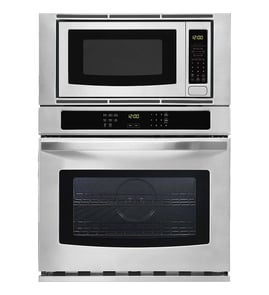
A KitchenAid wall oven typically lasts 10 to 15 years with normal household use and basic maintenance. For the KitchenAid KOCE500EBS20 built-in combo microwave wall oven, keeping airflow clear and addressing heating or door issues early helps you reach the upper end of that range.
Most electric wall ovens fall into a 10 to 15 year lifespan range; heavy use, high-heat cooking, and poor ventilation can shorten it.
- Usage frequency: daily baking and broiling wears components faster
- Heat management: blocked vents can overheat controls and wiring
- Cleaning habits: spills left to bake on can damage finishes and create hot spots
- Power quality: repeated breaker trips or surges can stress electronic controls
- Early repairs: replacing a failing part prevents secondary damage
When these parts fail, the oven may stop heating, trip breakers, or cook unevenly. Replacing them often restores full function.
| Symptom | Common part area | Example part for this model |
|---|---|---|
| Oven not heating or heats unevenly | Heating circuit | Range bake element W11545804 |
| Unit overheats or shuts down | Temperature safety | Range high-limit thermostat WP4449751 |
| Display or controls act erratically | Control electronics | Control panel W10588746 |
Knowing the expected lifespan helps you decide whether to repair or replace. If your KOCE500EBS20 is under about 10 years old, repairing a single failed component (like a bake element or thermostat) is often the most cost-effective path.
- Keep vents and surrounding cabinetry openings clear for cooling airflow
- Wipe up spills after the oven cools to prevent baked-on residue
- Avoid slamming the door; it stresses hinges and door alignment
- If you smell overheating or see repeated shutdowns, stop using it and inspect key components
- Use the correct bulb type when replacing the oven light (wrong wattage can add heat)
Last updated: January 2026
Are KitchenAid wall ovens good?
KitchenAid wall ovens, including the KitchenAid KOCE500EBS20 built-in combo microwave wall oven, are typically a strong choice for design, cooking performance, and everyday usability. Most owners value even baking and convenient features, while the most common complaints involve preheat speed and occasional temperature calibration needs.
When customers call a wall oven “good,” they usually mean it performs consistently and is easy to live with. For KitchenAid wall ovens and combo units, these are the most common strengths:
- Even baking and roasting results (especially when convection is used)
- Solid fit and finish, including stainless styling and premium look
- Useful rack and cavity features that improve access and visibility
- Straightforward controls once you learn the modes
- Good long-term parts support for common wear items
A few issues come up more often than others. Here is what to watch for and what typically fixes it.
| What you notice | What it often points to | What to do next |
|---|---|---|
| Slow preheating | Normal for some electric wall ovens, heavy insulation, or settings | Use convection preheat if available; allow extra time for baking accuracy |
| Food browns too fast or too slow | Temperature offset/calibration needed | Verify with an oven thermometer; adjust calibration in settings if your model supports it |
| Uneven results on multiple racks | Airflow and rack placement | Center racks, avoid blocking vents, rotate pans halfway through |
| Door heat or poor sealing | Door alignment, glass, or gasket concerns | Inspect door closure and glass condition; replace damaged components if needed |
If your KOCE500EBS20 starts acting “not so good,” a few serviceable parts can make a big difference depending on symptoms:
- If baking is weak or inconsistent, check the range bake element W11545804 for visible damage or loss of heating.
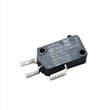
- If the microwave side has door-related starting issues, the switch W10211972 is a common interlock component involved in safe operation.
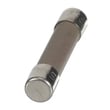
- If the unit is completely dead or intermittently loses power, testing the fuse mda 20a W11188752 is a practical first step.
A wall oven or combo microwave wall oven is a built-in appliance; performance issues affect daily cooking and can be expensive to diagnose blindly. Focusing on cooking symptoms (preheat time, browning, temperature stability) helps you decide whether you are seeing normal behavior, a settings issue, or a part that needs attention.
Last updated: January 2026
How to reset a KitchenAid wall oven?
To reset your KitchenAid built-in combo microwave wall oven model KOCE500EBS20, turn the unit off at the household circuit breaker for about 1 minute, then restore power. This reboots the control and clears many temporary display or keypad glitches.
- Press Cancel/Off once to stop any active cooking cycle.
- Locate the correct double-pole breaker for the wall oven.
- Switch the breaker OFF.
- Wait 60 seconds (up to 5 minutes if the control was frozen).
- Switch the breaker ON.
- Set the clock if it prompts you.
A reset fixes control lockups, but it will not fix a failed heating or safety part. Check these common causes:
- Control lock or Sabbath mode accidentally enabled
- A failed oven heating circuit (bake element, wiring, or control)
- An over-temperature safety device opened
- A blown internal fuse on the microwave side
Helpful parts to consider for KOCE500EBS20 troubleshooting:
| What happens | What it usually means |
|---|---|
| Display goes blank, then returns | Control rebooted normally |
| Clock flashes or asks to set time | Power was interrupted (expected) |
| No display after reset | Power supply issue, breaker, wiring, or control problem |
A breaker reset is the fastest way to clear a “stuck” touch panel or odd display behavior on an electronic control. If symptoms return quickly, focusing on the heating safety circuit (high-limit thermostat) or the heating component (bake element) saves time and repeat shutdowns.
Last updated: January 2026