What is the best reasonably priced food processor?
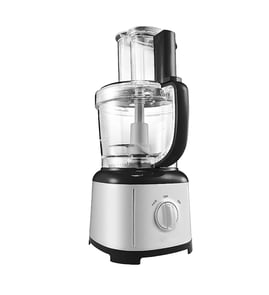
A “best reasonably priced” food processor is the one that matches your batch size and the jobs you actually do most (chopping, slicing, shredding) without paying for attachments you will not use. If you already own a KitchenAid KFP0935QOB0, keeping it running with the right replacement parts is often the most cost-effective choice.
What “reasonably priced” usually means (and what to look for)
When we help customers compare food processors, these are the features that matter most for value:
- Bowl capacity: 7 to 9 cups is the sweet spot for most households
- Disc and blade options: slicing and shredding cover most everyday prep
- Stable base: less walking on the counter, better control
- Easy-to-replace wear items: bowl, pusher, and discs are common replacements
- Simple controls: fewer electronics can mean fewer failures over time
If you already have the KitchenAid KFP0935QOB0
If your unit is underperforming, replacing a worn accessory typically restores results for far less than buying a new machine. Common “value” fixes include:
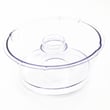
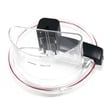
- Replace a cracked or leaking bowl with the food processor bowl WPW10466845
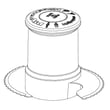
- If slicing or shredding is uneven, check the disc shaft parts like the adapter WPW10466843
- If the feed tube fit is loose or the pusher is damaged, replace the pusher W11027645
- If the machine will not power on, inspect the cord and plug; the food processor 2-prong power cord (black) W10451329 is a common replacement
Quick comparison: repair vs replace
| Option | Upfront cost | Best when | Typical outcome |
|---|---|---|---|
| Replace an accessory (bowl, pusher, disc adapter) | Lower | Motor runs, results are poor | Restores performance fast |
| Replace an electrical part (cord, switch) | Medium | No power or intermittent power | Restores operation if motor is good |
| Buy a new food processor | Higher | Motor is failing or multiple parts are missing | New warranty and features |
Why it matters
Food processors are “systems”; a sharp blade, properly seated disc, and tight-fitting bowl/pusher are what deliver clean cuts and consistent shredding. When one of those pieces is worn, the machine can feel weak even if the motor is fine.
Last updated: January 2026
Is 1000W good for a food processor?
Yes. A 1000W food processor is a strong, capable power level for most home tasks, including tougher jobs like shredding firm cheese, chopping nuts, and mixing thicker batches. For the KitchenAid KFP0935QOB0, wattage matters most when you routinely process dense or large loads.
What 1000W is best for
- Chopping hard ingredients (nuts, chocolate chunks, hard vegetables)
- Shredding and slicing larger quantities with less stalling
- Mixing thicker mixtures (hummus, nut butters, dense salsas)
- Faster processing with fewer pauses to scrape the bowl
Quick wattage guide (typical)
| Motor power | Typical performance | Best fit for |
|---|---|---|
| 400 to 600W | Light to moderate | Soft veggies, small batches, occasional use |
| 700 to 900W | Strong all-around | Frequent use, mixed ingredients, medium batches |
| 1000W+ | High torque | Dense foods, larger batches, heavy use |
What to check if performance still feels weak
Even with higher wattage, a food processor can struggle if a cutting part is dull, installed incorrectly, or slipping.
- Inspect the cutting edges for nicks or dullness
- Confirm the bowl and lid are fully locked before starting
- Avoid overfilling; process in batches for dense foods
- Use the correct attachment for the job (blade vs. disc)
- If the unit runs but the disc slips, check the shaft/adapter fit
If you suspect a worn drive connection, the adapter WPW10466843 is the disc shaft adapter used to couple the disc/shaft assembly during slicing and shredding.
Why it matters
Higher wattage generally means more torque and less bogging down under load, which helps protect the motor and improves results when you process hard ingredients or larger volumes.
Last updated: January 2026
Is it worth getting a food processor?
Yes, a food processor is worth it for most kitchens because it saves time and improves consistency on repetitive prep. With a KitchenAid food processor like model KFP0935QOB0, you can chop, slice, shred, and mix quickly, and you can keep it running well by replacing wear items such as the food processor blade W10648616 when needed.
When a food processor pays off
- You prep vegetables often (onions, carrots, cabbage, potatoes).
- You shred cheese or slice produce in batches.
- You make sauces, dips, or spreads (pesto, hummus, salsa).
- You want consistent results for slaws, gratins, and meal prep.
- You cook for a family or do weekly batch cooking.
What it can replace (and what it cannot)
| Task | Food processor strength | Better tool when… |
|---|---|---|
| Chopping | Fast, uniform, hands-off | You only chop 1 small item |
| Slicing/shredding | Very consistent with discs | You need paper-thin precision |
| Mixing dough | Works for many doughs in short bursts | You knead large bread batches |
| Pureeing | Great for dips and sauces | You want ultra-smooth soups |
Parts that matter for performance
If results get uneven or the unit struggles, these are common “performance” parts to check:
- Food processor blade W10648616 for dull edges or wobble
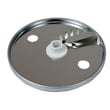
- Food processor shredder disc W10648621 for bent teeth or clogging
- Adapter WPW10466843 if discs do not seat or drive correctly
- Food processor bowl WPW10466845 if the bowl is cracked or the fit is loose
Why it matters
A food processor is one of the biggest time-savers in the kitchen. When the blade, disc, or bowl fit is right, you get faster prep, more even cuts, and less hand fatigue, which makes cooking at home easier to stick with.
Last updated: January 2026
What should you not put in a food processor?
For the KitchenAid KFP0935QOB0 food processor, avoid foods that are extremely hard, very hot, or overly dense and elastic because they can dull blades, crack the bowl, or strain the motor. When in doubt, cut food smaller and use short pulses.
Foods to avoid (or use extra caution with)
- Hot foods or boiling liquids: heat and steam can warp plastic parts and create pressure under the lid.
- Coffee beans, ice, and other very hard items: can chip or dull cutting edges.
- Frozen solid foods (rock-hard fruit, meat blocks): can overload the drive and blade.
- Very tough or sinewy meat: can wrap around the blade and stall the unit.
- Elastic, heavy doughs (especially stiff bread dough): can overwork the motor.
- Bones, pits, and hard rinds: can damage the bowl and blade.
Better options for common “don’t process” items
| If you need to process… | Use this instead | Why |
|---|---|---|
| Hot soup | Let it cool first, then pulse in small batches | Reduces heat and pressure risk |
| Coffee beans | Burr grinder | Protects the blade edge |
| Rock-hard frozen food | Thaw slightly, then pulse | Prevents stalling and drive strain |
| Bread dough | Stand mixer or hand kneading | Food processors are not ideal for heavy dough |
Tips that prevent damage and improve results
- Pre-cut firm foods into 1 to 2 inch pieces for more even chopping.
- Use pulse for control; continuous run can over-process and heat food.
- Don’t pack the bowl; leave space so food circulates.
- If the unit struggles, stop and scrape down, then restart.
- Replace worn cutting parts when performance drops; a dull blade makes the motor work harder.
Parts that matter if performance drops
If chopping is uneven or the processor bogs down with normal loads, inspect the blade and bowl for wear, chips, or cracks. For this model, common replacements include the blade W10648620 and the food processor bowl WPW10466845.
Why it matters
Using the right foods and technique helps protect the motor, keeps cuts consistent, and reduces the chance of cracking the bowl or dulling the blade, which can lead to leaks, stalling, or poor processing results.
Last updated: January 2026