Owner’s manual
 Error Codes




How to tell year of water heater by serial number?
For your Kenmore gas water heater model 153337463, the most reliable way to determine the year is to read the serial number on the model rating plate (located near the gas control valve) and decode it using the format shown in your 153337463 owner's manual.
Where to find the serial number on this model
On Kenmore 153337463 units, the manual identifies the model rating plate as the place to find the model information; it’s typically on the front of the tank near the gas control valve.
- Look for a rectangular label that includes model and serial information
- Check near the gas control valve area on the front of the water heater
- Wipe dust off the label so every character is readable
- Write the serial number exactly as shown (letters and numbers)
How serial number dating usually works (what to look for)
Serial number formats vary by manufacturer, but most water heater serial numbers encode a manufacture date in the first few characters.
Common patterns you may see:
- YYWW: year (YY) and week of year (WW)
- YYMM: year (YY) and month (MM)
- Letter + numbers: a letter for month (A=Jan, B=Feb, etc.) plus digits for year
- Digits later in the string: some formats place the date code in the middle
Quick decode checklist
- Identify whether the serial starts with letters, numbers, or a mix
- Look for a pair that could be a year (for example, 09, 14, 19)
- Look for a pair that could be a month (01-12) or week (01-52)
Example date-code patterns (for reference)
| Pattern type | What it means | Example | Interprets as |
|---|---|---|---|
| YYWW | Year + week | 1420xxxx | Week 20 of 2014 |
| YYMM | Year + month | 1907xxxx | July 2019 |
| MYY (letter month) | Month + year | G18xxxxx | July 2018 |
Why it matters
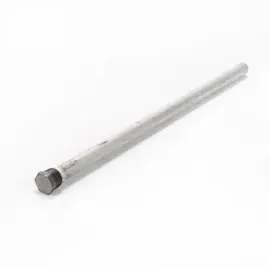
Knowing the manufacture year helps you plan maintenance and replacement decisions. For example, if you’re troubleshooting odor, rust-colored water, or reduced hot water, the tank age can point you toward common wear items like the anode rod 100108660 or a sediment flush procedure in the manual.
Last updated: February 2026
How do I read my water heater model number?
On Kenmore gas water heater model 153337463, the model number is printed on the model rating plate, which is located near the gas control valve. Use that full model number exactly as shown when looking up parts or manual information in the owner's manual.
Where to find the model number on this water heater
The rating plate is the key identifier label for your unit. Look for it:
- On the outside of the tank jacket
- Near the gas control valve area (lower front of the heater)
- On a label that also lists other specs (capacity, fuel type, etc.)
What to write down from the rating plate
For parts lookup and service, we use the same core fields the manual calls out:
- Model number (for this page: 153337463)
- Part description (example: anode rod, pilot tube assembly)
- Part number (manufacturer number) and/or part ID (Sears PartsDirect identifier)
- Name of item (the part name)
Model number vs. part number (quick comparison)
| Item | What it identifies | Example on this model page |
|---|---|---|
| Model number | The entire water heater | 153337463 |
| Part number | The manufacturer’s number for a part | 9000734 |
| Part ID | Sears PartsDirect identifier for a part listing | 100108660 |
Why it matters
Using the exact model number from the rating plate helps us match the correct parts list for your specific tank configuration (for example, the correct burner orifice, pilot components, and safety valve).
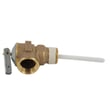
If you are ordering common maintenance or safety parts for this model, examples include the anode rod 100108660 and the water heater temperature and pressure relief valve 100108279.
Last updated: February 2026
What is the average lifespan of a 50-gallon hot water heater?
A typical 50-gallon gas water heater lasts 8 to 12 years. For your Kenmore 153337463, lifespan depends most on water quality, maintenance (especially flushing), and whether the tank’s corrosion protection (anode rod) is kept in good shape; see the owner's manual for care and maintenance details.
Typical lifespan and what changes it
Most homeowners see the biggest swing in service life from these factors:
- Water hardness and sediment buildup in the tank
- Temperature setting (higher temps increase stress and scale)
- Anode rod condition (protects the tank from corrosion)
- Thermal expansion and high inlet pressure (can stress the tank and fittings)
- Maintenance frequency, especially periodic draining and flushing
Maintenance that helps you reach the high end of the range
These steps are the most practical ways to extend life on a gas water heater like the Kenmore 153337463:
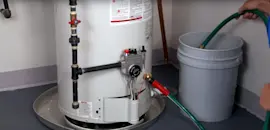
- Flush sediment from the tank on a regular schedule
- Test the temperature and pressure relief valve periodically
- Inspect and replace the anode rod when it is heavily worn
- Keep the burner area clean and ensure proper combustion air
- Address dripping at fittings and the drain valve quickly
Common “life-extending” parts for this model
| What it affects | Part you may need | What it does |
|---|---|---|
| Tank corrosion protection | Anode rod 100108660 | Sacrifices itself to slow tank rusting |
| Overpressure safety | Water heater temperature and pressure relief valve 100108279 | Opens to relieve excess temperature/pressure |
| Sediment draining | Water heater drain valve 100108361 | Lets you drain and flush the tank |
Why it matters
Once a tank begins to corrode internally, performance usually drops first (less hot water, rumbling, longer recovery), then leaks can follow. Staying ahead of sediment and corrosion is the most reliable way to get closer to 12 years instead of replacing early.
Last updated: February 2026
What is the average cost of replacing a gas hot water heater?
Replacing a gas water heater like the Kenmore 153337463 typically costs about $1,600 to $2,400 for a standard tank-style replacement (unit plus basic installation). If you switch to a tankless setup, total installed cost commonly runs about $2,400 to $5,400, mainly due to venting and gas-line upgrades.
What usually changes the price the most
- Tank vs. tankless: tankless often needs venting and gas supply changes
- Capacity and recovery rate: larger tanks and high-recovery models cost more
- Venting type: atmospheric vent vs. power venting can change labor and materials
- Gas piping and shutoff work: resizing or relocating the gas line adds cost
- Water line updates: new shutoff valves, flex connectors, or corrosion repairs
- Code-required safety items: items like a discharge pipe for the T&P valve
Typical cost ranges (installed)
| Replacement type | Common installed range | Best fit for |
|---|---|---|
| Standard tank (natural gas) | $1,600 to $2,400 | Most homes replacing a similar tank heater |
| Tankless (natural gas) | $2,400 to $5,400 | Homes prioritizing space savings and long draws |
Parts that can affect “replace vs. repair” decisions
If your tank is sound but performance or safety components are failing, replacing a specific part can sometimes restore reliable operation. For this model, common service parts include:
- Water heater temperature and pressure relief valve 100108279
- Water heater pilot tube assembly 100108370
- Anode rod 100108660
Why it matters
A gas water heater replacement is not just the tank. Correct venting, safe gas shutoff operation, and a properly rated temperature-pressure relief valve are critical for safe operation. Your owner's manual also outlines key safety requirements and part identification details for the Kenmore 153337463.
Last updated: February 2026
What is the most common problem with water heaters?
The most common water heater problem is sediment and mineral buildup in the tank, which reduces heating efficiency and can cause rumbling or popping noises. On Kenmore model 153337463, “leaks” are also commonly reported, but our owner's manual explains that condensation can look like a leak during startup or heavy hot-water use.
What you will notice first
- Rumbling, popping, or sizzling sounds during heating cycles
- Less hot water or hot water that runs out faster than normal
- Water on the floor near the heater (condensation, a fitting seep, or a valve issue)
- Pilot outages that happen after heavy hot-water use (excess condensation can contribute)
- Smelly hot water (often tied to anode rod chemistry and water conditions)
Quick checks we recommend (before assuming the tank is leaking)
- Give it time to warm up: condensation typically stops after the tank warms (often about 1 to 2 hours).
- Look at common leak points: temperature and pressure relief valve, drain valve, and threaded fittings.
- Check for seepage at fittings: the manual suggests using a cotton swab at the jacket opening near the fitting to confirm moisture.
- Listen for normal vs. problem noises: some sizzling can be condensation dripping on hot surfaces; heavy rumbling often points to sediment.
Common causes and the most likely fix
| Symptom | Most common cause | Typical next step |
|---|---|---|
| Rumbling/popping | Sediment buildup | Flush tank; maintain annually |
| Water on floor | Condensation or valve/fitting seep | Warm-up check; inspect valves/fittings |
| Smelly hot water | Anode rod reaction with water | Inspect/replace anode rod |
Parts that often solve the underlying issue
If inspection points to a worn maintenance part, these are common replacements for this model:
- Anode rod 100108660 (helps protect the tank from corrosion and can affect odor issues)
- Water heater temperature and pressure relief valve 100108279 (addresses relief valve seep or discharge)
- Water heater drain valve 100108361 (addresses drain valve seep/leak)
Why it matters
Sediment buildup makes the burner work harder and can shorten water heater life; moisture on the floor can be harmless condensation or an early warning of a valve or fitting problem. Sorting those out early helps prevent no-hot-water situations and unnecessary part replacement.
Last updated: February 2026