Error Codes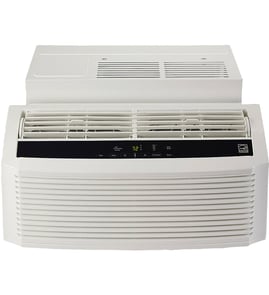



Are 13 SEER AC units being phased out?
Yes. In the U.S., new minimum efficiency rules have effectively phased out installing new central air conditioners rated at 13 SEER; most new systems must meet higher SEER (or SEER2) minimums depending on region. This does not affect keeping or repairing a GE ARC13AACBL2 room air conditioner.
What this means for a room air conditioner like GE ARC13AACBL2
Room air conditioners are regulated differently than whole-home (central) split systems. If your ARC13AACBL2 still cools well, it is normal to keep using it and replace parts as needed.
Common repairable issues on room A/C units include:
- Fan not running or noisy fan operation
- Weak airflow from the grille
- Unit trips the breaker or won’t start
- Intermittent cooling due to wiring or sensor problems
- Vibration from a damaged blade or loose shroud
When a “13 SEER phase-out” does matter
It matters when you are shopping for or installing a new central air conditioner or heat pump (outdoor condenser plus indoor coil/air handler). In that case, the minimum efficiency is higher than 13 SEER, so a contractor typically cannot install a new 13 SEER system.
| Equipment type | Where “13 SEER” comes up | Typical impact today |
|---|---|---|
| Central A/C (split system) | SEER/SEER2 ratings | New installs must meet higher minimums |
| Room air conditioner (window/through-wall) | Uses different efficiency metrics | Not tied to the 13 SEER central A/C rule |
Parts that commonly support a repair (instead of replacement)
If your ARC13AACBL2 has a fan or airflow problem, these model-matched parts are often involved:
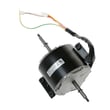
- Room air conditioner fan motor WJ94X25405
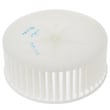
- Outdoor fan blade WJ73X25397
- Run capacitor WJ20X25406
- Main harness WJ35X25408
Why it matters
Mixing up central A/C SEER rules with room A/C efficiency can lead to unnecessary replacement. For a room air conditioner, the practical decision is usually based on cooling performance, noise, electrical reliability, and whether key parts (motor, capacitor, harness) are in good shape.
Last updated: February 2026
How many square feet will a 13500 BTU air conditioner cover?
A 13,500 BTU room air conditioner (like many GE window units in this class) typically cools about 550 to 700 square feet in average conditions. For your GE ARC13AACBL2, the real-world coverage depends most on insulation, sun exposure, ceiling height, and how often doors open.
Quick sizing guide (what changes the coverage)
- Strong sun / west-facing windows: plan closer to 550 to 600 sq ft
- Shaded room / good insulation: plan closer to 650 to 700 sq ft
- Ceilings over 8 ft: reduce effective coverage (more air volume to cool)
- Open floor plans: treat connected spaces as one larger area
- High heat loads (kitchen, many people, electronics): size up or expect longer run times
How to estimate your room size
- Measure length and width in feet.
- Multiply to get square footage.
| Room size | What to expect from 13,500 BTU |
|---|---|
| 450 to 550 sq ft | Fast pull-down, strong comfort margin |
| 550 to 700 sq ft | Typical target range for this BTU class |
| Over 700 sq ft | May run constantly and struggle on hot days |
Why it matters
Right-sizing helps your GE ARC13AACBL2 control temperature and humidity without excessive run time. If the unit is undersized, it can run nonstop and still feel warm; if oversized, it can cool quickly but leave the room feeling clammy.
Related parts that affect cooling performance
If airflow is weak or the unit is noisy, these model-matched parts are common suspects:
Last updated: February 2026
What are common 2 ton AC problems?
A “2 ton AC” usually refers to a central air system (about 24,000 BTU), but many comfort and cooling problems are similar to a GE room air conditioner like model ARC13AACBL2: restricted airflow, dirty coils, weak electrical components, and fan issues that reduce cooling and increase run time.
Most common problems (and what you notice)
- Dirty air filter or clogged coil: weak airflow, icing, musty odor
- Outdoor fan not moving enough air: unit runs hot, poor cooling, loud fan noise
- Weak run capacitor: fan or compressor struggles to start, humming, intermittent operation
- Loose or damaged wiring: random shutoffs, burning smell, no-start
- Sensor problems: short cycling, temperature swings
Quick checks we recommend first (safe DIY)
- Unplug the unit and let it sit 5 minutes.
- Clean or replace the filter; vacuum dust from the front grille.
- Inspect coils for heavy lint buildup; gently clean accessible surfaces.
- Confirm the fan spins freely by hand (power disconnected).
- If symptoms point to electrical testing, use a meter and follow a proven process like how to use a multimeter to test electrical parts video.
Parts that commonly relate to these symptoms on ARC13AACBL2
| Symptom | Likely area | Example part for this model |
|---|---|---|
| Fan won’t start or runs weak | Motor or capacitor | Room air conditioner fan motor WJ94X25405, run capacitor WJ20X25406 |
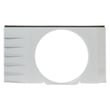
| Loud fan, vibration | Fan blade or shroud | Outdoor fan blade WJ73X25397, outdoor fan shroud WJ76X25398 |
| Intermittent power, no-start | Wiring harness | Main harness WJ35X25408 |
| Icing or erratic temperature | Sensor/airflow | Indoor coil sensor WJ26X27378 |
Why it matters
Airflow and heat transfer problems (filter, coils, fan) are the top causes of “not cooling” complaints and can also trigger icing. Electrical issues (capacitor, harness) often show up as hard-starting, humming, or random shutdowns.
Last updated: February 2026