Owner’s manual

Can I add sawstop to any table saw?
No. You cannot add a SawStop-style blade brake to just any table saw, including the Craftsman 11329991 bench saw, because that safety system is engineered into the saw’s arbor, electronics, and mechanical structure as a matched design. For safer operation on this model, use the built-in adjustments and safe-cutting practices in the owner's manual.
We recommend focusing on proven table saw safety fundamentals that work with the saw you already own:
- Set blade height so the teeth clear the work by about 1/4 inch (a lower blade reduces exposure and kickback risk).
- Use the miter gage for crosscuts; avoid freehand crosscutting.
- Use a push stick when your hands would be close to the blade.
- Keep the work flat to the table and avoid twisting the board (twisting can bind the blade and cause kickback).
- Dress properly; avoid loose sleeves, ties, and anything that can catch.
- Confirm the blade is square at 90 degrees and that the 45-degree tilt stop is set correctly before angled cuts.
These checks help the saw cut predictably, which is a major part of safety.
| Check | What “good” looks like | Why it matters |
|---|---|---|
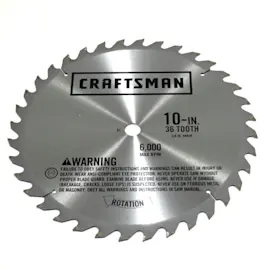
| Blade size | 10-inch maximum blade diameter | Oversize blades are unsafe on this saw |
| Tilt stops | Positive stops at 0 degrees and 45 degrees | Prevents surprise bevel angles |
| Fence and miter use | Fence for ripping; miter gage for crosscuts | Reduces binding and kickback |
| Belt and pulley alignment | Pulleys aligned; belt properly tensioned | Smoother power transfer, less vibration |
A SawStop brake is not an add-on accessory; it is a system that must detect contact, stop the blade, and absorb the forces of braking without damaging the saw structure. On the Craftsman 11329991, the safest path is correct setup, correct blade selection (10-inch max), and disciplined technique.
Last updated: February 2026
How to find craftsman date code?
On a Craftsman bench saw like model 11329991, the manual identifies the model number plate location (back of the saw near the bottom of the base). Date codes are not standardized across older Craftsman power tools, so the most reliable approach is to use the model/serial information on that plate and the documentation in the 11329991 owner's manual.
Check these common spots on Craftsman bench saws for a stamped or printed code:
- The ID plate on the back of the saw, near the bottom of the base (this is the primary label location for 11329991)
- The motor nameplate (if your saw has a separate motor installed)
- The switch box or cord area (sometimes a small label is applied there)
- The underside of the table near the trunnion/arbor housing area
On many Craftsman tools, you may find one or more of these identifiers:
- Model number (for this saw: 11329991)
- Serial number (often the best clue for age)
- A short date code (varies by supplier and era)
| Marking you find | What it tells you | Best use |
|---|---|---|
| Model number (11329991) | Product identification | Ordering the correct parts and using the right diagrams |
| Serial number | Unit-specific identifier | Narrowing production run/age |
| Date code | Manufacturing date (if present) | Estimating tool age |
Once you locate the plate information:
- Write down the full model number and every digit of the serial/date code
- Compare the label details to the identification notes in the 11329991 owner's manual
- Use the model number when searching diagrams and ordering replacement parts through Sears PartsDirect
Using the correct identification from the saw’s plate prevents ordering the wrong arbor, belt, switch, or table insert style, since small production changes can affect fit even within the same tool family.
Last updated: February 2026
Are craftsman table saws any good?
Yes. Craftsman table saws are a solid choice for DIY and light-duty woodworking when they’re set up correctly and used within their limits. For the Craftsman 11329991 10-inch bench saw, good results come from careful alignment, a stable bench mount, and using the right blade for the cut (details and setup steps are in the owner's manual).
This model is a classic 10-inch tilting-arbor bench saw. It’s typically “good” for straight ripping and crosscuts in common lumber and sheet goods when the fence and miter gauge are tuned.
Strengths you can expect
- Good value for a home shop and occasional projects
- Capable of accurate cuts after alignment and calibration
- Standard 10-inch blade format (wide blade availability)
- Serviceable design with replaceable wear parts (belt, bearings, insert)
Common limitations
- Fence accuracy depends heavily on adjustment and technique
- Vibration increases if the saw is not bolted down or the belt is worn
- Not ideal for production-level, all-day heavy ripping
- Bolt the saw to a rigid bench or stand; eliminate rocking
- Verify blade-to-miter-slot alignment before chasing fence issues
- Set the rip fence parallel to the blade (avoid toe-in)
- Use a sharp, appropriate blade (rip blade for ripping, combo for general work)
- Inspect the V-belt for glazing, cracks, or slack; replace if needed
| Task | How it usually performs | Tip |
|---|---|---|
| Ripping 1x and 2x lumber | Good | Use a rip or combo blade and steady feed rate |
| Crosscutting with miter gauge | Good | Use a stop block and keep the gauge snug |
| Sheet goods (plywood) | Fair to good | Add outfeed support to prevent binding |
| Thick hardwood all day | Not ideal | Take lighter passes and keep the blade sharp |
Most table saw complaints come from setup, not the brand. A properly aligned blade, a parallel fence, and solid support reduce burning, kickback risk, and wandering cuts, which is what makes a saw feel “good” in real use.
Last updated: February 2026
What is the specs of the craftsman 12 inch bandsaw 11329991?
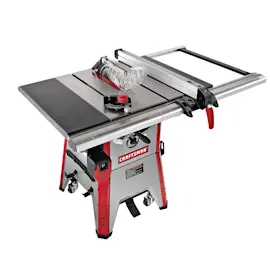
The Craftsman model 11329991 is a 10-inch bench saw (table saw) with a tilting arbor, not a 12-inch band saw. For the correct specs and setup details for this exact saw, use the 11329991 owner's manual.
- Tool type: bench saw (table saw)
- Blade size class: 10-inch
- Arbor design: tilting arbor
- Model identification: model plate is on the back of the saw near the bottom of the base
A tilting arbor lets you bevel-cut by tilting the blade assembly relative to the table. This affects:
- Bevel cut capability and angle setting
- Guard and splitter alignment after bevel adjustments
- How you set blade height and blade-to-fence alignment
The parts list for model 11329991 includes assemblies and wear items you may see referenced when looking up specs or doing repairs:
- Saw guard assembly (guard insert, clamping knob, splitter blade bracket)
- Arbor housing and arbor bearings
- Motor support assembly (pivot arm, hinge rod, motor base/bracket)
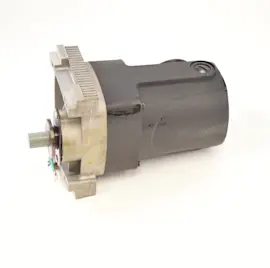
- V-belt listed as 1/2 x 43 in. (used to drive the arbor)
| Feature | Band saw | Table saw (Craftsman 11329991) |
|---|---|---|
| Cutting action | Continuous loop blade | Circular blade on an arbor |
| Best for | Curves, resawing | Ripping, crosscuts, bevels |
| “Throat” spec | Commonly listed | Not a primary spec |
Craftsman model numbers can look similar across different tools. Using the exact model number ensures you get the right specifications, parts list, and safety setup information for your saw.
Last updated: February 2026