 Installation guide
 Owner’s manual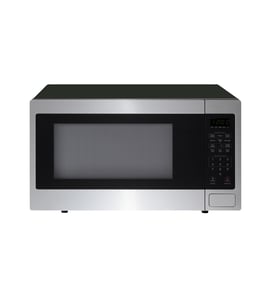



Can you put stuff on top of a countertop microwave?
For the KitchenAid KCMC155JBL0 countertop microwave, we do not recommend putting items on top, especially while it is running; the safety instructions say not to store anything directly on the microwave oven surface when the microwave oven is in operation. Use the top as a clear, open surface so heat can dissipate normally.
What’s safe vs. not safe
- Safe: Keeping the top clear at all times
- Usually OK (when the microwave is OFF and cool): A light, temporary item placed briefly, as long as it does not block vents or slide off
- Not safe: Storing items on top during cooking (paper goods, plastic, towels, cookbooks)
- Not safe: Anything that can trap heat, melt, or fall into side or rear vents
- Not safe: Placing any heating or cooking appliance beneath the microwave
Quick checklist before you set anything on top
- Confirm the microwave is OFF and the exterior is cool to the touch
- Keep all vents and airflow paths clear (top, sides, and rear)
- Avoid items that are combustible (paper, cardboard) or heat-sensitive (plastic)
- Do not let the power cord get pinched or pulled over an edge
- If you notice the cabinet getting unusually warm, remove items and improve clearance
Why it matters
A countertop microwave like the KCMC155JBL0 relies on airflow to keep internal components (cooling fan, wiring, and controls) within normal temperatures. Items stored on top can trap heat and increase the chance of overheating or poor performance.
What the manual guidance means in real life
| Situation | Recommendation |
|---|---|
| Microwave is cooking or running the fan | Keep the top completely clear |
| Microwave is off but still warm | Keep clear until fully cooled |
| Microwave is off and cool | Avoid storage; if temporary, keep vents clear |
For model-specific placement, clearance, and safety notes, follow the KCMC155JBL0 owner's manual.
Last updated: February 2026
Do countertop microwaves need venting?
Yes. A countertop microwave like the KitchenAid KCMC155JBL0 does not need to be ducted to the outside, but it does need clear airflow through its built-in air intake and exhaust vents so it can cool properly and vent normal cooking steam (do not block the openings). See the KCMC155JBL0 owner's manual for placement clearances and vent locations.
What “venting” means for this model
Countertop microwaves vent internally through openings in the cabinet; they are designed to move air across internal components and exhaust warm, moist air back into the room.
- Do not block the exhaust vents or air intake openings.
- Leave a few inches of space behind the microwave where the exhaust vents are located.
- Keep the microwave legs/feet installed so air can flow underneath.
- Expect steam from the exhaust vent during cooking; that is normal.
- If vents are blocked, a thermal safety device can shut the microwave off until it cools.
Quick placement checklist
Use this as a practical setup guide for the KCMC155JBL0.
| Item to check | What to do | What happens if ignored |
|---|---|---|
| Rear clearance | Leave a few inches behind the unit | Overheating, poor cooking results |
| Intake and exhaust openings | Keep them unobstructed | Thermal shutdown, possible damage |
| Feet/legs | Make sure they are installed and stable | Restricted airflow underneath |
| Nearby heat sources | Avoid placing next to or over a heat source unless using an approved trim kit | Overheating and safety risk |
Why it matters
Proper ventilation protects key electrical components (like the transformer and magnetron cooling path), helps prevent nuisance shutoffs, and keeps cooking performance consistent. It also allows the microwave to vent normal moisture created when heating foods.
Last updated: February 2026
What is a standard size countertop microwave?
A “standard size” countertop microwave typically falls in the 1.0 to 2.2 cubic feet range and measures about 21 to 25 inches wide, 12 to 15 inches tall, and roughly 16 to 20 inches deep. For exact fit details for KitchenAid model KCMC155JBL0, use the cutout and placement guidance in the installation guide.
Typical countertop microwave size ranges
Most countertop microwaves (including many KitchenAid units) fit within these common ranges:
- Capacity: 1.0 to 2.2 cu. ft.
- Width: 21 to 25 in.
- Height: 12 to 15 in.
- Depth: 16 to 20 in. (not including extra clearance for the cord and rear airflow)
- Weight: commonly 30 to 60 lb.
Fit and clearance checklist (what we recommend measuring)
Even when the exterior dimensions look “standard,” fit problems usually come from clearance and ventilation. Before buying or installing, we recommend:
- Measure the space width, height, and depth at the tightest point.
- Leave rear clearance so the cord is not pinched and air can circulate.
- Confirm the door can open fully without hitting a wall, cabinet, or backsplash.
- If installing into a cabinet opening, follow the anti-tip and positioning steps in the installation guide.
- Plan for a nearby properly grounded outlet; avoid extension cords.
Quick comparison: “standard” countertop vs built-in style cutout installs
| Type | Where it sits | What matters most | Common mistake |
|---|---|---|---|
| Countertop microwave | On a counter | Exterior dimensions and ventilation | Pushing it tight to the wall and blocking airflow |
| Cabinet cutout (built-in style) | In a cabinet opening | Cutout dimensions, anti-tip bracket alignment | Skipping bracket alignment and ending up off-center |
Why it matters
Microwaves need space for airflow and safe placement. A unit that is “standard size” can still overheat, vibrate, or fit poorly if the rear clearance is tight or a cabinet cutout is not aligned correctly.
Last updated: February 2026
Why is my KitchenAid microwave not showing display?
If your KitchenAid KCMC155JBL0 countertop microwave display is blank, the most common causes are a power interruption (clock resets), a blown internal fuse, a door switch problem, or a failed control. Start with basic power checks, then move to door and fuse diagnostics using the KCMC155JBL0 owner's manual.
Quick checks we recommend first
- Confirm the outlet has power by testing it with a small lamp.
- Reset power: unplug the microwave for 2 minutes, then plug it back in.
- If the display comes back showing a clock prompt (often just a blank clock state), set the clock.
- Check that the door closes firmly and latches normally.
- If the unit is completely dead (no lights, no fan, no response), stop and plan for internal electrical checks.
What the display behavior usually means
| What you see | What it typically points to | What to do next |
|---|---|---|
| Display shows a reset clock state after an outage | Normal after power loss | Set the clock in the manual steps |
| Display is blank but interior light works | Control/display issue or wiring connection | Inspect connections (service-level) |
| Everything is dead (no display, no light) | Fuse, door switch, or power supply issue | Test fuse and door switches |
Parts that commonly affect the display on this model
A blank display is often tied to a safety interlock or power feed issue. These model-listed parts can be involved during diagnosis or repair:
- Switch 4392027 (door interlock circuit; a failed switch can prevent operation)
- Wire harness 8183684 (loose or damaged wiring can interrupt power to the control)
- Voltage wire WP8205489 (power feed wiring issues can cause intermittent or no display)
Why it matters
On microwaves like the KCMC155JBL0, the display is powered through the same safety and control circuits that prevent operation with an unlatched door. Fixing the root cause (power, interlock, fuse, or control) restores both the display and safe operation.
Last updated: February 2026


