Owner’s manual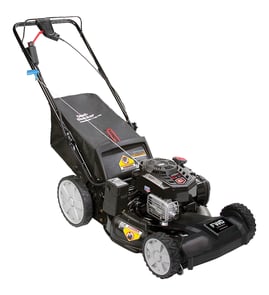


What are different types of mowers?
For the MTD 11A-429R729 gas walk-behind mower, the main mower “type” is a walk-behind rotary mower; beyond that, mowers are commonly grouped by how they move (push vs. self-propelled), how they cut (rotary vs. reel/cylinder), and what they ride on (walk-behind vs. riding). For safe operation and setup details, follow the 11A-429R729 owner's manual.
- Push walk-behind mower: You push; simplest design and usually lighter.
- Self-propelled walk-behind mower: Drive system helps move the mower forward.
- Riding lawn tractor: Sit-down mower for larger yards; wider cutting decks.
- Zero-turn rider: Very maneuverable rider for open areas and tight turns.
- Reel (cylinder) mower: Scissor-like cut; often manual or electric; best on shorter grass.
- Hover mower: Floats on an air cushion; useful on slopes or uneven ground.
| Type | Best for | Typical tradeoff |
|---|---|---|
| Walk-behind rotary (like 11A-429R729) | Small to medium lawns, mixed grass | More walking time than a rider |
| Self-propelled walk-behind | Hills, thicker grass, longer mowing sessions | More maintenance than a push mower |
| Riding/zero-turn | Large lawns | Higher cost, more storage space |
| Reel/cylinder | Fine turf, frequent mowing | Struggles with tall or weedy grass |
Choosing the right mower type affects cut quality, mowing time, and maintenance. For example, rotary mowers handle taller grass better, while reel mowers deliver a cleaner cut on short, well-kept turf.
- Keep the blade sharp and balanced
- Avoid mowing wet grass
- Set all wheels to the same cutting height for an even cut
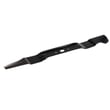
- Inspect the blade after hitting debris and tighten fasteners as needed
Last updated: January 2026
What is a mower used for?
A mower like the MTD 11A-429R729 gas walk-behind mower is used to cut grass to a consistent height so your lawn looks even and stays healthier. Many models also let you bag clippings or mulch them, depending on how you set up the rear discharge area.
- Cutting grass evenly across a yard
- Mulching clippings (rear discharge door closed, grass catcher removed)
- Bagging clippings for cleanup (using the grass catcher)
- Helping manage lawn health by avoiding over-cutting
- Routine deck cleaning to prevent grass buildup
The operator guidance for the 11A-429R729 includes both mulching and grass catcher use. Here is a quick comparison:
| Mode | What you do | Best for |
|---|---|---|
| Mulching | Remove grass catcher; keep rear discharge door closed | Returning fine clippings to the lawn |
| Bagging | Install grass catcher; stop engine before removing bag | Cleaner finish and collecting clippings |
These practices help performance and reduce strain on the blade, deck, and engine:
- Do not cut wet grass for best results.
- Never cut off more than one-third of the total grass height.
- If grass is over about 4 inches, bagging is typically better than mulching.
- Keep the underside of the mower deck clean after each use to prevent buildup.
- Wear safety glasses and keep bystanders away while mowing.
Cutting too much at once, mowing wet grass, or letting clippings build up under the deck can lead to uneven cutting, clumping, and extra load on the engine. Following the operating and deck-care steps in the 11A-429R729 operator's manual helps the mower cut cleaner and last longer.
Last updated: January 2026
Which size of lawn is best suited for a compact riding mower?
A compact riding mower is the best fit for lawns around 1/2 acre to 2 acres, especially when the yard is mostly open and mowing with a walk-behind takes too long. For your MTD 11A-429R729 (a walk-behind mower), operating and safety details are in the 11A-429R729 operator's manual.
- Under 1/4 acre: walk-behind mower is usually fastest overall
- 1/4 to 1/2 acre: self-propelled walk-behind or compact rider (depends on obstacles)
- 1/2 to 2 acres: compact riding mower for major time savings
- Over 2 acres: larger rider or zero-turn is typically more efficient
- Steep slopes or many tight obstacles: walk-behind often handles maneuvering and footing better
- Obstacles and layout: trees, beds, and fencing increase turning and trimming time
- Terrain: bumps, soft ground, and slopes can limit traction and stability on riders
- Gate width and storage space: riders need more clearance and parking room
- Mowing frequency: weekly mowing reduces load on any mower type
- Grass conditions: wet or overgrown grass slows any mower and can reduce cut quality
| Yard situation | Best match | Why it works |
|---|---|---|
| Mostly open, 1/2 to 2 acres | Compact riding mower | Faster coverage with less fatigue |
| Smaller or obstacle-heavy | Walk-behind mower | Better maneuverability and access |
| Steep or uneven areas | Walk-behind mower | More controlled handling on slopes |
Matching mower type to yard size and layout saves time and helps you get a cleaner cut. Operator manuals also emphasize basics that improve results, such as avoiding wet grass and not removing more than one-third of grass height per pass.
Last updated: January 2026