Owner’s manual
 Error Codes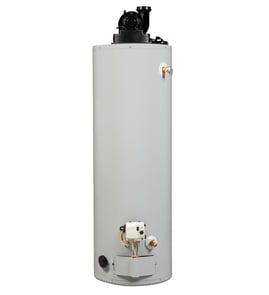





Why do plumbers not recommend tankless water heaters?
Plumbers often steer homeowners away from tankless water heaters because the total cost and complexity can be higher than expected, especially when gas line sizing, venting, and water quality are factors. For many homes, a conventional tank-style unit like the State GS640YOCT is simpler to install, easier to service, and more predictable for multi-fixture hot water demand.
- Higher install complexity and cost: Tankless units frequently need upgraded gas piping, dedicated venting, and sometimes electrical changes.
- Hard water sensitivity: Mineral scale can reduce performance and shorten component life without regular descaling.
- Flow-rate limits: Running multiple showers, a dishwasher, and laundry at once can exceed what a single tankless unit can deliver.
- “Cold water sandwich” and delay: Some systems have a noticeable lag before hot water arrives, especially with long pipe runs.
- More maintenance: Annual flushing and filter cleaning are common expectations, not optional extras.
| Feature | Tank-style (like GS640YOCT) | Tankless |
|---|---|---|
| Upfront install | Usually straightforward | Often requires upgrades |
| Hot water delivery | Stored hot water, strong recovery | Unlimited in theory, limited by flow |
| Maintenance | Periodic flushing, anode checks | Descaling is routine |
| Best fit | Most households, multi-fixture use | Smaller demand or staged systems |
If you are thinking about replacing a tank water heater with tankless, we recommend checking these items first:
- Gas supply capacity and pipe diameter to the heater location
- Venting route and allowed vent materials
- Incoming water hardness and whether a treatment system is needed
- Number of bathrooms and how often fixtures run at the same time
- Whether you want recirculation to reduce hot-water wait time
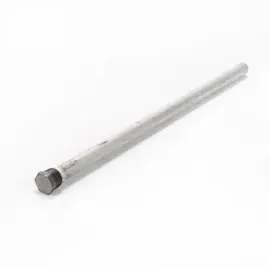
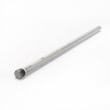
A water heater is a whole-home system. When tankless is mismatched to the home, the result is higher installation cost, more callbacks for maintenance issues, and complaints about temperature stability. If you are maintaining a tank-style State GS640YOCT instead, staying on top of service items like the anode rod can help protect the tank from corrosion; see the 2-way 100109624 part listing and your owner's manual for model-specific guidance.
Last updated: February 2026
What is the most common problem with gas water heaters?
The most common gas water heater problem is ignition related: the pilot will not light or will not stay lit, so the burner never heats the tank. On a State GS640YOCT, this is often tied to the igniter and flame-sensing safety circuit, plus airflow or gas-supply issues.
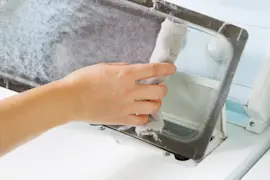
- Dirty or restricted air intake: lint, dust, or debris can starve the burner of air.
- Ignition component problem: weak spark, damaged wiring, or a failing igniter.
- Flame-sensing shutdown: the heater lights briefly, then shuts down for safety.
- Gas supply issue: shutoff valve partially closed, low supply pressure, or air in the line.
- Sediment buildup: reduces efficiency and can cause rumbling or longer recovery times.
| What you notice | Most likely cause | What we recommend |
|---|---|---|
| Pilot will not light | Ignition or gas supply issue | Confirm gas valve is fully open; follow lighting steps in the owner's manual |
| Pilot lights, then goes out | Flame-sensing safety shutdown or airflow restriction | Clean intake area; check for error indications using State gas water heater error codes |
| Hot water runs out fast | Sediment, dip tube issue, or thermostat setting | Flush tank; inspect inlet tube if performance changed suddenly |
| Rumbling or popping | Sediment on tank bottom | Drain and flush tank; repeat until water runs clear |
If your GS640YOCT is failing to ignite or stay running, these model-matched parts are often involved:
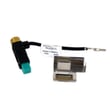
- Igniter assembly 100109221 (ignition component)
- Screen 100109216 (helps protect the combustion air path)
- Outer door 100109299 (combustion chamber access cover; must be installed correctly)
Ignition and flame-sensing problems are safety-related; the heater is designed to shut down when it cannot prove a stable flame. Fixing airflow restrictions and ignition issues restores reliable hot water and helps prevent nuisance shutdowns.
Last updated: February 2026
How long do state gas water heaters last?
Most State gas water heaters, including model GS640YOCT, last 8 to 12 years with normal use and routine maintenance. Water quality, temperature setting, and maintenance items like flushing sediment and checking the anode rod have the biggest impact on service life.
- 8 to 12 years is the normal service-life range for a residential gas tank water heater.
- Hard water and heavy hot-water demand can shorten life.
- Keeping the thermostat at a moderate setting helps reduce tank stress.
- Sediment buildup reduces efficiency and can overheat the tank bottom.
- A worn anode rod speeds up internal tank corrosion.
| What you notice | What it often means | What to do next |
|---|---|---|
| Rusty or metallic-smelling hot water | Tank corrosion or failing anode rod | Inspect/replace the anode rod; plan for replacement if corrosion persists |
| Rumbling or popping sounds | Heavy sediment in the tank | Flush the tank and recheck noise |
| Water around the base | Tank leak (not a fitting) | Replace the water heater |
| Pilot/ignition problems | Ignition component or airflow issue | Check ignition and air intake components |
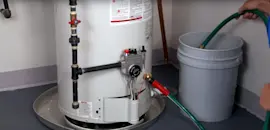
- Flush a few gallons from the drain valve periodically to reduce sediment.
- Inspect the anode rod every 1 to 3 years; replace it when heavily worn.
- Keep the burner area and air intake clean so combustion air is not restricted.
- Watch for small leaks at fittings and correct them early.
If you are planning preventive maintenance, the 2-way 100109624 (water heater anode rod) is one of the most common wear items that can help extend tank life.
Replacing a worn anode rod and controlling sediment buildup helps protect the tank lining. That directly affects whether your GS640YOCT reaches the typical 8 to 12-year lifespan or fails early from corrosion or overheating.
For model-specific maintenance intervals and safety steps, follow the owner's manual.
Last updated: February 2026
Why are gas water heaters being phased out?
Gas water heaters are being phased out in some areas because local air-quality and climate policies target reductions in emissions from burning natural gas, especially nitrogen oxides (NOx) and greenhouse gases. For a State GS640YOCT gas water heater, the impact is usually about what you can install in the future, not how your current heater operates today.
Most phase-out proposals focus on cutting pollution from combustion appliances in homes and businesses. Gas water heaters can be a meaningful source of:
- NOx emissions that contribute to smog in some regions
- Carbon emissions tied to natural gas use
- Indoor air-quality concerns when venting or combustion air is inadequate
- Long-term infrastructure planning (moving toward electric options)
In most places, existing gas water heaters can be maintained and repaired; the bigger changes typically show up when you replace the unit or pull permits for a new installation. For model-specific requirements, we recommend checking the venting, combustion air, and safety sections in the GS640YOCT owner's manual.
| Scenario | What usually happens | What you can do now |
|---|---|---|
| Your heater still runs safely | Keep using it | Maintain it and keep it venting correctly |
| A part fails | Repair is typically allowed | Replace the failed part and verify safe operation |
| Full replacement needed | Rules may steer you to electric in some areas | Check local code and permit requirements |
If your area tightens rules, planning ahead helps you avoid surprises at replacement time. Keeping your current gas water heater in good working order also reduces nuisance shutdowns and helps it burn cleaner.
These steps are common for gas water heaters like the State GS640YOCT:
- Keep the burner area clean and unobstructed
- Make sure the air intake area is not blocked; clean the flame-arrestor screen if your design uses one
- Inspect the burner access door and seals for proper fit
- Flush sediment periodically to help efficiency
- Replace corrosion-protection parts on schedule
If you are troubleshooting ignition or lockout behavior, use our State gas water heater error codes guide. If you are addressing corrosion or odor issues, the 2-way 100109624 (water heater anode rod) is one of the common maintenance parts for this model.
Last updated: February 2026
What is the average cost to install a 40 gallon gas water heater?
Installing a 40-gallon gas water heater typically costs about $900 to $3,000+ total (heater plus labor). For a State gas water heater like model GS640YOCT, the final price depends on venting type, gas line work, permit requirements, and whether any code upgrades are needed; see the GS640YOCT owner's manual for model-specific venting and location requirements.
- Water heater unit: commonly $400 to $1,000 for many 40-gallon tank models
- Labor: commonly $500 to $2,000+ depending on complexity
- Permit and inspection: often $50 to $500+ (varies by area)
- Materials: vent pipe, gas fittings, shutoff valve, connectors, drain pan, and misc. hardware
- Code upgrades (when required): seismic strapping, expansion tank, venting changes, drip leg, combustion air changes
Gas water heater replacements vary widely because the installer may need to modify fuel and exhaust systems.
- Venting changes: switching vent types or resizing venting increases labor and parts
- Gas line work: adding a sediment trap, replacing a shutoff, upsizing pipe, or leak testing
- Location and access: attic, crawlspace, tight closet, or long carry distance
- Water damage prevention: adding a drain pan and drain line where required
- Old unit removal: difficult disconnects or disposal fees
| Scenario | What it usually includes | Typical total cost range |
|---|---|---|
| Like-for-like replacement | Same venting, minimal gas/pipe changes | $900 to $1,800 |
| Moderate updates | Some venting or gas fitting updates, permit | $1,400 to $2,500 |
| Major changes | Vent conversion, gas line changes, relocation | $2,000 to $3,000+ |
A gas water heater must vent safely and burn cleanly. Paying for correct venting, combustion air, and gas leak testing protects your home and helps the heater run efficiently and reliably.
Even when the heater itself is new, installers often add or replace supporting items.
- Drain pan (helps protect floors in leak-prone locations)
- Gas shutoff valve and approved connector
- Venting components (as required by the installation setup)
- Screen or air intake protection parts (if your setup needs them)
If you are refreshing related components on GS640YOCT, we list model-matched parts such as the drain pan 100108616.
Last updated: February 2026