
What size AC for 2000 sq ft?
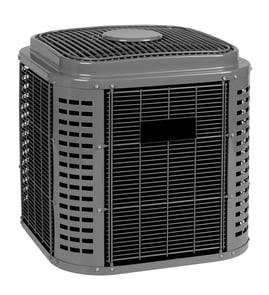
For a typical 2,000 sq ft home, we size central air conditioning in the 3.5 to 4 ton range (about 42,000 to 48,000 BTU/hr). Your Coleman Evcon central air conditioner setup (model BRCS0241BB) still needs a load calculation because insulation, windows, and climate can shift the right size by a full ton.
A common starting point is 20 to 25 BTU per sq ft.
- 2,000 sq ft × 20 BTU = 40,000 BTU (about 3.3 tons)
- 2,000 sq ft × 25 BTU = 50,000 BTU (about 4.2 tons)
- 1 ton of cooling = 12,000 BTU/hr
Use these factors to decide whether you land closer to 3.5 tons or 4 tons.
- Hotter climates or lots of sun exposure: size up
- Older/poor insulation or leaky ductwork: size up
- Large west-facing windows or skylights: size up
- Tight, well-insulated home with good windows: size down
- High ceilings or open floor plans: often size up
- Many occupants or heavy cooking: can size up
An oversized condenser can short-cycle (turn on and off too often), which reduces comfort and humidity control.
| If the AC is... | You may notice... | What it leads to... |
|---|---|---|
| Too small | Runs constantly | Higher wear, still warm on hot days |
| Too large | Short cycles | Poor dehumidification, uneven temps |
| Right size | Longer steady cycles | Better comfort and efficiency |
We recommend a Manual J style load calculation before replacing or matching equipment.
- Confirm your existing system tonnage from the outdoor unit nameplate
- Check duct size and condition (undersized ducts can mimic an undersized AC)
- Replace/verify the air filter and indoor airflow first
- If you are shopping parts or matching components, search by model on Sears PartsDirect
Correct sizing protects the compressor, improves humidity control, and helps your Coleman system run efficiently without excessive cycling.
Last updated: February 2026
Is it cheaper to run an air conditioner or central air?
Central air (like the Coleman BRCS0241BB) is usually cheaper per hour to cool an entire home because it is typically more energy-efficient than multiple room air conditioners. A single window or portable AC is usually cheaper only when you cool one small room instead of the whole house.
Your cost comes down to how much space you cool, how long you run it, and the efficiency of the equipment.
- Area cooled: one room vs the whole home
- Efficiency: central AC SEER rating vs window AC EER/CEER
- Runtime: long steady runs vs short cycling
- Ductwork condition: leaks and poor insulation raise central AC cost
- Thermostat settings: each degree lower increases energy use
| Scenario | Usually cheaper | Why |
|---|---|---|
| Cooling one bedroom at night | Window/portable room AC | You avoid cooling unused rooms |
| Cooling most rooms daily | Central air | One system is designed to cool the whole home efficiently |
| Hot spots in one area only | Room AC (or zoning) | Targeted cooling reduces total load |
| Leaky ducts or poor attic insulation | Room AC (short term) | Central air loses cooled air before it reaches rooms |
These steps apply to most central air conditioners, including Coleman Evcon systems.
- Replace or clean the return air filter on schedule
- Keep the outdoor condenser coil clear of leaves and debris
- Seal obvious duct leaks and insulate accessible duct runs
- Use ceiling fans and raise the thermostat 2 to 4°F
- Close blinds on sunny windows during peak heat
- Have the system checked if it short-cycles or struggles to reach set temperature
Central air can be the best value when you need whole-home comfort, but it becomes expensive fast if you are only using one room or if airflow is restricted (dirty filter, duct leaks, weak blower performance).
For safe DIY electrical checks related to AC controls and power, use our guide: how to use a multimeter to test electrical parts video.
Last updated: February 2026
Can an AC work without a condenser?
A standard split-system central air conditioner like the Coleman BRCS0241BB needs a condenser section to reject heat; without it, the refrigerant cannot condense properly and the system will not cool. Some “no outdoor unit” designs exist, but they are different systems, not a typical central AC.
In a conventional central AC, the condenser is the outdoor heat-rejection side of the refrigeration cycle. If the condenser coil or condenser fan cannot do its job, you typically see:
- Warm air from supply vents even though the thermostat is calling for cooling
- Outdoor unit running loudly, short-cycling, or shutting off on safety
- High head pressure that can trip a high-pressure switch (if equipped)
- Compressor overheating and potential compressor damage
- Icing on the indoor coil in some failure scenarios (restricted airflow plus low heat transfer)
When people say an AC works “without a condenser,” they usually mean a different product type, such as:
- Water-cooled or water-source systems that reject heat to water instead of outdoor air
- Packaged indoor units that still have a condenser coil, but it is not outdoors
- Specialty through-wall or ductless configurations (still include a condensing function)
| System type | Has a condensing function? | Typical heat rejection location |
|---|---|---|
| Split-system central AC (common) | Yes | Outdoors (condenser coil and fan) |
| Water-cooled AC | Yes | To water loop (often indoors) |
| Packaged unit | Yes | In the same cabinet (often outdoors) |
If your BRCS0241BB is not cooling, the condenser may be present but not operating correctly. Check these basics first:
- Verify the outdoor disconnect and breaker are on
- Confirm the thermostat is set to COOL and the temperature is set below room temp
- Replace or clean the return air filter and make sure supply/return vents are open
- Look for a dirty outdoor coil or blocked airflow around the outdoor unit
- Listen for the condenser fan; if the compressor runs but the fan does not, shut the system off
Running a central air conditioner without proper condensing (heat rejection) quickly drives pressures and temperatures out of range; that reduces cooling and can damage the compressor, capacitor, contactor, or wiring.
For safe electrical checks during troubleshooting, use our how to use a multimeter to test electrical parts video.
Last updated: February 2026
How much should a central air conditioner cost?
A central air conditioner typically costs about $3,500 to $8,500 installed for a standard replacement, with higher prices when you need ductwork repairs, electrical upgrades, or a higher-efficiency system. For your Coleman BRCS0241BB setup, the biggest cost drivers are capacity, SEER2 rating, and installation complexity.
These are common U.S. ranges for replacing an outdoor condenser and matching indoor coil (or full split-system swap).
- Budget replacement: $3,500 to $5,000
- Mid-range replacement: $5,000 to $8,500
- Premium/high-efficiency: $8,500 to $15,000+
- Ductwork repair or replacement (if needed): add $1,500 to $6,000+
- Electrical or pad/line-set work (if needed): add $300 to $2,500+
| What you’re paying for | How it changes cost | Why it matters |
|---|---|---|
| System size (tons/BTU) | Higher size usually costs more | Oversizing can reduce comfort and efficiency |
| Efficiency (SEER2) | Higher SEER2 costs more upfront | Can lower monthly cooling costs |
| Installation complexity | Can add thousands | Refrigerant line-set, access, and code items add labor |
| Duct condition | Can add thousands | Leaky ducts waste cooled air |
- Capacity match to your home (load calculation matters more than square footage rules of thumb)
- SEER2 efficiency level and whether you choose single-stage, two-stage, or variable-speed equipment
- Refrigerant and compatibility (for example, whether the indoor coil and outdoor unit are properly matched)
- Condition of the line set (may need flushing or replacement)
- Duct leakage and airflow (static pressure issues can raise noise and reduce cooling)
- Permits and code upgrades (disconnect, breaker sizing, surge protection in some areas)
- Get quotes that include a matched indoor coil and any required refrigerant work
- Ask for an itemized estimate (equipment, labor, permits, add-ons)
- Replace air filter regularly and keep the outdoor coil clear to avoid performance complaints that look like “system failure”
- If you’re troubleshooting before replacing, use a meter safely; our how to use a multimeter to test electrical parts video helps with basic testing concepts
A low bid can hide missing essentials (like a properly matched coil or airflow corrections), while a high bid can include upgrades you may not need. A correctly sized, properly installed system delivers better comfort, humidity control, and longer compressor life.
Last updated: February 2026
What is the most expensive part to replace on an air conditioner?
For a Coleman Evcon central air conditioner like model BRCS0241BB, the compressor is typically the most expensive single part to replace because it is the sealed, high-labor component that pumps refrigerant through the system; when it fails, repair costs often rival the value of an older unit.
- It is part of the sealed refrigerant circuit (more labor and specialized tools).
- A compressor failure can contaminate the system (cleanup adds time and materials).
- Diagnosis often leads to additional parts (run capacitor, contactor, filter drier).
- Refrigerant recovery, evacuation, and recharge are typically required.
- Access and brazing work can increase labor time.
Depending on the design and what failed, these can also be high-cost repairs:
- Condenser coil (especially if badly corroded or leaking)
- Outdoor fan motor (less than a compressor, but still a bigger-ticket part)
- Control board (on units with advanced electronics)
- Refrigerant metering device (TXV or piston) when paired with refrigerant work
| Part | Typical cost impact | Why it gets expensive |
|---|---|---|
| Compressor | Highest | Sealed system labor plus refrigerant work |
| Condenser coil | High | Coil replacement plus refrigerant work |
| Control board | Medium to high | Part cost can be high; diagnosis time matters |
| Fan motor | Medium | Motor plus capacitor and labor |
We see compressor repairs push customers toward replacement when:
- The system is 10 to 15 years old (typical central AC lifespan).
- The compressor is out of warranty and the repair includes refrigerant work.
- There is evidence of electrical damage (burnt wiring, repeated breaker trips).
The compressor is the “heart” of cooling; if it is failing, the system often cannot maintain proper refrigerant pressures, which leads to poor cooling, high energy use, and potential repeat failures if the root cause is not corrected.
For safe DIY electrical checks (power off at the disconnect), we use guidance like how to use a multimeter to test electrical parts video.
Last updated: February 2026