Owner’s manual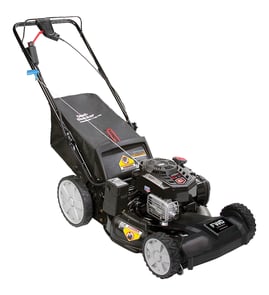



What is the life expectancy of a gas-powered lawn mower?
Most gas-powered walk-behind lawn mowers typically last 8 to 10 years with normal residential use and routine maintenance. For the MTD 12AE997E099, proper fuel care and off-season storage steps in the owner's manual help the engine and cutting system reach that expected lifespan.
What “life expectancy” means for a mower
A mower’s usable life is mainly driven by engine hours, storage conditions, and how often wear items are serviced.
- Typical homeowner use is about 20 to 25 hours per year
- Many engines are designed around emissions durability categories measured in hours
- Poor fuel storage (stale gas) is one of the fastest ways to shorten engine life
- Deck corrosion and blade impacts also reduce overall service life
Maintenance habits that extend mower life
We recommend focusing on these high-impact basics:
- Use fresh gasoline; gas older than about 4 weeks should be treated as stale
- Empty the fuel system for storage of 30 days or longer (drain tank, run engine until lines and carburetor are empty)
- Change engine oil on schedule and after long storage
- Keep the underside of the deck clean (avoid pressure washers)
- Protect the blade from rust during storage (light coating as described in the manual)
Quick guide: what to do before storing the mower
| Storage situation | What we do | Why it matters |
|---|---|---|
| 30+ days (off-season) | Drain tank and run engine until fuel system is empty | Prevents varnish and carburetor clogging |
| Any long storage | Store in a dry, clean area away from corrosives (fertilizer) | Reduces rust and cable corrosion |
| After storage | Change oil before returning to service | Protects internal engine parts |
Why it matters
A mower that starts easily, runs smoothly, and cuts cleanly is usually a mower with clean fuel, clean oil, and a protected deck and blade. Those basics often make the difference between replacing a mower at 6 years versus getting 10+ years.
Last updated: February 2026
Is it cheaper to repair or replace a lawnmower?
For an MTD walk-behind mower like model 12AE997E099, repair is usually cheaper when the fix is routine maintenance or a small mechanical issue; replacement is usually the better value when the repair estimate is more than about 50% of the cost of a comparable new mower or the engine has major internal damage.
A practical cost rule we use
- Repair when the issue is a wear item or adjustment (blade hardware, height adjuster, wheels, starter rope issues).
- Replace when the engine has severe problems (low compression, seized crankshaft) or the deck/frame is badly damaged.
- Decide by percentage: if the repair total (parts + labor) is over 50% of replacement cost, replacement typically makes more sense.
Quick checklist before you decide
- Confirm the engine stops and starts safely; follow the safety steps in the owner's manual.
- Inspect for impact damage; the manual advises stopping the engine and disconnecting the spark plug wire after striking an object, then repairing damage before operating.
- Check for basic, low-cost fixes first:
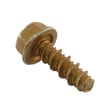
- Dull or bent blade, or loose blade hardware
- Height adjuster not holding position
- Pull cord or recoil starter problems
- Wheel or axle wear causing poor tracking
Common repairs that are often worth it (and why)
| Repair type | Typical cost level | Why it’s usually worth it |
|---|---|---|
| Blade-related hardware and supports | Low | Restores cut quality and reduces vibration |
| Handle, knobs, and fasteners | Low | Improves control and safety |
| Wheel/height adjustment parts | Low to medium | Restores proper cutting height and maneuverability |
| Recoil starter issues | Medium | Avoids replacing an otherwise good mower |
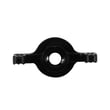
If you’re seeing blade wobble or vibration, replacing worn supports and tightening hardware is a smart first step; for this model, a common related part is the lawn mower blade support 736-0524B.
Why it matters
A mower that is unsafe to operate (loose fasteners, damaged discharge components, or compromised safety devices) can throw debris or fail under load. The manual emphasizes keeping nuts and bolts tight and replacing worn safety-related components with OEM-equivalent parts.
Last updated: February 2026
How much does it cost to repair a hydrostatic transmission on a lawn mower?
Hydrostatic transmission repairs are typically a riding-mower cost; most walk-behind mowers like the MTD 12AE997E099 use a simpler belt, cable, and gear drive instead of a hydrostatic unit. When a hydrostatic transmission is involved, total repair cost commonly ranges from a few hundred dollars for minor service to $1,300 to $2,500 for a full replacement.
What you’re likely dealing with on the MTD 12AE997E099
On this model, “won’t move” or “poor self-propel” symptoms are usually caused by drive system wear or adjustment, not a hydrostatic transmission.
Common checks:
- Inspect the drive cable for stretch, binding, or misrouting.
- Check the drive belt and pulleys for glazing, cracking, or slipping.
- Look for worn wheel drive parts (pawls, ratchets) if one wheel freewheels.
- Verify the height adjuster and wheel hardware are tight and not dragging.
- Confirm the handle controls fully engage the drive.
For diagrams and part identification, use the 12AE997E099 owner's manual.
Typical cost ranges (what you pay for)
Costs vary most by whether it’s service/adjustment vs. major component replacement.
| Repair type | What it usually includes | Typical cost range (parts + labor) |
|---|---|---|
| Adjustment/service | Cable adjustment, belt inspection, cleaning | $75 to $250 |
| Drive system repair (walk-behind) | Belt, pulleys, wheel drive parts | $150 to $500 |
| Hydrostatic repair (riding mower) | Fluid service, linkage work, leak repair | $200 to $800 |
| Hydrostatic replacement (riding mower) | Transmission unit replacement | $1,300 to $2,500 |
Why it matters
A hydrostatic replacement can exceed the value of an older mower, while a walk-behind drive issue is often a straightforward fix (cable, belt, wheel drive parts). Identifying the drive type first prevents overpaying for the wrong repair.
Parts that commonly show up in “won’t move” fixes
If you’re diagnosing a self-propel problem, these model-matched parts are often involved:
- Lawn mower pawl plate 16855 (wheel drive engagement)
- Cotter pin 714-0104 (retaining hardware on linkages)
- Lawn mower blade support 736-0524B (not a drive part, but often removed during underside service)
If you want a step-by-step diagnostic flow, use lawn mower wont move troubleshooting video motion drive failure.
Last updated: February 2026