Installation guide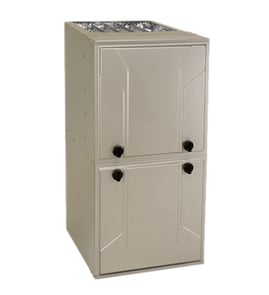




Do Payne furnaces have a reset button?
Yes. On the Payne PG8JAA066110 gas furnace, the “reset” is typically a manual-reset safety limit switch in the gas control area (often a flame rollout or overheat limit) with a small button you press after the underlying problem is corrected. See the installation guide for the safety checks and reset guidance.
What “reset” means on this furnace
Payne furnaces usually do not have one universal reset button for the whole unit. Instead, they use multiple safety devices that either:
- Manual-reset (you press a small button on the switch), or
- Auto-reset (the switch resets after it cools)
Common reset-related items include:
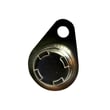
- Flame rollout switch (manual reset)
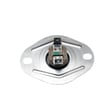
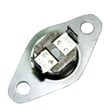
- High-limit/temperature limit switch (some are manual reset)
- Draft safeguard or vent-related limit (often auto-reset)
- Control board lockout (resets by interrupting power or thermostat call)
Safe, practical reset steps (what we recommend)
- Turn the thermostat to OFF.
- Turn off power to the furnace at the service switch or breaker.
- Remove the access panel(s) and locate the manual-reset limit switch(es) in the burner or gas control area.
- If a switch has a small center button, press it once to reset.
- Reinstall doors (the blower door typically must be on for operation), restore power, then call for heat.
If the switch trips again, do not keep resetting it. A rollout or overheat trip points to an airflow, venting, or combustion-air problem that needs correction.
Control board “lockout” reset vs. safety switch reset
| What needs resetting | Typical symptom | How it resets |
|---|---|---|
| Manual-reset limit/rollout switch | Furnace shuts down for safety | Press the switch’s reset button after fixing the cause |
| Control board lockout | Furnace won’t retry ignition for a period | Interrupt 115V power briefly or cycle the thermostat OFF then back to HEAT |
| Auto-reset vent/draft limit | Furnace cycles off, then may restart later | Resets automatically after cooling |
Why it matters
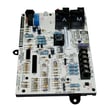
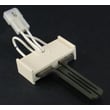
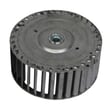
A tripped manual-reset switch is a safety warning. Resetting without fixing the cause can lead to repeated shutdowns and damage to components like the igniter, blower system, or the control board HK42FZ034.
Last updated: February 2026
How much space is needed around a gas furnace?
For the Payne gas furnace model PG8JAA066110, the required space depends on the specific clearance-to-combustibles and combustion-air rules in the installation instructions; many installations allow tight side and back clearances, but you still need safe front working space and proper vent clearances. Use the clearances and air-opening sizing in the installation guide for the exact setup.
Minimum clearances that matter most
Clearances are about two things: (1) keeping combustibles safely away from hot surfaces and venting, and (2) ensuring the furnace has enough air for combustion and ventilation.
- Follow the minimum inches clearance to combustible construction diagram for your installation orientation (upflow, downflow, horizontal).
- Maintain vent clearance to combustibles:
- Single-wall vent: 6 inches
- Type B-1 vent: 1 inch
- Keep the furnace area open enough to prevent blocked combustion air and overheating (do not crowd the burner compartment).
- Do not store items in front of the unit; you need access for filter changes, service, and safe burner inspection.
Combustion air and “space around the furnace”
Even if the cabinet clearances are small, the room or closet must provide enough combustion air.
- If the space is at least 50 cu ft per 1,000 Btuh input for all gas appliances, indoor combustion air methods may be allowed.
- If the space is less than 50 cu ft per 1,000 Btuh, you typically need an outdoor combustion air method.
- Outdoor air opening sizing commonly used in the guide includes:
- Two horizontal ducts: 1 sq in free area per 2,000 Btuh
- Two openings or vertical ducts: 1 sq in free area per 4,000 Btuh
- One outdoor opening: 1 sq in free area per 3,000 Btuh (and not less than the sum of vent connector areas)
Quick reference table (common guide values)
| Item | Typical requirement in the guide | Why it matters |
|---|---|---|
| Single-wall vent clearance | 6 in. | Reduces fire risk near hot venting |
| Type B-1 vent clearance | 1 in. | Maintains safe vent spacing |
| Appliance clearance (air method section) | 1 in. sides/back; 6 in. front | Helps airflow and service access |
Why it matters
Insufficient clearance or combustion air can cause overheating (opening limit switches), nuisance shutdowns, and unsafe venting performance. Keeping the correct spacing also makes routine service and troubleshooting faster.
Last updated: February 2026
What size is a 80,000 BTU furnace?
An 80,000 BTU gas furnace is typically a mid-size residential furnace; “size” usually means its heating capacity (80,000 BTU per hour input), not a single standard cabinet dimension. For your Payne PG8JAA066110, use the installation guide to confirm the exact cabinet size and required clearances for your specific configuration.
What “size” can mean for an 80,000 BTU furnace
When customers ask about furnace size, it usually refers to one of these:
- Heating capacity: 80,000 BTU/h input (how much fuel it can burn)
- Physical cabinet size: width, height, depth (varies by model series)
- Airflow capability: often paired with a blower size and ductwork design
- Venting and combustion air needs: opening sizes and duct sizing depend on BTU input
Typical physical size range (what to expect)
Most 80,000 BTU class furnaces are built in common cabinet widths, with height and depth varying by series and installation orientation.
| What you’re measuring | Typical range for this class | What to check for PG8JAA066110 |
|---|---|---|
| Cabinet width | ~14 to 21 inches | Model-specific cabinet width in the installation guide |
| Cabinet height | ~33 to 40 inches | Clearance and service access requirements |
| Cabinet depth | ~27 to 33 inches | Venting, filter rack, and return-air setup |
Why BTU size matters for installation
BTU input directly affects combustion air sizing and can affect venting requirements. The installation instructions for this furnace include tables that size combustion-air openings and ducts based on furnace input (BTUH). Using the correct opening size helps the furnace burn cleanly and run safely.
Quick checks before you buy or install
- Match the furnace BTU input to your home’s heat load (oversizing can cause short cycling).
- Verify cabinet dimensions and clearances for your closet, attic, or basement location.
- Confirm combustion air method (indoor air vs. ducted outdoor air) and opening sizes.
- Confirm venting type and routing allowed for your installation orientation.
- If you’re troubleshooting heat issues, check common safety devices like a limit switch (for example, furnace temperature limit switch HH18HA495) and airflow restrictions.
Last updated: February 2026
How do I read my furnace model number?
For your Payne gas furnace model PG8JAA066110, the model number identifies the exact furnace series and size, and it is the key to matching the correct parts and installation requirements. We use the model number (and the serial number on the rating plate) to narrow down specifications like airflow setup, electrical requirements, and compatible replacement parts.
Where to find the model number on the furnace
Look for the data plate or rating label on the furnace cabinet. Common locations include:
- Inside the blower compartment door area
- On the inside of an access panel
- On a side wall of the furnace cabinet
- Near the burner compartment (label placement varies)
For diagrams and cabinet details that help you orient yourself, use the installation guide.
How to interpret a furnace model number (what it usually tells you)
Model numbers are brand-specific, but most follow a similar logic. Typically, the characters indicate:
- Fuel type and product family (gas furnace series)
- Cabinet width or configuration (upflow, horizontal, etc., depending on series)
- Heating input size (often reflected by a number like 066 for a 66,000 BTU class)
- Design or revision identifiers (letters/numbers at the end)
Model number vs. serial number
| You are reading | What it’s used for | Why you need it |
|---|---|---|
| Model number (PG8JAA066110) | Identifying the exact furnace design | Ensures parts and instructions match your unit |
| Serial number | Identifying build date and production run | Helps estimate age and confirm version changes |
Why it matters for parts and troubleshooting
Using the correct model number prevents mismatched electrical and safety components. For example, common model-matched parts on this unit include the control board HK42FZ034 and temperature limit switches such as furnace temperature limit switch HH18HA495.
Quick tips to avoid mix-ups
- Copy the model number exactly as printed (letters and numbers)
- Use the full model number, not just the first few characters
- If you are ordering parts, match by model first, then confirm the part ID
- If you are diagnosing an electrical issue, follow the wiring and service label guidance in the installation guide
Last updated: February 2026