


What is the most common part to fail on a furnace?
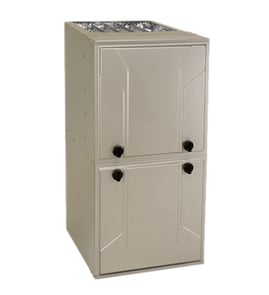
The most common “failure point” on a furnace is the air filter because a clogged filter restricts airflow and can trigger a safety shutdown from overheating. On your York P3URB12N07501C upflow natural gas furnace, other frequent failures include the flame sensor, igniter, control board, and blower components such as a run capacitor.
Most common furnace failures (and what you’ll notice)
- Dirty air filter: short cycling, overheating, weak airflow
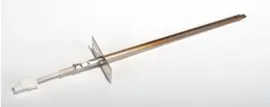
- Flame sensor: burners light then shut off within seconds
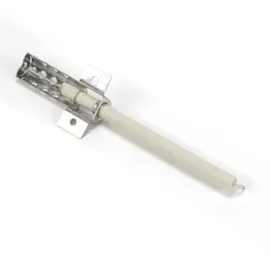
- Hot surface igniter: no ignition, repeated ignition attempts
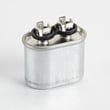
- Blower run capacitor: blower hums, starts slowly, or won’t start
- Thermostat or power issue: no response, intermittent operation
- Blown fuse/tripped breaker: furnace completely dead
Quick checks we recommend first
- Set thermostat to Heat and raise the setpoint 3 to 5 degrees.
- Replace the air filter and make sure supply and return vents are open.
- Check the furnace switch and circuit breaker; reset once if tripped.
- If the burners light then go out quickly, clean the flame sensor (lightly) and retry.
- If the blower will not start or only hums, test the capacitor and motor circuit.
Part you may need for blower-start problems
If your blower motor struggles to start, a weak run capacitor is a common cause. For this model, we list the Capacitor 12907 as an in-stock replacement option.
| Symptom | Common cause | Typical fix |
|---|---|---|
| Furnace starts then shuts off | Dirty filter or flame sensor | Replace filter; clean flame sensor |
| Clicks but won’t ignite | Igniter issue | Replace igniter |
| Blower hums or won’t spin | Weak capacitor | Replace capacitor |
| Completely dead | Fuse, breaker, door switch | Restore power; replace failed safety/power part |
Why it matters
Restricted airflow and ignition-safety problems can look like “random breakdowns,” but they are often predictable and preventable. Catching a clogged filter or weak capacitor early helps protect the heat exchanger, blower motor, and control board.
Last updated: February 2026
What is the life expectancy of a York furnace?
A York furnace like model P3URB12N07501C typically lasts 15 to 20 years. With consistent maintenance (filter changes, safe venting, and annual service), many natural gas furnaces reach the high end of that range, and some run longer.
Typical lifespan ranges (what to expect)
Most upflow natural gas furnaces fall into these practical ranges:
- 15 to 20 years: common lifespan for a properly installed gas furnace
- 10 to 15 years: heavy use, poor airflow, or repeated overheating events
- 20+ years: excellent maintenance, correct sizing, stable gas pressure, clean combustion
| Condition | What you’ll usually see | What it means |
|---|---|---|
| Well maintained | Steady heat, normal cycling | You’re on track for 15 to 20 years |
| Airflow restricted | Hot limit trips, noisy blower | Shortens heat exchanger and blower life |
| Ignition issues | Delayed ignition, retries | More wear on igniter and controls |
| Aging blower components | Humming, slow start | Often points to a weak run capacitor |
What shortens (or extends) furnace life
These are the biggest real-world factors that change life expectancy:
- Air filter habits (a clogged filter overheats the furnace and strains the blower)
- Ductwork and return air (undersized returns reduce airflow)
- Installation quality (correct sizing and venting prevent chronic stress)
- Condensate and corrosion control (especially in high-efficiency setups)
- Electrical health (loose connections and failing capacitors stress motors)
If your blower motor struggles to start or you hear a persistent hum, checking the run capacitor is a common next step; the model-specific part listed for this furnace is the capacitor 12907.
Why it matters
Once a furnace gets into the 15 to 20 year window, small issues (airflow restrictions, weak ignition, failing capacitors, dirty burners) can turn into repeated no-heat calls. Staying ahead of maintenance helps protect comfort, efficiency, and major components.
Last updated: February 2026
What company makes York furnaces?
York furnaces are made under the York brand, which is part of Johnson Controls (often listed as Johnson Controls, Inc. or Johnson Controls-Hitachi in product listings). For your York upflow natural gas furnace model P3URB12N07501C, that means York is the manufacturer brand family you should use when matching parts and service information.
Who “York” is (and why you’ll see different names)
York is the furnace brand; Johnson Controls is the parent company name that commonly appears in certifications, distributor catalogs, and product registrations.
Common ways it may be labeled:
- York
- York by Johnson Controls
- Johnson Controls
- Johnson Controls, Inc.
- Johnson Controls-Hitachi (corporate branding in some contexts)
Why it matters for parts and repairs
Using the correct brand and full model number helps ensure you get the right electrical and HVAC components (like capacitors, blower parts, and controls) that match your furnace’s specifications.
Quick check: what to match when ordering
- Model number: P3URB12N07501C (match exactly)
- Fuel type: natural gas
- Configuration: upflow
- Part identifiers: use the part ID and part number when available
| What you’re matching | Where it’s used | Why it matters |
|---|---|---|
| Brand (York) | Listings and diagrams | Keeps you in the right product family |
| Model number (P3URB12N07501C) | Parts lookup | Prevents fit and wiring mismatches |
| Part ID / part number | Ordering | Ensures you get the exact replacement |
A part example from this model’s parts list
If you’re troubleshooting a motor that hums, struggles to start, or overheats, a weak run capacitor is a common cause. This model’s parts list includes a capacitor option: capacitor 12907.
Before replacing electrical parts
- Turn off power at the furnace switch and the breaker
- Confirm the symptom (hard start, intermittent blower, buzzing)
- Test safely with a meter if you’re qualified
- Replace with the same ratings listed on the original part
For safe testing basics, we use the steps in how to use a multimeter to test electrical parts video.
Last updated: February 2026
What is the most expensive part to fix on a furnace?
On a York P3URB12N07501C upflow natural gas furnace, the most expensive single repair is typically the heat exchanger because it is a major safety-critical component and the labor to replace it is extensive. Other high-cost repairs often involve the blower motor assembly or the control board.
Typical “most expensive” furnace repairs (what to expect)
Costs vary by region and access, but these are the repairs that most often land at the top of the bill:
- Heat exchanger replacement: commonly the highest total cost due to teardown and reassembly
- Blower motor or blower assembly: higher part cost plus setup and wiring time
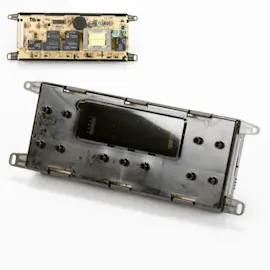
- Control board (furnace control): expensive electronics and diagnostic time
- Draft inducer motor: moderate-to-high part cost; can include venting checks
- Gas valve: part cost plus combustion setup checks
Quick comparison: cost drivers by component
| Component | Why it gets expensive | What you usually notice first |
|---|---|---|
| Heat exchanger | Major disassembly; safety checks | Furnace runs but shuts down, odd smells, repeated lockouts |
| Blower motor/assembly | High part cost; labor | Weak airflow, overheating, noisy blower |
| Control board | Electronics + diagnostics | No heat call response, intermittent operation |
| Inducer motor | Part cost; venting/pressure checks | Starts then stops, pressure switch issues |
What we recommend before approving a major repair
These steps help confirm the real failure and avoid replacing the wrong part:
- Verify the thermostat settings and replace thermostat batteries (if applicable).
- Check the air filter and return vents; restricted airflow can mimic expensive failures.
- Confirm the breaker and service switch are on.
- Look for a blink code on the control board door panel area (if your furnace uses one).
- If you suspect an electrical issue, use safe testing practices; our guide how to use a multimeter to test electrical parts video helps.
Why it matters
The “most expensive part” is usually expensive because it combines high labor time with critical performance or safety checks. Getting an accurate diagnosis first can prevent repeat breakdowns and unnecessary parts.
If you are troubleshooting a blower that will not start or runs weak, a failed run capacitor can be a lower-cost fix on some systems; the capacitor 12907 listed for this model is one example of a common electrical wear item.
Last updated: February 2026