 Owner’s manual
 Error Codes
Can I look up Frigidaire parts by model number?
Yes. We recommend looking up Frigidaire parts by entering the full model number (for this freezer, FFCS0722AW) so you see the correct parts diagrams and compatible replacement parts for your exact unit.
How to find and use the model number
You will get the best match when you use the complete model number exactly as shown on the appliance label.
- Use the full model number, not just the brand or freezer size.
- Include all letters and numbers (example: FFCS0722AW).
- If your label also shows a serial number, keep it for reference, but search by model number first.
- Confirm the product type is a chest freezer before ordering parts.
- Cross-check the part location using the exploded-view diagrams for the model.
For model-specific identification and operating details, use the FFCS0722AW owner's manual.
What you can typically look up with a model-number search
A model-number lookup is designed to narrow parts to what fits your exact Frigidaire freezer configuration.
| What you’re trying to do | What the model-number lookup helps you find |
|---|---|
| Replace a failed component | Compatible replacement parts for FFCS0722AW |
| Confirm where a part installs | Parts diagrams and location callouts |
| Avoid ordering the wrong item | Model-specific variations and revisions |
Why it matters
Frigidaire often uses similar-looking parts across multiple freezer models. Searching by FFCS0722AW helps prevent fit issues, wiring/connector mismatches, and repeat repairs.
If you’re troubleshooting before ordering parts
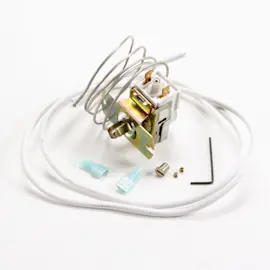
If your freezer has an electronic control and is showing an error, use our Frigidaire deluxe electronic control module freezer error codes guide to narrow the likely failure (control, sensor, wiring, etc.) before you choose parts.
Last updated: February 2026
Can you replace the rubber seal on a chest freezer?
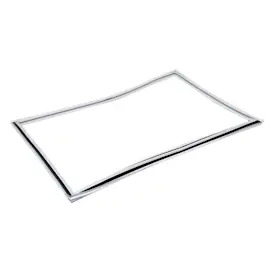
Yes. On the Frigidaire FFCS0722AW chest freezer, you can replace the rubber lid seal (gasket) if it’s torn, hardened, or no longer sealing. A good seal prevents warm air leaks that cause frost, moisture, and temperature swings; use the FFCS0722AW owner's manual for care and sealing tips.
How to tell the seal needs replacement
- Visible cracks, tears, or missing sections
- The lid looks closed but you can feel cold air leaking
- Excess frost or moisture inside the cabinet
- The lid sits unevenly or looks misaligned
- The gasket feels stiff, flattened, or won’t “spring back”
Before you replace it: quick fixes that often work
The manual notes that sealing problems can sometimes be corrected by reshaping the seal.
- Make sure the freezer is level; an unlevel cabinet can misalign the lid and prevent sealing
- Clean the gasket and the sealing surface with mild detergent and warm water; dry fully
- Warm and reshape the gasket where it leaks using a hair dryer set to “cool”, then press it into place by hand
- Reduce lid-open time to limit moisture and frost buildup
Replacement overview (what the job usually involves)
Chest freezer gaskets are typically pressed into a retaining channel or secured with fasteners, depending on design.
- Unplug the freezer.
- Remove the old gasket by pulling it out of the channel (or loosening fasteners if present).
- Clean and dry the channel and sealing surface.
- Install the new gasket evenly, working around the perimeter.
- Close the lid and check for gaps all the way around.
Seal check: simple “paper test”
| Test | What to do | What it means |
|---|---|---|
| Paper pull test | Close lid on a strip of paper and pull | Strong resistance = good seal; easy slide = leak area |
| Visual gap check | Look for uneven contact around the rim | Gaps point to misalignment or warped gasket |
Why it matters
A leaking lid gasket lets humid room air into the freezer. That drives frost buildup, moisture on interior walls, longer run times, and warmer food storage conditions.
Last updated: February 2026
Is a Frigidaire a good chest freezer?
Yes. Frigidaire chest freezers like model FFCS0722AW are a solid choice for bulk storage because they are simple, efficient, and designed for long, steady run times. The biggest factors in “good” performance are correct setup, leveling, and using the right loading and cooling practices from the start.
What makes a chest freezer a good pick
A “good” chest freezer typically delivers consistent temperatures with minimal maintenance and low operating cost. For FFCS0722AW, we focus on these practical strengths:
- Steady cold retention (top-opening design holds cold air better than uprights)
- Good capacity for bulk food storage
- Manual-defrost simplicity (fewer automatic defrost components to fail)
- Better performance when installed level so the lid seals correctly
- Predictable cool-down and loading guidance for safe food storage
Setup tips that directly affect performance
Following the use and care guidance is what turns a decent freezer into a great one.
- Level the freezer so the lid aligns and seals; an unlevel cabinet can cause frost, moisture, and cooling issues.
- Allow a full cool-down period before loading unfrozen food.
- Do not overload with fresh food at once; freeze in smaller batches.
- Keep the lid closed as much as possible during the first day.
- Place the freezer on a solid floor that can support it fully loaded.
Quick reference: recommended start-up practices
| Task | What we recommend | Why it matters |
|---|---|---|
| Initial cool-down | Run about 4 hours before adding unfrozen food | Helps the cabinet reach stable safe temps |
| Adding frozen food | Add after the first few hours | Reduces temperature swings |
| Freezing fresh food | Freeze in batches (not all at once) | Prevents long run times and warm spots |
| Leveling | Ensure all 4 corners rest firmly | Improves lid seal and reduces frost |
Why it matters
Most “bad freezer” complaints come from installation and use issues, not the brand itself. A lid that does not seal (often from being out of level) can create frost buildup, moisture, and temperature instability, which makes any chest freezer seem unreliable.
For model-specific operating and care details, use the FFCS0722AW owner's manual.
Last updated: February 2026
What can cause a chest freezer to stop working?
A Frigidaire FFCS0722AW chest freezer can stop working because it is not getting power, the control settings are incorrect, the lid is not sealing (often from the freezer being out of level), or a cooling-system component like the start relay or electronic control has failed. Use the owner's manual troubleshooting and setup guidance first.
Quick checks we recommend first
- Confirm the outlet has power (try a lamp or small appliance).
- Make sure the temperature control is set to a colder setting.
- Allow a full cool-down period after startup; safe storage requires about 4 hours to cool completely.
- Check that the freezer is level so the lid aligns and seals; an unlevel cabinet can cause cooling and frost problems.
- Keep the lid closed as much as possible after a shutdown or power interruption.
Common causes (and what they look like)
| What’s happening | Likely cause | What to do next |
|---|---|---|
| No lights/sound, no cooling | No power to the unit | Verify outlet, cord connection, and reset tripped breaker/GFCI |
| Runs but won’t freeze | Warm load too fast or lid not sealing | Wait 4 hours after startup; reduce warm food load; check lid seal and leveling |
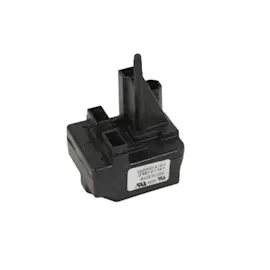
| Intermittent clicking, won’t start | Compressor start relay issue | Follow how to replace a freezer compressor start relay guidance |
| Display/alarm behavior or error indication | Control or sensor issue | Check Frigidaire deluxe electronic control module freezer error codes |
Why leveling and sealing matter
On chest freezers like the FFCS0722AW, leveling affects lid alignment. If the lid does not close and seal tightly, warm air leaks in, moisture builds up, frost increases, and temperatures rise. That can look like the freezer “stopped working” even when the compressor is running.
When it’s time to troubleshoot deeper
If power and settings are correct, the unit is level, and it still will not cool after the 4-hour cool-down period, focus next on the start components and controls (start relay, control module, wiring connections). Use the diagnostic steps in the owner's manual and the error-code guide above.
Last updated: February 2026