Owner’s manual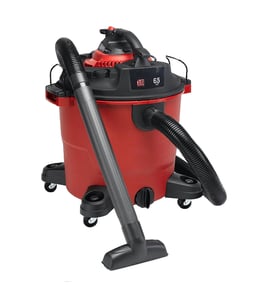
Can I use wet vac without foam sleeve?
No. For the Craftsman 113177630 wet/dry vacuum, we always use a filter setup: use the foam sleeve for liquid pickup and a dry filter for dry debris. Running the vac without a filter can let debris reach the motor and can damage the vacuum.
What to use for wet vs. dry pickup
Use the right filter for the job so airflow stays strong and the motor stays protected.
- Wet pickup (large amounts of liquid): remove the dry filter and use the foam sleeve
- Wet pickup (small amounts of liquid): the filter may be left in place, but it can saturate and cause exhaust misting
- Dry pickup: use a dry, correctly installed filter (never use a wet filter for dust)
- Fine dust: empty the drum and clean the filter more often to maintain performance
- Switching back to dry pickup: dry the filter first (a wet filter clogs quickly)
Quick decision table
| What you are vacuuming | Recommended setup | What can go wrong if you skip it |
|---|---|---|
| Water, spills, wet sludge | Foam sleeve (and remove dry filter for large amounts) | Filter saturation, misting, motor exposure to debris |
| Sawdust, drywall dust, dirt | Dry filter installed and dry | Rapid clogging, poor suction, dust bypass |
| Mixed wet and dry mess | Pick up dry first with dry filter; then switch to foam sleeve for liquids | Clogged filter, reduced airflow |
Why it matters
This model is designed to be used “as described” in the owner's manual, including keeping the filter in the correct position for normal dry vacuuming. Using the wrong filter (or none) is one of the fastest ways to lose suction and risk internal damage.
Safe-use reminders
- Unplug the vac before changing or cleaning the filter.
- Do not vacuum flammable liquids or explosive dust.
- Store indoors and keep the cord and plug in good condition.
Last updated: February 2026
What is the list of vacuum cleaner parts?
For the Craftsman 113177630 wet/dry vacuum, the parts list centers on the vac assembly plus the hose and cleaning attachments, along with the filter system that protects the motor and maintains suction. Your exact included items and service parts are shown in the owner's manual.
Common parts you will see on a wet/dry vacuum parts list
Most wet/dry vacuum parts fall into a few groups:
- Power and airflow: motor housing, on/off switch, power cord, exhaust and ventilation openings
- Collection: drum (tank), latches, casters or wheels (if equipped)
- Filtration: filter, filter cage, filter plate, filter nut
- Air path and reach: hose, extension wands, inlet port
- Cleaning tools: utility nozzle, wet nozzle (squeegee style), car nozzle, crevice tool
Model-specific carton contents (Craftsman 113177630)
The manual’s carton contents list for this model includes these items:
| Item type | Examples included with this model |
|---|---|
| Main unit | Vac assembly |
| Hose | Pos-I-Lock hose assembly |
| Nozzles and tools | Utility nozzle, wet nozzle, car nozzle, crevice tool |
| Filter hardware | Filter nut, filter plate, filter (red stripe), filter cage |
Why the parts list matters
Knowing the correct part names helps you match the right replacement and fix performance issues faster. For example, the manual notes the filter must be in the correct position to reduce leaks and help prevent vac damage, and it explains when to remove the filter for large liquid pickup.
Quick tips when identifying parts
- Match parts by function (filtering, pickup, airflow, attachments) before ordering.
- For low suction, check the hose, nozzle, and filter first.
- If you vacuum liquids often, inspect the wet nozzle squeegee for wear.
- Keep ventilation openings clear to maintain airflow.
Last updated: February 2026
Where is the model number on a Craftsman 16 gallon wet dry vac?
On Craftsman wet/dry vacuums in this series, the model and serial number label is on the handle. For your Craftsman model 113177630, check the handle area for a tag or sticker that lists both the model number and serial number; record them for future parts lookup.
Where to look (fast checklist)
- Inspect the top handle first (front and back surfaces).
- Look for a silver or white serial label with “MODEL NO.” and “Serial Number.”
- Check the underside of the handle and the area where the handle meets the powerhead.
- Wipe dust off the label with a dry cloth so the numbers are readable.
- If the label is worn, use a flashlight at an angle to make the print stand out.
What the label typically shows
| Item on label | What it’s used for | Example format |
|---|---|---|
| Model number | Finding the correct diagrams and parts | 113.177630 (may include dots) |
| Serial number | Identifying production run details | Letters and numbers |
Why it matters
We use the model number to match the correct Craftsman wet/dry vacuum parts list, and the serial number helps avoid mix-ups when a model has multiple versions. Having both numbers handy speeds up troubleshooting and ordering.
Helpful tip for parts lookup
In manuals and labels, the model number may appear with punctuation (for example, 113.177630). When searching, try it with and without the dot.
For more details on recording and using the model and serial number, see the owner's manual.
Last updated: February 2026
Why do shop vacuums lose suction?
Shop vacuums like the Craftsman 113177630 wet/dry vacuum usually lose suction because airflow is restricted (most often by a clogged or wet filter, a blockage in the hose or nozzle, or a full drum that triggers the float to shut off airflow during liquid pickup). Use the owner's manual steps to restore normal airflow.
Most common causes (and what to check first)
- Filter is clogged with fine dust: remove and clean the filter; replace it if it is torn or won’t clean up.
- Filter is wet: a wet filter clogs quickly when picking up dry debris.
- Hose, wand, or nozzle blockage: check for packed debris at bends and at the inlet.
- Drum is full: reduced capacity can choke airflow.
- Float shutoff activated (liquid pickup): when liquid reaches a set level, the float rises and airflow stops.
Quick suction restore checklist (5 to 10 minutes)
- Unplug the vac before servicing.
- Remove the hose and check both ends for clogs.
- Inspect the filter for heavy dust loading, tears, or improper seating.
- If you recently picked up liquid, dry the filter before vacuuming dry material.
- Empty the drum; if suction stopped during liquid pickup, reset by emptying the drum and lowering the float.
Wet vs. dry pickup: what changes
| Situation | What typically happens | What to do |
|---|---|---|
| Dry pickup with a wet filter | Filter clogs fast; suction drops quickly | Dry the filter first, then resume dry pickup |
| Large liquid pickup with filter installed | Filter saturates; exhaust misting can appear | Remove filter for large liquid pickup, then dry it afterward |
| Liquid level reaches float shutoff | Airflow ceases | Turn off, unplug, empty drum, restart |
Why it matters
Low suction is almost always an airflow problem. Running the vac with restricted airflow can make cleanup frustrating and can push fine dust into places it should not go. Keeping the filter dry for dry pickup and clearing blockages restores performance fast.
Last updated: February 2026