Installation guide
 Owner’s manual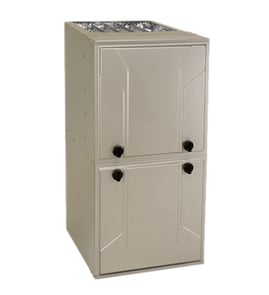




What is the average lifespan of a Carrier furnace?
A Carrier furnace typically lasts 20 years. With correct installation, clean combustion air, and routine maintenance (filter changes, burner and blower checks), many units reach 15 to 30 years of service. For model-specific operating limits that protect longevity, use the installation guide.
What affects furnace lifespan the most
- Return-air temperature control: Keep return air within the limits specified for this furnace to reduce stress on the heat exchanger, blower motor, and controls.
- Combustion air quality: Avoid contaminated combustion air (common household chemicals can accelerate corrosion).
- Correct gas input and setup: Proper manifold pressure and correct orifice setup prevent overfiring and heat exchanger damage.
- Airflow and filtration: Restricted airflow overheats the furnace and can trip limit switches.
- Electrical health: Loose connections, weak capacitors, or failing boards can shorten component life.
Model 58STA09010016 operating limits that help it last longer
The installation instructions for this Category I fan-assisted furnace specify return-air temperature limits that directly impact reliability.
| Item | Target for longevity | Why it matters |
|---|---|---|
| Continuous return-air temp | At least 60°F | Prevents cold-air stress and condensation-related issues |
| Intermittent (setback) return-air temp | Down to 55°F | Helps during night setback operation |
| Maximum return-air temp | 80°F max | Reduces overheating risk to motors, controls, and heat exchanger |
Parts that commonly come up when a furnace is overheating or short-cycling
If your Carrier 58STA09010016 is shutting down on high temperature, these parts are often involved in diagnosis and repair:
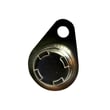
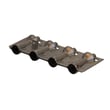
- Furnace temperature limit switch HH18HA495
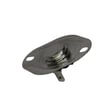
- Furnace temperature limit switch HH18HA502
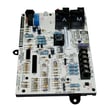
- Control board HK42FZ034
Why it matters
A furnace can still “run” while operating outside airflow, temperature, or combustion-air guidelines; that extra stress usually shows up later as repeated limit trips, ignition problems, or premature heat exchanger and control failures.
Last updated: February 2026
What is the most common part to fail on a furnace?
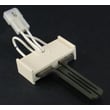
On a gas furnace like the Carrier 58STA09010016, the most common failure item is the hot surface igniter because it heats to very high temperatures on every call for heat and becomes fragile over time. If the igniter fails, the burners will not light and you get no heat.
What you typically see when the igniter is failing
- Furnace starts, inducer runs, but burners never light
- Repeated clicking or multiple ignition attempts, then shutdown
- Short cycling (tries to heat, then stops)
- No heat even though the thermostat is calling for heat
- A visible crack or white spot on the igniter (if you can safely inspect it)
Quick checks that prevent repeat failures
Before replacing parts, we use these basics to reduce stress on ignition and airflow components:
- Replace or clean the air filter monthly; never run without a filter
- Keep the filter access door installed and closed
- Keep the burner compartment clean and free of rust, soot, and dust
- Avoid storing strong household chemicals near the furnace; contaminated combustion air can corrode furnace components
- Make sure electrical connections are tight and controls operate correctly (seasonal maintenance)
Common “no heat” parts and what they do
| Part | What it does | What happens when it fails |
|---|---|---|
| Igniter | Heats up to light the burners | Burners do not ignite, no heat |
| Control board | Manages ignition sequence and safety timing | Erratic operation, no ignition, lockouts |
| Temperature limit switch | Shuts burners off if overheating occurs | Burners shut off, blower may keep running |
Model-specific parts we commonly see involved
If your symptoms point beyond the igniter, these model-listed parts are often involved in ignition and safety operation:
Why it matters
Ignition and safety controls work as a sequence. A weak igniter can look like a gas or control problem, and restricted airflow (dirty filter, dirty blower wheel) can trip limit switches and cause nuisance shutdowns that feel like “no heat.” For maintenance intervals, safety notes, and installation requirements, follow the installation guide.
Last updated: February 2026
Where can I buy Carrier HVAC parts?
You can buy replacement parts for your Carrier furnace model 58STA09010016 directly from the parts list for this model, and confirm the correct part by matching your furnace’s model and the part callouts in the owner's manual.
Best way to get the right part for 58STA09010016
We recommend using the model-specific parts breakdown first, then verifying the part by function (ignition, safety, blower, or controls).
- Match the part to the exact Carrier 58STA09010016 model number on your rating plate
- Use the parts diagram and parts replacement section in the installation guide
- Confirm the part’s role (control, ignition, limit safety, blower)
- Compare your old part’s markings and wire terminals before ordering
- Replace one part at a time so troubleshooting stays clear
Common Carrier furnace parts customers replace
These are examples of parts available for this model that commonly relate to “no heat,” short cycling, or blower issues:
| Symptom | Part type to check | Example part available for this model |
|---|---|---|
| No heat, no ignition | Ignition component | Furnace burner igniter (listed for this model) |
| Furnace shuts off, overheats | Safety limit switch | Furnace temperature limit switch HH18HA495 |
| Intermittent operation, no response | Control board | Control board HK42FZ034 |
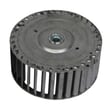
| Blower runs poorly or noisy | Blower wheel | Wheel blwr LA11XA048 |
Why it matters
Carrier furnaces often use multiple similar-looking electrical and safety parts (like limit switches and control components). Ordering by the exact model number and verifying in the documentation helps prevent wrong-part returns and repeat breakdowns.
Last updated: February 2026