 Owner’s manual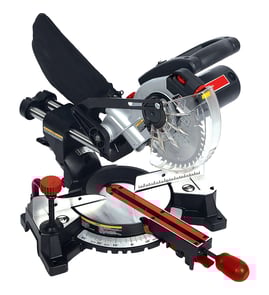

What is the 31.6 on a miter saw?
On the Bosch 5312 miter saw, 31.6° is a built-in positive detent (stop) used primarily for cutting crown molding flat on the table. It pairs with the saw’s 33.9° bevel detent to make accurate 90° corner crown cuts for 38° spring-angle molding (not 45° crown). See the owner's manual.
What 31.6° means on the Bosch 5312
The 31.6° mark is a miter detent. Detents let us swing the table to a common angle quickly and lock it in accurately.
Common detents on this saw include:
- 0°
- 15°
- 22.5°
- 31.6° (crown molding detent)
- 45°
- 60° right
When to use 31.6° (and when not to)
Use 31.6° when:
- You are cutting standard 38° spring-angle crown molding
- You want to lay the crown flat on the saw table (instead of nested against the fence)
- You are also using the 33.9° bevel detent for typical 90° corners
Do not use 31.6° when:
- You are cutting 45° spring-angle crown molding (this saw uses different angles for that)
- Your corner is not a true 90° and you need to fine-tune the settings
Quick settings reference (crown molding laid flat)
| Crown spring angle | Miter setting | Bevel setting | Notes |
|---|---|---|---|
| 38° | 31.6° | 33.9° | Uses the saw’s crown detents |
| 45° | 35.3° | 30.0° | Uses different settings (not the 31.6° detent) |
Why it matters
Crown molding is easy to mis-cut because the profile sits at a “spring angle” between the wall and ceiling. The Bosch 5312 detents at 31.6° miter and 33.9° bevel reduce setup time and improve repeatability when the molding is 38° spring angle and the corner is close to 90°.
Last updated: February 2026
What should you never cut with a miter saw?
You should never use a Bosch 5312 miter saw to cut pieces too small to clamp, cut freehand, or cut ferrous metals (steel or iron). This saw is intended for wood and wood-like products; unsafe materials and setups increase the risk of binding, kickback, and serious injury (see the owner's manual).
Never cut these materials on a Bosch 5312
- Ferrous metals (steel, iron, rebar, threaded rod): the manual warns against using abrasive cutoff wheels and against cutting ferrous material because it can cause excessive sparking, damage the guard, and overload the motor.
- Masonry products (brick, tile, concrete): these require abrasive wheels and create dust and loads the saw is not designed for.
- Unknown or contaminated stock: wood with embedded nails, screws, staples, or grit can damage the blade and increase kickback risk.
Never make these types of cuts
- Freehand cuts: the workpiece must be stationary and clamped or braced; do not feed the workpiece into the blade.
- Cuts on pieces too small to clamp securely: keep hands out of the marked “No Hands” zone; small parts can pull your hand toward the blade.
- Cross-handed cutting (reaching across the cut line): the manual calls this very dangerous.
- Multiple workpieces at once: they cannot be clamped adequately and can shift or bind.
Safer alternatives (what to do instead)
| If you need to cut… | Use this approach | Why it’s safer |
|---|---|---|
| Very small parts | Clamp a longer board, cut the end off, then trim to length | Keeps hands away from the blade |
| Aluminum or other non-ferrous metal | Use a blade specifically rated for non-ferrous metal cutting | Reduces grabbing and improves cut control |
| Warped or bowed wood | Clamp it with the outside bowed face toward the fence | Reduces rocking and binding |
| Long or wide boards | Add stable outfeed support (stands/tables) | Prevents tipping and guard interference |
Why it matters
Most miter saw injuries happen when the workpiece moves, binds, or forces your hands into the cutting area. Clamping, proper support, and cutting only approved materials keeps the lower guard working correctly and helps prevent kickback.
Last updated: February 2026
What's the best miter saw on the market?
The “best” miter saw depends on what you cut most and how you work. For many woodworkers, a 12-inch sliding compound miter saw is the most versatile; your Bosch 5312 is built around that idea (12-inch blade, 1-inch arbor) and includes features like miter detents and sliding base extensions. For model-specific setup and safe operation details, use the owner's manual.
How we recommend choosing the best miter saw
- Capacity: 10-inch vs 12-inch blade, and whether you need a slider for wider boards.
- Accuracy features: positive miter detents, bevel stops, and a stable fence.
- Jobsite vs shop: weight, stand compatibility, and how often you transport it.
- Dust control: porting and bag or vacuum hookup.
- Material type: wood and wood-like products; use the correct blade for non-ferrous metals (never abrasive cutoff wheels).
Quick comparison: which type fits your work?
| If you mostly do... | Best fit | Why it wins |
|---|---|---|
| Trim, baseboard, framing | 10-inch compound miter saw | Lighter, plenty of capacity for common trim |
| Furniture, wide boards, crown | 12-inch sliding compound miter saw | More crosscut capacity and flexibility |
| High-volume jobsite cutting | Pro-grade slider with stand | Faster repeatability and support for long stock |
What your Bosch 5312 already does well
From the Bosch 5312 design features, you get several “best saw” traits for repeatable, accurate cuts:
- Miter detents for fast common angles
- Miter detent override for micro-adjustments between detents
- Sliding fence with a cast-in scale for repeat cuts
- Kerf inserts that can be adjusted to help reduce tear-out
- Sliding base extensions to support long workpieces
Why it matters
The right miter saw is the one that stays accurate, supports your workpiece safely, and matches your most common cuts. A saw that is “best” on paper can still be a poor fit if it lacks the capacity, detents, or support you need for your typical trim, crown, or long stock.
Last updated: February 2026