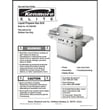
Owner’s manual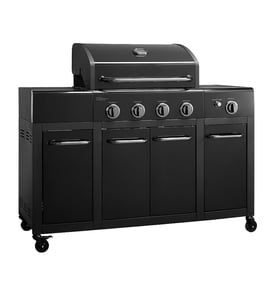



Is it worth fixing a gas grill?
Yes, fixing a gas grill is usually worth it when the firebox and frame are still solid and the problem is limited to normal wear parts (burners, ignition, grates, grease handling). For the Kenmore Elite 41516661800 LP gas grill, parts support and safe-use guidance in the 41516661800 owner's manual make repair a practical option.
Repair makes sense when you can restore safe ignition and steady burner flames without major structural work.
- The grill body and firebox are intact (no rust-through holes)
- Burners light reliably and flames are even after basic cleaning
- The issue is a single component (ignition, burner, grate, caster)
- You can complete a leak test after reassembly (soap-and-water bubbles test)
- The repair cost is clearly less than replacing the grill
If the grill has structural damage or chronic safety issues, replacement is the better value.
- Rust-through in the firebox or bottom pan
- Warped or cracked firebox that prevents proper burner alignment
- Repeated gas leaks you cannot stop by tightening connections
- Severe corrosion that keeps returning after cleaning
- Multiple major parts needed at once (burners plus grates plus ignition)
These are typical fixes that restore performance and safety on LP grills like the Kenmore Elite 41516661800.
| Symptom | Likely fix | Example part you may replace |
|---|---|---|
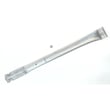
| Weak heat or uneven flames | Clean burner ports; replace burner if corroded | Kenmore elite gas grill main burner 80016303 |
| One burner lights, others do not | Inspect carryover tube; clear blockage | Char-broil gas grill carryover tube 80015760 |
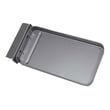
| Hard to control grease flare-ups | Clean and replace grease tray | Grease tray (match by model) |
| Lid temp seems inaccurate | Replace gauge | Temperature gauge (match by model) |
A “cheap” grill that leaks gas is never a bargain. The manual calls out critical safety steps such as using the grill only in a well-ventilated area, keeping clearances from combustibles, never lighting with the lid closed, and performing leak tests after any gas connection work. Following those steps helps you decide whether you are doing a simple wear-part repair or dealing with a bigger safety risk.
Last updated: January 2026
What are the parts to a gas grill?
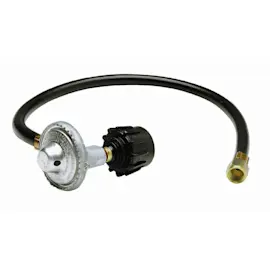
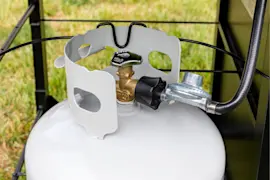
A Kenmore Elite gas grill like model 41516661800 is built around a fuel system (LP tank, regulator, valves), a burner and ignition system (burners, electrodes, igniter module), and a cooking system (grates and heat distribution parts), plus grease management and safety components. For your exact component names and diagrams, use the 41516661800 owner's manual.
- Cooking grates: hold food over the flame and transfer heat.
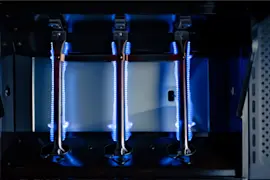
- Burners: mix gas and air to create the cooking flame.
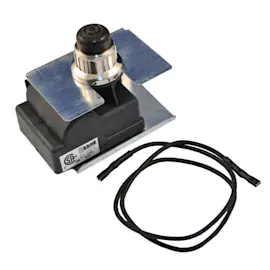
- Ignition system: creates spark to light gas (electrode, wires, ignition module).
- Control valves and knobs: regulate gas flow and flame level.
- Heat distribution parts: help spread heat and reduce flare-ups (often shields, tents, or radiants).
- Grease management: channels drippings away from burners to reduce flare-ups.
- Temperature monitoring: lid gauge helps you track cooking temperature.
These are examples of parts we commonly see replaced on this Kenmore Elite LP gas grill:
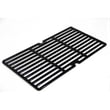
- Gas grill cooking grate 80015518 (worn coating, rust, heavy buildup)
- Kenmore elite gas grill main burner 80016303 (uneven flame, corrosion, clogged ports)
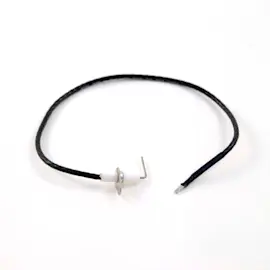
- Electrode 80016974 (no spark at the burner)
- Temperature gauge (inaccurate readings)
- Grease tray (rusted through or hard to clean)
| Grill area | Parts you will find there | What to check first |
|---|---|---|
| Control panel | knobs, valves, ignition button/module | knobs turn smoothly; igniter clicks |
| Firebox | burners, carryover tube, electrodes | steady flame; no blocked burner ports |
| Cook surface | cooking grates, heat distribution parts | excessive rust; flare-ups |
| Bottom/rear | grease tray, LP hose/regulator routing | grease buildup; hose not kinked |
Knowing the main systems helps you troubleshoot faster. For example, if the igniter clicks but a burner will not light, we focus on the electrode gap, wiring, and burner ports; if flames are weak, we focus on the LP supply, hose condition, and valve operation.
Last updated: January 2026
What is the average lifespan of a gas grill?
Most gas grills last 5 to 15 years with normal use and basic maintenance. For the Kenmore Elite 41516661800 LP gas grill, lifespan depends most on how often you cook, how well you clean grease and burners, and how consistently you protect the grill from weather (covering and dry storage).
- Budget grills: 2 to 5 years
- Mid-range grills: 5 to 10 years
- Higher-end grills with good care: 10 to 15 years (sometimes longer with part replacement)
| What wears out first | Common symptom | Typical fix |
|---|---|---|
| Main burners | Uneven flame, low heat, flare-ups | Clean ports; replace burner if rusted through |
| Ignition parts | Clicking but no spark, or no click | Check battery, electrode gap, wiring |
| Cooking grates | Heavy rust, sticking food | Clean/season; replace grates |
| Grease handling | Grease fires, heavy buildup | Clean tray and firebox regularly |
- Keep the grill in a well-ventilated outdoor area and follow clearance guidance (safe placement reduces heat damage and fire risk).
- Clean grease and food debris after cooks; grease buildup accelerates corrosion and flare-ups.
- Check burner flames regularly; poor flame patterns often mean clogged burner ports.
- Protect from weather: keep it covered and dry when not in use.
- Replace wear items as needed (burners, ignition parts, grates) instead of running them until failure.
This grill is designed to be used only with LP (propane) gas and the supplied regulator/valve assembly, and it should be leak-tested and used with the lid open during lighting. For the exact safety and maintenance steps that help extend service life, use the 41516661800 owner's manual.
A grill usually does not “die” all at once; performance drops as burners, ignition components, and grease management parts wear. Replacing a few key parts on time often restores safe ignition, steady heat, and more even cooking.
Last updated: January 2026