Owner’s manual
 Error Codes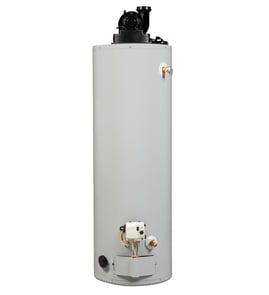



How to tell year of water heater by serial number?
For Kenmore model 153332040, the most reliable way to tell the year is to read the serial number on the rating plate (typically on the front of the tank above the gas control valve) and then match its date code format to the manufacturer’s pattern. The owner's manual shows where to find the rating plate details.
Where to find the serial number on 153332040
Look for the rating plate label on the front of the water heater.
- Check the area above the gas control valve
- Wipe dust off the label so every character is readable
- Write down the model number, serial number, and type of gas (natural or propane)
- Take a clear photo for reference before you start any repair
How serial number “date codes” usually work
Water heater serial numbers commonly embed a manufacture date using digits or letters.
| Common format | What it means | Example of what to look for |
|---|---|---|
| YYWW | Year + week of year | First 2 digits = year; next 2 = week |
| MMYY | Month + year | First 2 digits = month; next 2 = year |
| Letter code | Month/year letters (often repeating cycles) | First 1 to 2 characters are letters |
Quick checks to avoid misreading the year
- Confirm you are reading the serial number, not the model number (153332040)
- Watch for confusing characters (O vs 0, I vs 1)
- If the label shows both a long and short number, use the one labeled Serial No.
- Compare the decoded year to the heater’s likely age range (most tank-style gas water heaters last 8 to 12 years)
Why it matters
Knowing the manufacture year helps us choose the right repair approach and parts, especially for ignition and gas control issues. For example, if you are troubleshooting lighting problems, the water heater burner igniter assembly 100110771 and water heater gas valve and temperature control assembly 100110774 are common service parts for this model.
Last updated: February 2026
How do I read my water heater model number?
Your Kenmore gas water heater model number is printed on the rating plate on the front of the tank; for model 153332040, the manual notes the rating plate is located above the gas control valve. Use that exact model number when looking up parts and service information in the owner's manual.
Where to find the model number on model 153332040
Look for a label (rating plate) on the front of the water heater. On this Kenmore power-vent model, it is typically positioned above the gas control valve/temperature control.
What to write down
- Model number (example: 153332040)
- Serial number (on the same rating plate)
- Type of gas (Natural or Propane, if listed)
- Tank capacity (often listed in gallons)
- Input rate (BTU/hr, helpful for matching components)
How to use the model number for parts
When ordering or matching replacement parts, we use the model number to ensure the correct fit and compatibility for your exact heater configuration.
| What you’re doing | What to use | Why it matters |
|---|---|---|
| Finding a parts diagram | Model number 153332040 | Filters to the correct parts list |
| Ordering a specific part | Model number + part name/ID | Prevents wrong-fit returns |
| Checking specs | Model number | Confirms capacity, venting, and gas type |
Why it matters
Kenmore water heaters can look similar across sizes and series; the rating plate model number is the fastest way to match critical items like the gas valve/thermostat, burner components, and safety controls to your exact unit.
Last updated: February 2026
How many years should a gas water heater last?
Most tank-style gas water heaters last 8 to 12 years. With consistent maintenance on your Kenmore 153332040 (especially sediment flushing and anode rod upkeep), it’s common to reach the upper end of that range and sometimes longer; water quality and usage are the biggest drivers.
Typical lifespan and what changes it
A water heater’s tank life is mainly limited by internal corrosion and sediment buildup.
- Hard or high-conductivity water can consume the anode rod faster
- Heavy daily hot-water demand increases burner run time and wear
- Sediment reduces efficiency and can overheat the tank bottom
- Poor combustion air or venting can cause sooting and unsafe operation
- Skipped annual checks let small issues become tank-damaging problems
Maintenance that extends service life
Your manual notes that replacing a depleted anode rod can extend water heater life and that the anode should be checked at least annually after the warranty period. Use the owner's manual for the exact maintenance schedule and safety steps.
Common life-extending tasks:
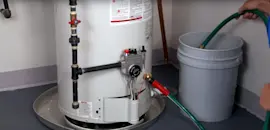
- Flush the tank periodically to reduce sediment
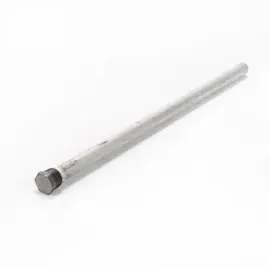
- Inspect and replace the anode when depleted (example part: anode rod 100109624)
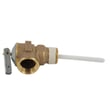
- Manually operate the temperature-pressure relief valve at least once a year (replace if it won’t reset; example part: water heater temperature and pressure relief valve 100108279)
- Keep air intake screens and blower area clear of lint and blockage
- Watch for sooting; turn off gas and have the cause corrected before further use
Quick guide: age vs. what we recommend
| Water heater age | What we recommend | Why it matters |
|---|---|---|
| 0 to 6 years | Follow routine maintenance | Helps protect the tank during the warranty period |
| 7 to 12 years | Increase inspections (anode, T&P valve, combustion) | Prevents corrosion and safety issues as parts age |
| 13+ years | Plan for replacement if repairs stack up | Older tanks are more likely to leak unexpectedly |
Why it matters
A tank leak is usually not repairable; preventing corrosion (anode rod) and controlling sediment are the two most effective ways to get the full expected lifespan from a gas water heater.
Last updated: February 2026
What is the average cost of a 50 gallon gas water heater?
A 50-gallon natural gas water heater like the Kenmore 153332040 is typically $600 to $1,300 for the unit, and about $1,000 to $3,100+ installed once you include labor, venting, fittings, and any code-required upgrades. Use the owner's manual to confirm whether your setup is power-vented, since that can raise total cost.
What drives the price up or down
- Venting type: power-vented units (like this model family) usually cost more than standard atmospheric-vent models.
- Efficiency and features: higher efficiency, better controls, and longer warranties increase price.
- Installation complexity: tight spaces, old shutoff valves, or corroded piping add labor time.
- Code upgrades: items like expansion tanks, seismic strapping (where required), and drain pans can add materials and labor.
- Disposal and haul-away: removal of the old tank is often a separate line item.
Typical cost ranges (unit vs. installed)
| What you’re paying for | Typical range | What’s included |
|---|---|---|
| Water heater unit only | $600 to $1,300 | Tank, burner system, basic controls |
| Installed total | $1,000 to $3,100+ | Labor, fittings, venting work, startup/testing |
Parts that can affect repair vs. replace decisions
If the tank is sound, replacing a failed component can be a cost-effective alternative to full replacement. Common higher-impact parts include:
- Water heater gas valve and temperature control assembly 100110774
- Water heater exhaust vent blower assembly 100109785
- Water heater temperature and pressure relief valve 100108279
- Anode rod 100109624
Why it matters
A 50-gallon gas water heater price is not just the tank; the installed cost is heavily influenced by venting, safety components (like the temperature and pressure relief valve), and the condition of existing gas and water connections.
Last updated: February 2026
What is the most common problem with gas water heaters?
The most common gas water heater problem is loss of heat because the burner will not stay lit or the heater will not fire consistently. On Kenmore model 153332040, this is often tied to ignition and combustion-air issues, venting problems, or a failing gas control system (see the troubleshooting section in the owner's manual).
Most common symptoms we see
- Pilot or burner lights but goes out within seconds
- No hot water or water turns lukewarm quickly
- Gas odors or poor combustion (sooting, unusual exhaust)
- Water on the floor that looks like a leak but is actually condensation
- Rumbling or popping sounds from sediment at the bottom of the tank
Quick checks that solve many “no hot water” calls
Before replacing parts, we recommend these basic checks (they match common causes listed in the manual troubleshooting):
- Confirm the ON/OFF switch is set to ON and the blower is plugged into a working outlet.
- Make sure the tank is completely full of water before turning gas on (open a hot faucet until water flows steadily).
- Inspect the air intake and blower lint screen for dust or blockage.
- Look for venting issues (loose, obstructed, sooted, or deteriorated vent piping).
- Verify the temperature setting is not set too low.
When it points to a part problem
If the burner will not stay lit, combustion air is restricted, or the heater shuts down on safety, these model-specific parts are commonly involved:
| Symptom | Likely area | Example part for model 153332040 |
|---|---|---|
| Burner will not stay lit | Ignition/flame proving | Water heater burner igniter assembly 100110771 |
| Poor combustion, sooting, flame issues | Burner/orifice/air mix | Burner assembly 100110764 or water heater burner orifice 100110763 |
| Overheat shut-off activated (non-resettable) | Gas control valve safety | Water heater gas valve and temperature control assembly 100110774 |
Why it matters
A gas water heater that will not stay lit is not just inconvenient; it can indicate a combustion-air or venting problem that affects safe operation. Also, water under the heater is not always a tank leak; the manual notes condensation and minor relief-valve discharge as common causes that should be checked before assuming the tank failed.
Last updated: February 2026