Owner’s manual
 View engine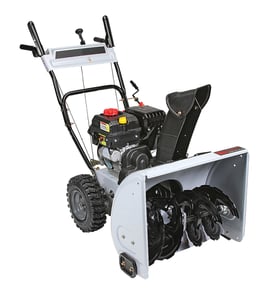



Can I use 5W30 instead of SAE 30 in my snowblower?
Yes. For the Briggs & Stratton 1696614-00 gas snowblower, 5W-30 is generally an acceptable substitute for SAE 30, and it typically improves cold-weather starting. We still recommend confirming the exact oil viscosity guidance in your 1696614-00 setup instructions manual before you change oil types.
What to use and when
Snowblowers run in cold temperatures, so multi-viscosity oil is often preferred.
- 5W-30: Better cold starts; good all-around choice for winter use.
- SAE 30: Usually better suited to warmer operating temperatures.
- Synthetic 5W-30: Often provides the easiest starting and strong protection in very cold conditions.
Quick comparison
| Oil type | Cold starting | Typical winter fit | Notes |
|---|---|---|---|
| 5W-30 | Better | Yes | Common snowblower choice |
| SAE 30 | Harder | Sometimes | Can be sluggish in cold |
| Synthetic 5W-30 | Best | Yes | Great for very low temps |
How to switch oils safely
If you are moving from SAE 30 to 5W-30, we recommend these basics:
- Check oil level on a level surface and keep it in the operating range.
- Change oil with the engine warm (not hot) so it drains fully.
- Do not overfill; overfilling can cause smoking and poor running.
- If you notice belt slip or loss of drive after service, inspect the drive system (for example, the snowblower traction drive belt 707585).
Why it matters
Using an oil that flows well in cold weather helps your Briggs & Stratton engine crank faster, start easier, and get lubrication to internal parts sooner, which reduces wear during winter starts.
Last updated: January 2026
What is the typical lifespan of a gas snowblower?
A gas snowblower like the Briggs & Stratton model 1696614-00 typically lasts 10 to 15 years with normal residential use and consistent maintenance. With careful off-season storage and timely replacement of wear items, it’s common to reach 15 to 20 years of service.
What most affects lifespan
- Maintenance consistency: oil checks/changes, lubrication, and fastener checks
- Fuel care: avoiding stale fuel and keeping the carburetor from gumming up
- Snow conditions: heavy, wet snow and end-of-driveway plow berms increase load
- Storage: dry storage reduces corrosion on the auger housing, chute, and hardware
- Wear parts: belts, cables, and shear pins are designed to be replaced over time
Maintenance habits that add years
Use the procedures and specs in the 1696614-00 operator’s manual to stay on schedule.
- Check oil level before each season and keep it in the operating range
- Inspect and replace shear pins when they’re bent, missing, or repeatedly breaking
- Keep belt-driven systems adjusted so the auger and traction engage cleanly
- Verify cable tension and control operation before the first storm
- Clean packed snow and salt residue off the unit after use
Common wear items and what they do
| Wear item | What it impacts | Typical symptom when worn |
|---|---|---|
| Snowblower auger drive belt 707584 | Auger/impeller power | Auger slows, slips, or stops under load |
| Briggs & stratton snowblower traction drive belt 707585 | Self-propel drive | Poor forward motion or slipping drive |
| Briggs & stratton snowblower auger shear pin 707555 | Auger protection | Auger won’t turn after hitting ice/debris |
Why it matters
A realistic lifespan helps you decide whether to invest in maintenance and parts now or plan for replacement later. On model 1696614-00, replacing normal wear parts on time often prevents bigger failures in the auger drive and traction systems.
Last updated: January 2026
How to find snowblower model number?
For the Briggs & Stratton snowblower model 1696614-00, the model number is typically printed on a product ID label attached to the machine. On many snowblowers, that label is commonly found near the rear of the unit, often between the wheels; confirm the exact label location using the 1696614-00 setup instructions manual.
Where to look on a snowblower
Check these common label locations first (wipe off snow, salt, and grime so the print is readable):
- Rear of the frame between the wheels
- Back of the housing near the axle area
- Side of the main frame near the engine mount
- Under or behind the handle support area
- Near the chute base or dash panel area
What to write down (so you get the right parts)
When you find the label, record the information exactly as shown.
- Model number (for this unit: 1696614-00)
- Any “type” or “revision” code listed on the same label
- Serial number (helps confirm production run)
- Engine model information if listed separately (common on snowblowers)
Why the model number matters
Snowblower parts can change within the same product family. Using the exact model number helps us match the correct diagrams and compatible parts like belts, cables, and shear pins.
| If you’re doing this task | The model number helps you | Example part type |
|---|---|---|
| Ordering replacement parts | Match the correct part to your exact build | Belts, cables, decals |
| Looking up instructions | Find the right procedures and specs | Setup, adjustments |
| Troubleshooting | Identify the correct assemblies | Auger drive, chute controls |
Last updated: January 2026
Is it worth fixing an old snowblower?
Yes, it’s usually worth fixing a Briggs & Stratton 1696614-00 gas snowblower when the problem is a normal wear item (belt, cable, shear pin) and the machine is otherwise solid. If the repair involves major drivetrain or engine work and costs approach half the price of a comparable replacement, replacement is typically the better value.
Quick way to decide (repair vs. replace)
Use these checkpoints before you spend time or money:
- Starts and runs well after fresh fuel and basic tune-up steps: repair is often worthwhile.
- Auger or drive slips but the engine is strong: commonly a belt or adjustment issue.
- Repeated breakdowns across multiple systems (drive, auger, controls): replacement tends to win.
- Parts you need are common wear parts: repair is usually cost-effective.
- Major gearbox or internal engine damage: replacement is often the smarter choice.
For model-specific setup, safety checks, and control tests, follow the 1696614-00 operator’s manual.
Common “worth fixing” repairs on this model
These are the types of repairs that are typically economical because they’re straightforward and restore performance quickly:
- Replace a worn auger belt: snowblower auger drive belt 707584
- Replace a worn traction belt: Briggs & stratton snowblower traction drive belt 707585
- Replace broken shear pins after hitting a hard object: Briggs & stratton snowblower auger shear pin 707555
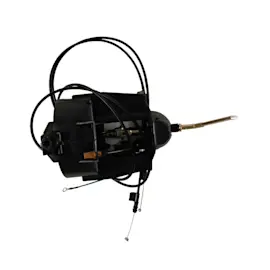
- Fix chute control issues by inspecting/servicing the cable: snowblower chute deflector control cable 707516
Cost and effort comparison
| Situation | Typical outcome | Best choice |
|---|---|---|
| Engine runs strong; auger or drive slips | Restored performance with wear parts | Repair |
| One system failing (auger, traction, chute) | Predictable fix | Repair |
| Multiple major systems failing | Costs add up fast | Replace |
| Gearbox or engine internal failure | High labor and downtime | Replace |
Why it matters
A snowblower that is mechanically sound but slipping, not throwing well, or not self-propelling often needs only a belt, cable, or shear pin. Making that repair can extend useful life and restore safe operation without the cost of a new machine.
Last updated: January 2026