Owner’s manual
How to change string on electric trimmer?
On the Craftsman 13874503 electric line trimmer, you change the cutting line by removing the trimmer head using the two release slots, opening the head to access the spool area, installing the correct diameter line, then reassembling the head so it locks back in place. Use the 13874503 owner's manual for the exact head layout.
Before you start
- Unplug the trimmer; never service the head while it is connected to power.
- Wear gloves and eye protection; line ends can be sharp.
- Clear wrapped grass and debris from the head so the release slots work.
- Use the line diameter specified for the Craftsman 13874503.
How to replace the line (head-release slot style)
- Locate the two slots/openings on the trimmer head.
- Press your fingers into the slots to release the head assembly, then pull the head off.
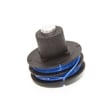
- Separate the head components to access the spool and line path.
- Remove any remaining old line and clean the spool cavity and eyelets.
- Install new line:
- Anchor the line end(s) in the spool as designed.
- Wind the line evenly and tight in the direction indicated on the spool/head.
- Leave enough free line to thread through the eyelet(s).
- Reassemble the head and push it back on until it locks.
Quick troubleshooting after restringing
| Problem | Likely cause | Fix |
|---|---|---|
| Line will not feed/advance | Line wound unevenly or in the wrong direction | Rewind tight and even, following the direction marking |
| Line jams in the head | Spool overfilled or line crossed | Remove some line; rewind without overlaps |
| Line breaks quickly | Wrong line diameter or line routed wrong | Use the specified size; re-thread through the eyelet(s) |
| Head will not lock back on | Debris in the latch area or misaligned parts | Clean and realign, then reinstall until it clicks |
Why it matters
This head style relies on the head locking tabs and correct winding; installing the line cleanly prevents jams, improves cutting performance, and reduces wear on the eyelets and head mechanism.
If you need to look up replacement parts by model number, we recommend starting with the model parts list and then searching on Sears PartsDirect.
Last updated: February 2026
Which is better, .080 or .095 trimmer line?
For the Craftsman 13874503 electric line trimmer, neither .080 nor .095 is the better choice because this model is designed to use .065-inch trimmer line. Using thicker line can cause poor feeding, extra motor load, and more frequent jams; use the size listed in the owner's manual.
What to use on Craftsman 13874503
Use .065 in line for normal trimming and edging. If you want longer life, change the type of .065 line (material/shape) rather than increasing diameter.
- Use round .065 for smooth feeding and quieter trimming.
- Use twisted .065 to reduce noise and improve cutting feel.
- Use reinforced .065 (if available) for better wear on fences and concrete.
- Keep line length correct; overly long line reduces RPM and increases heat.
- Replace line when it becomes brittle, flattened, or repeatedly breaks at the head.
If you are deciding between .080 and .095 for a different trimmer
Thicker line is stronger but needs a head and motor designed for it.
| Line diameter | Typical best for | Typical downside |
|---|---|---|
| .080 in | Light to medium weeds | Can still snap on heavy stems |
| .095 in | Heavier weeds, thicker stems | Harder feeding; more load on smaller trimmers |
Why it matters
Correct line diameter keeps the 13874503 trimmer head feeding smoothly and helps the electric motor maintain speed. Oversize line commonly leads to bogging, overheating, and inconsistent cutting.
Getting the right replacement line
Shop by model number 13874503 so you match the correct spool and line specification; if you do not see what you need in the model parts list, search by model number on Sears PartsDirect.
Last updated: February 2026
Why do landscapers take the guard off string trimmers?
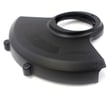
Landscapers sometimes remove the debris guard on a string trimmer to improve sightlines for edging and to run a longer cutting line for faster trimming, especially along sidewalks and curbs. On a Craftsman 13874503 electric line trimmer, we recommend keeping the guard installed because it controls debris throw and helps keep line length in check.
What the guard does (and why it’s there)
The guard is more than a shield; it helps the trimmer cut consistently and safely.
- Deflects rocks, sticks, and grit away from the operator
- Helps prevent damage to siding, windows, vehicles, and landscaping
- Limits line length (many guards work with a line cutter) to reduce motor load
- Reduces the chance of the line striking the power cord on electric models
- Helps keep the cutting path predictable near fences and hardscape
Why some pros remove it
Pros prioritize speed and visibility, and they often accept the tradeoffs.
- Cleaner view of the cut line for crisp edges
- Ability to use longer line for wider swath and quicker coverage
- Easier access in tight spots (under shrubs, near posts)
- Slight weight reduction and less “bulk” at the head
Tradeoffs to expect if the guard is removed
Removing the guard changes how the trimmer behaves and increases risk.
| Change | What you may notice | Why it matters |
|---|---|---|
| More debris throw | More kickback of stones and clippings | Higher injury and property-damage risk |
| Higher load on motor | Slower spool-up, more heat | Shorter motor life, more nuisance trips |
| Faster line wear | Line breaks more often | More downtime and higher line use |
| Less consistent cut | Uneven edging height | More rework to “clean up” edges |
Best practice for the Craftsman 13874503
We use the guard as designed and tune performance other ways.
- Install fresh line of the correct diameter listed in the owner's manual
- Keep the line at the intended length (don’t “over-extend” it)
- Trim with the head slightly angled for edging, not forced into the ground
- Inspect the cord, plug, and strain relief before each use
Why it matters
On an electric line trimmer, the guard helps balance cutting performance with motor protection and debris control. Keeping it installed typically delivers steadier edging, fewer line breaks, and safer operation.
You can look up diagrams and replacement parts by model number on the parts list for this model, or search by model on Sears PartsDirect.
Last updated: February 2026