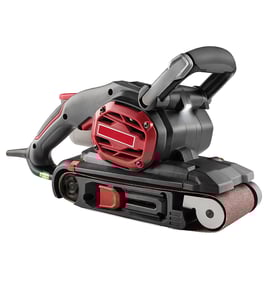

How to tell what size belt for belt sander?
For a Craftsman 35122671 1 x 6" belt & disc sander, the belt size is the belt’s width x length. We identify the correct size by measuring the old belt (best method) or measuring the belt path around the rollers so the replacement tracks correctly and does not slip.
Fast ways to measure the belt size
- Measure belt width: measure straight across the back of the belt (this is the first number).
- Old belt method (most accurate): cut the old belt and lay it flat; measure end-to-end for length.
- String method (no belt available): wrap a non-stretch string around the rollers/platen path, mark it, then measure the string.
- Record as width x length: example format is 1" x 42" (your measurement may differ).
- Match the joint style: most sanding belts use a diagonal splice; choose the same style when possible.
Step-by-step: old belt method
- Unplug the sander.
- Release belt tension and remove the belt.
- Measure width across the belt.
- Cut the belt once and measure length end-to-end.
- Buy the closest exact match; sanding belts are not “one size fits all.”
What to do if your measurement is between sizes
Use this quick guide to choose correctly:
| What you see | What it usually means | What we recommend |
|---|---|---|
| Belt is slightly loose | Belt is too long | Go one standard length shorter |
| Belt is very hard to install | Belt is too short | Go one standard length longer |
| Belt walks off the rollers | Wrong length or tracking needs adjustment | Confirm size, then adjust tracking |
Why it matters
The correct belt size keeps proper tension and tracking on your Craftsman belt sander. A belt that is too long can slip and burnish the work; a belt that is too short can overload the motor and damage the tracking/tension mechanism.
Helpful related DIY reading
Last updated: February 2026
Is a 4x36 belt sander good for knife making?
A 4x36 belt sander can work for knife making, especially for rough shaping and handle work, but it is slow for heavy stock removal and harder to control for clean bevels than a 2x72 grinder. For a Craftsman 35122671 1 x 6" belt and disc sander, expect best results on profiling, deburring, and light grinding.
What a 4x36 does well (and where it struggles)
- Good for: rough profiling, smoothing flats, handle shaping, and quick cleanup after heat treat
- Struggles with: fast bevel grinding, removing lots of steel, and keeping plunge lines consistent
- Belt tracking and platen flatness matter more on knives than on general woodworking
- Heat control is tougher; thin edges overheat quickly on smaller sanders
- Belt selection makes a bigger difference than most upgrades
Belt speed and grit choices for knife work
Most 4x36 sanders run at a moderate surface speed; that is usable, but it feels slow compared to a 2x72. You can still get solid results by matching grit and pressure to the job.
| Task | Belt type | Typical grit range | Tip |
|---|---|---|---|
| Profiling and shaping | Ceramic or zirconia | 36 to 80 | Use light passes to avoid burning the edge |
| Bevel refinement | Aluminum oxide or ceramic | 120 to 220 | Keep the blade moving to prevent grooves |
| Pre-finish | Aluminum oxide | 320 to 600 | Switch to hand sanding for final lines |
Setup tips that improve results on a 4x36
- Square the platen and table so the belt runs true
- Use a fresh, quality belt; dull belts create heat and chatter
- Add a simple water dunk routine (grind 2 to 5 seconds, cool, repeat)
- Use the disc for flattening and squaring, not for long bevels
- Keep guards and dust collection in place; metal dust is hard on motors
Why it matters
Knife grinding is mostly about control, repeatability, and heat management. A 4x36 can produce a good knife, but it demands more patience and technique because the belt area, tracking, and power are more limiting than on purpose-built knife grinders.
For help identifying the exact Craftsman 35122671 model tag before ordering parts or accessories, use how to find your appliance model number (and what it means for parts).
Last updated: February 2026
What are the main parts of a belt sander?
On the Craftsman 35122671 1 x 6" belt & disc sander, the main belt-sanding parts are the abrasive belt, the drive system (motor and drive pulley), the idler pulley, and the belt tracking and tension hardware that keeps the belt running straight and tight.
Main belt-sander components (what each one does)
- Abrasive belt: The sanding surface; it rides around two rollers/pulleys.
- Drive pulley (drive roller): Powered by the motor; pulls the belt.
- Idler pulley (idler roller): Free-spinning roller that supports the belt loop.
- Belt tension mechanism: Spring/lever/adjuster that tightens the belt so it does not slip.
- Tracking adjustment: Fine adjustment that centers the belt on the rollers.
- Platen (sanding shoe): Flat backing behind the belt that helps keep sanding even.
- Guards and dust collection port/bag: Helps contain debris and improve safety.
Quick layout: what you are looking at
| Area | Typical parts you will see | What to check first if it acts up |
|---|---|---|
| Belt loop | Belt, drive pulley, idler pulley | Belt condition, belt direction, belt tension |
| Belt control | Tracking knob/screw, tension lever/spring | Belt walking off, belt slipping |
| Support and safety | Platen, guards, dust port | Uneven sanding, excess dust, vibration |
Common symptoms and the part that usually causes it
- Belt keeps sliding off: Tracking adjustment out of position; belt installed crooked; worn belt.
- Belt slips or stalls: Low tension; glazed belt; debris on pulleys.
- Uneven sanding: Worn platen surface; belt seam bump; belt not centered.
- Excess vibration: Damaged belt; pulley/roller wear; loose mounting hardware.
Why it matters
Knowing the drive pulley, idler pulley, tensioner, and tracking adjuster makes troubleshooting faster; most belt-sander problems come from belt alignment or tension, not the motor.
For help identifying the correct replacement items by model number, use how to find your appliance model number (and what it means for parts) and then search by 35122671 on Sears PartsDirect.
Last updated: February 2026
Why did my belt sander suddenly stop working?
A Craftsman 35122671 1 x 6" belt and disc sander that suddenly stops is usually losing drive (belt slipping or tracking off), tripping a thermal overload, or failing electrically (switch, cord, or motor). Start with the simplest checks: power, belt tracking/tension, and load.
Quick checks (fastest fixes first)
- Unplug the sander; wait 10 to 20 minutes, then try again (a hot motor can trip internal overload protection).
- Confirm the outlet has power; test with another tool or lamp.
- Inspect the sanding belt: if it is glazed, stretched, torn, or oily, it can slip and stall.
- Check belt tracking; if the belt walked off the rollers, the motor can spin but the belt stops.
- Reduce pressure on the workpiece; pushing too hard can stall the belt and overheat the motor.
- Look for jammed debris around the belt, disc, or guards; packed dust can bind moving parts.
What to inspect on the sander (mechanical vs. electrical)
Use this table to narrow it down before you disassemble anything.
| Symptom | Most likely cause | What to do next |
|---|---|---|
| Motor hums but belt does not move | Belt slipping, belt off-track, seized roller/bearing | Re-track/tension belt; spin rollers by hand (unplugged) to feel for binding |
| Runs briefly then stops | Overload from heat, heavy pressure, dust buildup | Let it cool; clean dust; sand with lighter passes |
| No sound, no movement | Power cord, switch, outlet, internal wiring | Check outlet; inspect cord and switch; test continuity |
| Burning smell or repeated stalling | Worn bearings, failing motor, severe binding | Stop using; inspect rollers/bearings; service motor if needed |
Safe troubleshooting steps we recommend
- Unplug the tool before touching the belt, disc, or guards.
- Remove the belt and try turning the rollers by hand; they should spin smoothly with light resistance.
- Clean out dust from the belt path and motor vents (dust can cause overheating and binding).
- Inspect the drive roller/pulley surface; a damaged or debris-covered roller can cause slipping.
- If you have a multimeter, check the cord and switch for continuity using how to use a multimeter to test electrical parts video.
Why it matters
A sudden stop is often a protection response (overload) or a loss of traction/tracking. Fixing belt tracking, tension, and dust buildup prevents repeat stalling, reduces motor heat, and helps the sander run at full speed under load.
Last updated: February 2026