 Installation guide
 Owner’s manual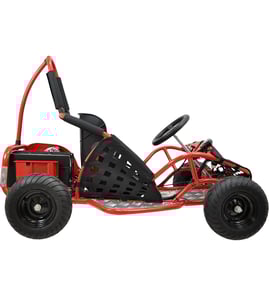

What size engine is best for a Manco go-kart?
For the Manco 606C-14 Fun Kart, the best engine size is the one that matches the kart’s original mounting pattern, clutch or torque converter setup, and safe operating speed; most Manco Fun Karts commonly run in the 5 to 7 HP class (often around 196cc). Confirm the exact engine and drive requirements in the owner's manual.
What to match before choosing an engine
We focus on fit and safe drivability first, then power. Before buying an engine, verify:
- Engine mounting bolt pattern and crankshaft height
- Crankshaft diameter and length (must match your clutch or torque converter driver)
- Rotation direction and throttle linkage compatibility
- Exhaust clearance and guard coverage (chain guard, torque converter cover)
- Kill switch or engine stop switch hookup (if equipped)
Typical engine size guidance (what most owners use)
If you are replacing a worn engine on a kart like the Manco 606C-14, these ranges are the most common starting points:
| Rider/load use | Typical engine class | What you can expect |
|---|---|---|
| Light rider, flat ground | 3.5 to 5 HP (about 120 to 160cc) | Smooth, slower acceleration |
| General use (most common) | 5 to 7 HP (about 160 to 212cc) | Strong pull, good parts availability |
| Heavy load or hills | 7 to 10+ HP (often 212cc+) | More stress on chain, clutch, brakes |
Setup checks that matter for safety and reliability
The manual emphasizes safe speed and proper function checks before each use. After an engine swap, we recommend:
- Set idle speed low enough that the clutch or torque converter does not engage at idle
- Verify throttle cable and linkages move freely and return to idle
- Confirm the engine stop switch works correctly
- Inspect that all guards and covers are installed and serviceable
- Lubricate and tension the chain after the first 2 hours of operation, then before and after each use
Why it matters
An engine that is “too big” for the clutch, chain, or braking system can create excessive speed and heat, shorten drive component life, and increase the risk of loss of control. Matching the drive components and keeping guards in place protects both the kart and the rider.
Last updated: February 2026
What is the fastest 0 60 go-kart?
We don’t rank the “fastest 0 to 60” go-kart for the Manco 606C-14 because acceleration depends on the engine, governor settings, gearing, clutch or torque converter condition, rider weight, and surface. For safe operation, keep your kart in factory configuration and follow the speed and operation limits in the owner's manual.
What you can expect from karts like the Manco 606C-14
Most recreational fun-karts are designed for controlled, low-to-moderate speeds, not 0 to 60 performance. The manual also warns against altering governor settings and against racing or stunt riding because excessive speed and loss of control can cause severe injury.
Key factors that change acceleration
- Engine governor setting (do not tamper with it)
- Clutch engagement and slippage (slip can overheat and ruin the clutch quickly)
- Torque converter engagement (if equipped)
- Tire pressure and traction
- Total load (operator, passenger, fuel)
- Terrain (flat hardpack vs. grass, soft soil, hills)
Quick comparison: performance vs. safe setup
| Goal | What people try | What we recommend for 606C-14 |
|---|---|---|
| Faster acceleration | Higher RPM, altered governor, aggressive gearing | Keep factory governor settings; focus on maintenance and correct adjustment |
| Better takeoff | “Ride” the throttle at low speed | Avoid clutch slippage; use smooth throttle application |
| Higher top speed | Racing-style use | Do not use for racing, jumps, donuts, or stunts |
Safe ways to improve how it feels (without chasing 0 to 60)
- Verify throttle returns to idle freely and is clear of dirt and debris
- Confirm the parking brake is fully released before driving
- Inspect clutch or torque converter for wear and overheating signs
- Practice in a large, level, open area at low speed until confident
- Slow down more as turns get sharper (keep all four tires on the ground)
Why it matters
“Fastest 0 to 60” claims push karts into racing-style use. Your Manco 606C-14 documentation emphasizes factory configuration, functional safety controls, and speed management, especially while turning.
Last updated: February 2026
What are the common problems with Manco go-karts?
Common problems on the Manco 606C-14 go-kart are usually tied to control and wear items: throttle sticking or not returning smoothly, unusual vibration or noise from loose or worn parts, clutch slippage/overheating, and reduced braking when the parking brake is left on. Our owner's manual outlines the key safety checks and operating habits that prevent most of these issues.
Most common issues we see
- Throttle sticks or binds after riding in water, mud, sand, snow, or freezing conditions (loss-of-control risk).
- Unusual noise or abnormal vibration, often caused by loose or worn parts.
- Clutch slippage and overheating, typically from high RPM at low speed (hills, soft soil, high grass, or riding the brake).
- Reduced braking performance and faster pad/lining wear from driving with the parking brake applied.
- Premature wear of normal wear items such as chain(s), brake(s), throttle cable, drive belt(s), and clutch components.
Quick checks before you ride (and when a problem starts)
Use this short checklist as a practical starting point:
- Confirm the throttle moves smoothly and snaps back to closed when released.
- Inspect the throttle cable conduit and linkage for dirt, ice, kinks, or binding.
- If you notice new vibration/noise, stop the engine and disconnect the spark plug wire; then check for loose or worn hardware.
- Verify the parking brake is fully released before driving.
- Avoid operating conditions that promote clutch slip (high RPM with low ground speed).
Symptoms and likely causes (at a glance)
| Symptom | Most likely cause | What to do first |
|---|---|---|
| Throttle does not return | Debris, water, or ice in cable/throttle mechanism | Clean, dry, and recheck smooth return; avoid those conditions |
| Loud noise or heavy vibration | Loose or worn parts | Stop, inspect fasteners and moving parts, correct before riding |
| Kart feels weak, clutch smells hot | Clutch slippage/overheating | Reduce slip conditions; avoid high RPM at low speed |
| Brakes feel weak | Parking brake left on, worn pads/linings | Release parking brake; inspect brake wear |
Why it matters
These problems are more than annoyances; throttle binding and abnormal vibration are direct loss-of-control and mechanical-failure warnings. Catching them early helps protect the clutch, brakes, and drivetrain and keeps the kart operating predictably.
Last updated: February 2026
What is the top speed of the Manco go-kart?
The Manco 606C-14 go-kart has an advertised top speed of about 30 MPH in typical stock configuration. Actual top speed varies with engine governor settings, gearing, tire size, rider load, and terrain; the 606C-14 owner's manual also stresses keeping speed under control, especially when turning.
What to expect in real use
Even when the kart is running correctly, speed changes a lot based on conditions.
- Rider weight and passenger load (if equipped)
- Surface type (pavement vs dirt or grass)
- Tire pressure and tire diameter
- Drive system condition (belt wear, torque converter engagement)
- Throttle linkage moving freely and returning to idle
- Engine governor set to factory spec (do not tamper with it)
Safety limits that matter more than top speed
The manual warnings focus on preventing loss of control, not chasing maximum MPH.
- Start in a large, level, open area to practice
- Operate at low speed until steering and braking feel predictable
- Slow down before turns; sharper turns require slower speed
- Avoid rough ground and high speed together
- Confirm the restraint system is adjusted and secured before riding
Quick comparison: advertised vs real-world speed
| Speed description | What it means | What we recommend using |
|---|---|---|
| Advertised top speed (about 30 MPH) | Typical stock, ideal-condition estimate | Use as a general benchmark |
| Real-world top speed | Your kart, your load, your terrain | Prioritize controllable speed |
| Turning speed | Speed carried into corners | Reduce speed before and during turns |
Why it matters
Most go-kart incidents happen from carrying too much speed into a turn or riding faster than the surface allows. Keeping the kart in original configuration and operating within your skill level protects the rider, passengers, and the kart.
Last updated: February 2026