Installation guide
 Owner’s manual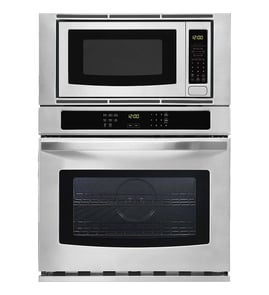


How long do Whirlpool wall ovens last?
Whirlpool wall ovens typically last 15 years. For the Whirlpool GSC309PVS02 30 inch electric built-in oven combo, consistent cleaning, correct installation, and avoiding overheating events are the biggest factors that help you reach (or exceed) that 15-year lifespan; see the GSC309PVS02 owner's manual for care and safety guidance.
Typical lifespan and what to expect
Most built-in electric wall ovens and wall oven/microwave combos follow this pattern:
| Age of oven | What’s common | What we recommend |
|---|---|---|
| 0 to 5 years | Minor adjustments, light bulbs, normal wear | Keep vents clear, clean regularly |
| 6 to 10 years | Sensors, door hardware, occasional heating issues | Test components before replacing |
| 11 to 15 years | Higher chance of element, control, or wiring issues | Plan for 1 to 2 repairs to extend life |
| 16+ years | Repairs become more frequent | Compare repair cost vs. replacement |
What shortens the life of a wall oven
These are the most common lifespan reducers we see in electric built-in ovens:
- Overheating from blocked airflow or a failing cooling fan
- Heavy self-clean use (high heat stresses door locks, wiring, and controls)
- Power issues (loose connections, heat damage at the terminal block)
- Door seal or hinge wear that lets heat escape and forces longer run times
- Skipped cleaning that leads to baked-on soil and hotter operating conditions
Parts that commonly affect longevity
If performance drops, these model-compatible parts are often involved:
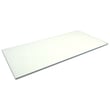
- Range bake element WPW10207398 (weak or no bake heat)
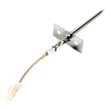
- Wall oven temperature sensor WPW10131825 (temperature swings, underbaking)
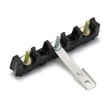
- Terminal block WPW10245259 (power connection overheating symptoms)
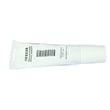
- Fuse (black) WP4375321 (unit appears dead after an electrical event)
Why it matters
A wall oven that heats accurately and vents properly runs shorter cycles, protects the control area from excess heat, and reduces stress on high-wattage components like the bake and broil elements. That directly translates into fewer breakdowns over time.
Last updated: February 2026
What company makes the best wall ovens?
The “best” wall oven brand depends on what you value most (cooking performance, reliability, service support, or luxury features). For a Whirlpool GSC309PVS02 wall oven/microwave combo owner, we focus on proven reliability and practical features; premium brands can add advanced cooking modes and build quality at a higher cost. See the GSC309PVS02 owner's manual for the features and controls your unit already supports.
Best wall oven brands by priority
- Luxury performance and build: Wolf, Miele, Gaggenau, Thermador
- Feature-rich and design-forward: KitchenAid, Bosch, GE Profile, Café
- Value and broad service coverage: Whirlpool, GE, Frigidaire
- Smart features in mid-range pricing: LG Studio (varies by model and platform)
Quick comparison
| What you care about most | Brands that typically lead | What you usually get |
|---|---|---|
| Top-tier baking consistency | Wolf, Miele | Very even heat, strong convection systems |
| Premium features and styling | Thermador, Gaggenau, Café | Specialized modes, upscale finishes |
| Best overall value | Whirlpool, GE Profile, Bosch | Solid performance, good feature-to-price |
| Budget-friendly replacement | Whirlpool, GE, Frigidaire | Reliable basics, simpler controls |
How to choose the best wall oven for your kitchen
- Match the cutout size and electrical requirements to your cabinet and circuit.
- Decide if you want single, double, or a combo (like your microwave/oven setup).
- Pick the cooking system you will use: standard bake, true convection, or steam assist.
- Check control style: knobs vs. touch, and whether you want smart connectivity.
- Consider long-term ownership: parts availability, service access, and warranty coverage.
Why it matters
Wall ovens are built-in appliances; fit, electrical compatibility, and serviceability matter as much as brand reputation. A well-matched oven that fits your cutout and cooking habits performs better and costs less to own over time.
Last updated: February 2026
What is the disadvantage of a convection microwave oven?
A convection microwave (like the microwave portion of Whirlpool GSC309PVS02) trades simplicity for flexibility; it can be more complex to use, takes more cleanup, and its smaller cavity and airflow can limit large dishes and require extra cook time when the oven is full. See the GSC309PVS02 owner's manual for mode-specific cooking guidance.
Common disadvantages you will notice
- Smaller usable capacity than a full-size oven; large roasts, tall bakeware, and big sheet pans may not fit.
- More steps and settings (microwave, convection, combination modes) so it is easier to pick the wrong mode or rack.
- More cleanup; splatter and grease can affect performance and odors if not wiped out regularly.
- Uneven results when crowded; airflow needs space around cookware, and a full cavity can need extra time.
- Different recipe adjustments; convection typically needs a lower temperature than standard baking.
What the manual says about convection cooking (and why it matters)
For the oven’s convection cooking, Whirlpool notes that cookware should have about 1 inch of space from the sides for airflow, and that extra cooking time may be needed if the oven is full. It also recommends reducing many recipe temperatures by 25°F when using convection. Those same convection principles are why convection microwaves can feel less “set it and forget it” than a basic microwave.
Quick comparison: convection microwave vs standard microwave
| Feature | Convection microwave | Standard microwave |
|---|---|---|
| Best at | Baking, roasting, crisping plus reheating | Fast reheating and defrosting |
| Learning curve | Higher | Lower |
| Cleanup | More frequent | Usually easier |
| Capacity | Smaller than a wall oven | Similar cavity size, fewer accessories |
Tips to reduce the downsides
- Leave airflow space around dishes; avoid packing the cavity tight.
- Use cookware that fits the rack and allows circulation.
- Preheat when the recipe calls for it.
- Start by lowering recipe temperature about 25°F for convection-style baking.
- Keep the cavity clean to prevent smoke and odors.
Why it matters: Knowing these tradeoffs helps you choose the right mode (microwave vs convection) so you get predictable doneness, better texture, and fewer re-cooks.
Last updated: February 2026