 Owner’s manual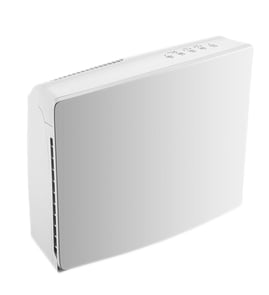

How often do you replace filters in an air purifier?
For the Kenmore 43783394410 air purifier, we replace the main filter about every 6 to 12 months in typical home use. If you run the unit 24/7, have pets, smoke, or high dust, plan on changing it sooner; check the owner's manual for your model’s exact guidance.
Quick replacement schedule (typical)
- Pre-filter (if your unit has one): clean every 2 to 4 weeks; replace if it won’t come clean
- HEPA or main particle filter: replace every 6 to 12 months
- Carbon/odor filter (if separate): replace every 3 to 6 months
- After smoke, wildfire haze, or remodeling: inspect filters right away and replace if loaded
How to tell it’s time to replace the filter
- Airflow feels weaker even on a higher fan speed
- The filter looks gray, fuzzy, or clogged with dust
- Odors linger longer than usual (carbon media is saturated)
- The unit is louder than normal because it is working harder
- A filter indicator light stays on after cleaning the pre-filter (if equipped)
What changes the filter life the most
| Condition in the home | What to expect | What we recommend |
|---|---|---|
| Pets, heavy dust, open windows | Faster loading | Check monthly; replace closer to 6 months |
| Smoke, candles, cooking odors | Carbon saturates faster | Replace carbon closer to 3 months |
| Light use, clean home | Slower loading | Replace closer to 12 months |
Why it matters
A clean air purifier filter protects the fan and motor, keeps airflow and CADR performance up, and helps the Kenmore 43783394410 capture fine particles and odors efficiently.
Last updated: February 2026
How many air purifiers for a 1000 sq ft house?
For a 1,000 sq ft house, we typically recommend 1 to 2 air purifiers, depending on your layout and the purifier’s CADR (clean air delivery rate). One properly sized unit can cover an open floor plan; homes with closed bedrooms usually need a second unit for better room-by-room coverage.
How to choose the right number (what changes the answer)
Use these factors to decide whether one Kenmore air purifier or two makes more sense:
- Floor plan: Open concept needs fewer units; hallways and closed doors block airflow.
- Bedrooms with doors closed at night: A purifier in the living area will not clean bedroom air well.
- Allergy or smoke sensitivity: More units improves consistency and reduces peaks.
- Ceiling height: Higher ceilings increase air volume; you may need more capacity.
- Placement limits: If the best location is blocked by furniture or corners, coverage drops.
Practical sizing rule we use
Most households get the best results by treating an air purifier as a single-room solution, then scaling up.
- 1 purifier: Best for a mostly open 1,000 sq ft space or when you mainly care about one large area.
- 2 purifiers: Best for typical 1,000 sq ft homes with separate bedrooms and doors.
Quick scenarios table
| Home layout (about 1,000 sq ft) | Recommended purifiers | Best placement approach |
|---|---|---|
| Open living, kitchen, dining | 1 | Center of the main living zone |
| 2 to 3 bedrooms with doors | 2 | One in living area, one near bedrooms |
| Pets plus allergies | 2 | Add one where pets spend the most time |
| Smoke or strong odors | 2 | One near source area, one in sleeping area |
Why it matters
Air purifiers only clean the air that can circulate through them. Walls and closed doors reduce air exchange, so adding a second unit often improves real-world performance more than buying one larger unit and placing it in a single room.
Model-specific tip for Kenmore 43783394410
For filter type, replacement intervals, and any placement guidance specific to your Kenmore 43783394410, follow the maintenance section in the owner's manual.
Last updated: February 2026
What is the 2 3 rule for air purifiers?
The 2/3 rule is a quick way to size an air purifier to a room: the purifier’s Smoke CADR should be at least two-thirds of the room’s square footage. For your Kenmore air purifier model 43783394410, use this rule to choose a setting or unit size that can keep up with smoke, dust, and pollen in that space; confirm any model-specific CADR details in the 43783394410 owner's manual.
How to use the 2/3 rule (step by step)
- Measure the room length and width in feet.
- Multiply to get square footage (sq ft).
- Multiply sq ft by 2/3 (0.67) to estimate the minimum Smoke CADR.
- If ceilings are higher than 8 ft, treat the room as “larger” and size up.
- If you are dealing with heavy smoke (wildfire smoke, cooking smoke), size up again or run a higher fan speed.
Quick sizing examples
| Room size (sq ft) | Minimum Smoke CADR (2/3 rule) | What to do if air still feels smoky |
|---|---|---|
| 120 | 80 | Increase fan speed; close doors/windows |
| 200 | 133 | Move purifier closer to the source; run longer |
| 300 | 200 | Consider a higher-CADR unit or add a second purifier |
Why CADR and placement matter
CADR (Clean Air Delivery Rate) is a standardized way to compare how quickly a purifier can remove common particles. Even with the right CADR, performance drops if airflow is blocked or the filter is loaded.
Best practices that improve real-world results
- Keep at least 1 to 2 ft of clearance around the air intake and outlet.
- Replace or clean filters on schedule; a clogged filter reduces airflow and CADR.
- Run the purifier continuously on a lower setting for steady control, then boost when needed.
- Keep doors closed for the room you are trying to clean.
- Avoid placing the unit behind furniture or under shelves.
What to check for this Kenmore model
Because CADR and recommended room size are model-specific, we use the manual to match performance to your space.
- Look for “CADR” or “recommended room size” specifications.
- Check the filter maintenance interval and reset steps (if your model has a filter light).
- Follow any guidance on operating modes and fan speeds.
Why it matters: Using the 2/3 rule helps prevent under-sizing (air stays dusty or smoky) and over-sizing (more noise and energy than you need).
Last updated: February 2026
Is it necessary to replace an air purifier filter?
Yes. To keep your Kenmore air purifier model 43783394410 cleaning the air effectively, you need to replace (and in some cases clean) its filters on a regular schedule; a loaded filter restricts airflow, reduces filtration, and can cause odors and more dust in the room.
What to replace (and how often)
Most air purifiers use a combination of filters. Typical replacement and cleaning intervals are:
- HEPA or main particle filter: replace about every 6 to 12 months
- Carbon/odor filter: replace about every 3 to 6 months (sooner with smoke, cooking odors, or pets)
- Pre-filter (mesh/foam): clean every 2 to 4 weeks and replace if it will not come clean or is damaged
For the exact filter types and the reset steps for your unit’s filter indicator, follow the 43783394410 owner's manual.
Signs your filter needs attention now
Replace or service the filter sooner than the calendar suggests if you notice:
- Weaker airflow from the outlet
- A filter light that stays on after cleaning or reset
- Musty or stale odors when the unit runs
- More visible dust settling in the room
- Allergy symptoms that seem worse when the purifier is running
Quick filter care checklist
Use this routine to protect the fan motor and keep performance steady:
- Turn the unit off and unplug it before opening the filter cover
- Vacuum the pre-filter gently (do not wash unless your manual says it is washable)
- Never vacuum or wash a HEPA filter unless the manual specifically allows it
- Install filters with the airflow arrow (if present) facing the correct direction
- Reset the filter reminder after service (per the manual)
Typical schedule at a glance
| Filter type | What you do | Typical interval |
|---|---|---|
| Pre-filter | Clean | 2 to 4 weeks |
| Carbon/odor | Replace | 3 to 6 months |
| HEPA/main | Replace | 6 to 12 months |
Why it matters
A clean filter set helps your 43783394410 maintain airflow and capture particles and odors as designed; a clogged filter makes the fan work harder, lowers cleaning performance, and can shorten the life of internal components.
Last updated: February 2026
How to reset filter life on Kenmore air purifier?
On the Kenmore air purifier model 43783394410, the filter reminder resets using the control-panel filter indicator function described in the 43783394410 owner's manual. After you replace or clean the filters, use the manual’s reset steps for your exact control panel (button names and indicator lights vary by series).
Reset the filter indicator (what to do)
- Turn the air purifier ON.
- Look for a filter indicator light or filter check message on the display/LEDs.
- Use the control panel buttons shown in the 43783394410 owner's manual to perform the filter reset sequence for your unit.
- Wait for the indicator to turn off or return to normal operation.
- Power the unit OFF, then ON to confirm the reminder stays cleared.
Common reasons the filter light stays on
- The filter or pre-filter is not seated correctly.
- The filter cover is not fully latched.
- The unit is placed too close to a wall or furniture, reducing airflow.
- The filter is heavily loaded; airflow restriction triggers the reminder again.
- The reset sequence was not held long enough or was done with the unit OFF.
What “reset” means
| Item | What it does | What it does not do |
|---|---|---|
| Filter indicator reset | Clears the maintenance reminder | Does not clean the filter or improve airflow by itself |
| Filter cleaning/replacement | Restores airflow and filtration performance | Does not automatically clear the reminder on many models |
Why it matters
Clearing the reminder after filter service keeps maintenance timing accurate, which helps your Kenmore 43783394410 maintain steady airflow and consistent air cleaning performance.
Last updated: February 2026