Owner’s manual
 Error Codes




How many years do gas hot water heaters last?
Most gas water heaters, including the Kenmore Elite 153332620, typically last 8 to 12 years. Regular maintenance (flushing sediment, checking the anode rod, and verifying safe venting) helps you reach the upper end of that range.
Typical lifespan (quick guide)
| Water heater type | Typical lifespan | What usually ends its life |
|---|---|---|
| Gas tank water heater | 8 to 12 years | Tank corrosion, burner or gas control issues |
| Electric tank water heater | 10 to 15 years | Tank corrosion, heating element failure |
What helps a gas water heater last longer
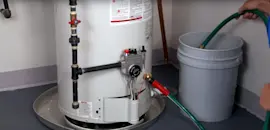
- Flush the tank periodically to reduce sediment buildup.
- Test the temperature and pressure relief valve for safe operation.
- Inspect venting and draft to prevent combustion and shutdown problems.
- Check for water leaks around fittings, the drain valve, and the base of the tank.
- Replace wear items before they cause secondary damage (for example, a depleted anode rod).
Parts that commonly affect longevity on this model
If performance drops or you see corrosion or leaking, these model-specific parts are often involved:
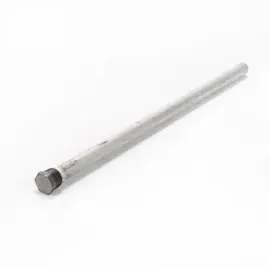
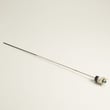
- Water heater anode rod 100111915 (helps protect the tank from corrosion)
- Water heater temperature and pressure relief valve 100108455 (critical safety component)
- Water heater gas control valve 100111913 (can affect ignition, temperature control, and reliability)
Why it matters
Once a tank starts leaking from internal corrosion, replacement is usually the practical fix. Catching issues early (sediment, venting problems, or a worn anode rod) helps prevent premature tank failure and keeps hot water recovery consistent.
For maintenance intervals and model-specific procedures, follow the owner's manual.
Last updated: February 2026
What is the most reliable gas hot water heater?
The most reliable gas water heater is the one correctly sized for your home, installed to code, and maintained regularly (especially flushing and venting checks). For long-term dependability, many homeowners do best with a standard tank-style gas unit from a well-established brand, then protect it with routine maintenance per the owner's manual.
What “reliable” means for gas water heaters
Reliability usually comes down to stable ignition and combustion, safe venting, corrosion protection inside the tank, and easy-to-service controls.
Key reliability factors:
- Correct tank size and recovery rate for your household
- Proper venting and adequate combustion air
- Stable gas control and ignition performance
- Tank corrosion protection (anode rod condition)
- Water quality and regular sediment flushing
Practical guidance when choosing a replacement
If you are replacing a Kenmore Elite gas water heater like model 153332620, match the basics first (fuel type, venting style, and capacity). Then prioritize serviceability and maintenance access.
Use this quick comparison:
| Option | Typical reliability strengths | Best fit for |
|---|---|---|
| Standard tank gas | Simple design, proven parts, easier troubleshooting | Most homes needing consistent hot water |
| Power-vent tank gas | Flexible vent routing, good for tight venting situations | Homes without a good chimney path |
| Tankless gas | Long service life with regular descaling, space-saving | Homes with steady maintenance habits |
Maintenance that most improves reliability
These steps prevent the most common failures (sediment buildup, corrosion, venting issues, and nuisance shutdowns):
- Flush the tank periodically to reduce sediment
- Test the temperature and pressure relief valve for proper operation
- Inspect venting for blockage, corrosion, or loose connections
- Check burner area for dust and lint buildup
- Replace worn seals and gaskets if you ever open the burner/manifold area
Parts that commonly affect reliability on model 153332620
If your current heater is acting up, these model-matched parts are often involved in safe operation and consistent heating:
- Water heater temperature and pressure relief valve 100108455
- Water heater anode rod 100111915
- Water heater gas control valve 100111913
Why it matters
A “reliable” gas water heater is really a system: correct venting plus stable gas control plus a protected tank. When any one of those is neglected, you get symptoms like lukewarm water, pilot or ignition problems, or frequent shutdowns.
Last updated: February 2026
What is the most common problem with a gas water heater?
The most common gas water heater problem is ignition failure, meaning the pilot will not light or will not stay lit, so the burner never heats the tank. On Kenmore model 153332620, this is often tied to combustion air or venting safety checks, or a gas control issue.
What you will usually notice
- No hot water or water turns lukewarm quickly
- Pilot will not light, or lights then goes out
- Burner will not stay on long enough to heat the tank
- Status lights or control panel indicators show a fault
- Occasional rumbling or popping sounds (sediment)
Common causes (and what to check first)
Start with the simplest, safest checks before replacing parts.
- Airflow or venting problem: Blocked intake, restricted vent, or a safety switch opening can stop ignition.
- Gas control problem: A failing control can prevent pilot operation or burner operation.
- Sensor or wiring issue: Loose connections or a bad sensor can shut the system down.
- Sediment buildup: Reduces heating efficiency and can cause noise and short cycling.
- Relief valve leaking: A leaking T&P valve can indicate overheating, excess pressure, or a worn valve.
Parts that commonly relate to “won’t light” or “won’t stay lit” symptoms
These are examples of model-matched parts we see tied to ignition and safety shutdown complaints:
| Symptom | What it points to | Model-matched part example |
|---|---|---|
| Pilot drops out after starting | Draft/pressure safety opening | Water heater exhaust vent blower pressure switch 100111914 |
| Unit struggles with combustion air | Intake airflow issue | Water heater air intake fan 100111908 |
| No stable burner operation | Gas valve/control issue | Water heater gas control valve 100111913 |
| Faults that seem “random” | Sensor feedback or connection issue | Sensor 100110780 |
Why it matters
A gas water heater that cannot prove flame, draft, or safe operating conditions will shut down by design. Fixing the root cause restores hot water and helps prevent nuisance shutdowns, poor combustion, and overheating.
Best next step for this model
Use the troubleshooting and lighting instructions in the owner's manual for Kenmore 153332620. Follow the exact lighting sequence and note any indicator codes or blink patterns before ordering parts.
Last updated: February 2026
What are the parts on a gas water heater?
A Kenmore Elite gas water heater like model 153332620 is built around a storage tank plus gas burner and safety controls that heat water and vent combustion gases. Common service parts include the dip tube, anode rod, drain valve, T&P relief valve, and (on some models) draft and air-moving components. See the owner's manual for your exact layout.
Main parts you will typically find
- Tank: holds and insulates hot water
- Gas burner and combustion chamber: heats the water (under the tank)
- Gas control valve/thermostat: regulates gas flow and water temperature
- Dip tube: directs incoming cold water to the bottom of the tank
- Anode rod: helps protect the tank from corrosion
- Drain valve: used for draining and flushing sediment
- Temperature and pressure (T&P) relief valve: safety valve to prevent overpressure/overheating
- Venting components: move exhaust safely out of the home (draft hood or powered vent parts, depending on design)
Model 153332620 parts you may see on this parts list
These are examples of real replacement parts available for this model:
| Part (what it does) | Example part for model 153332620 | When it is commonly replaced |
|---|---|---|
| Controls gas flow and temperature | Water heater gas control valve 100111913 | No heat, unstable temperature, control faults |
| Protects tank from corrosion | Water heater anode rod 100111915 | Rotten-egg odor, accelerated corrosion risk, routine maintenance |
| Directs cold water into tank | Water heater dip tube 100111953 | Lukewarm water, reduced hot water volume |
| Drains tank for flushing/service | Drain valve 100108269 | Leaking valve, won’t open/close, sediment flushing issues |
| Safety pressure/temperature release | Water heater temperature and pressure relief valve 100108455 | Dripping/leaking valve, won’t reseat, safety concern |
Why it matters
Knowing the major parts helps you troubleshoot faster and order the right replacement. For example, “not enough hot water” often points to the dip tube or heavy sediment, while a persistent leak at the discharge pipe often involves the T&P relief valve.
Quick identification tips before ordering
- Match the model number 153332620 on the rating label.
- Compare the part’s name and ID to what you see on the heater.
- For gas and venting parts, confirm whether your unit uses a draft hood or a fan-assisted venting setup.
- Use the diagrams and part descriptions alongside the owner's manual.
Last updated: February 2026
How to reset thermal switch on water heater?
On Kenmore Elite gas water heater model 153332620, the thermal switch is a safety cutoff that trips when the burner area overheats, often from venting or airflow problems. Reset it only after the heater cools and you follow the exact access and lighting steps in the 153332620 owner's manual.
Safe reset steps (works for most Kenmore power-vent style heaters)
- Turn the gas control knob to OFF.
- Shut off electrical power to the heater (unplug or switch off the circuit) if it has a blower/control panel.
- Wait until the burner compartment is completely cool.
- Remove the outer door to access the burner area (reinstall it before relighting).
- Find the thermal switch and reset it using the method shown for your unit (some switches have a small push button; others reset automatically after cooling).
- Restore power, then relight using the lighting instructions in the manual.
What to check first (so it does not trip again)
A thermal switch trip is almost always caused by heat buildup from poor exhaust or restricted combustion air.
- Vent pipe and draft hood for blockage, disconnection, or backdrafting
- Blower operation and airflow (if equipped)
- Pressure proving circuit (if equipped)
- Burner door seal and gasket condition
- Lint, dust, or debris restricting the air intake
Parts on this model that commonly relate to thermal switch trips
| What you notice | What to inspect | Model 153332620 example part |
|---|---|---|
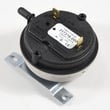
| Blower runs but heater shuts down | Pressure proving | Water heater exhaust vent blower pressure switch 100111914 |
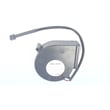
| Weak or no intake airflow | Intake fan | Water heater air intake fan 100111908 |
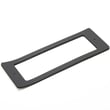
| Burner compartment not sealing | Door gasket | Water heater manifold door gasket 100112699 |
Why it matters
The thermal switch prevents unsafe overheating. If it trips repeatedly, correcting the venting, airflow, or sealing issue restores reliable ignition and protects the gas control system.
Last updated: February 2026