
Are all low profile microwaves 18 inches deep?
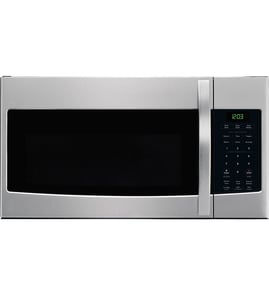
No. Low-profile over-the-range microwaves are not all 18 inches deep; 18 inches is common, but depths vary by brand and model. For an Amana microwave/hood combo like model AMV1154BAS, always confirm the cutout and cabinet clearance before buying or replacing parts.
Most low-profile OTR microwaves fall into a few common depth bands:
- About 15 to 18 inches deep: the most common “low-profile” range
- About 12 to 14 inches deep: space-saving designs for tighter cabinets
- 18 inches or more: some models prioritize interior capacity over a slimmer profile
Depth is only one dimension that affects fit and venting. We recommend checking:
- Cabinet depth (front face to back wall)
- Clearance to the backsplash (some installs need extra room for the plug and ducting)
- Door swing clearance (handle and door can extend farther than the cabinet)
- Bottom clearance over the cooktop (for safe cooking space)
- Venting setup (recirculating with charcoal filter vs. outside vent)
| Depth category | What it usually means | Common tradeoff |
|---|---|---|
| ~12 to 14 inches | Maximum space savings | Smaller cavity or tighter airflow path |
| ~15 to 18 inches | Balanced fit and capacity | May protrude slightly past cabinets |
| 18+ inches | More interior room | More likely to stick out farther |
If the microwave is too deep, it can protrude past the cabinet line, interfere with cabinet doors, or complicate venting. If it is too shallow, you may give up usable cooking space or end up with a different mounting and duct alignment than expected.
If you are converting between recirculating and vented setups, or your hood performance is poor, these model-related parts are often involved:
- Charcoal filter DE63-00367E (recirculating setups)
- Mounting plate DE70-00378A (mounting alignment and wall support)
Last updated: February 2026
Does Amana make good microwaves?
Yes. Amana microwaves, including the AMV1154BAS microwave/hood combo, are a solid, dependable choice for everyday cooking when they are installed correctly, vented properly, and maintained (filters kept clean, door seals kept intact). Overall quality is best judged by fit, features, and long-term parts support.
A microwave/hood combo has two jobs: heating food and moving air. We consider it a good unit when it:
- Heats evenly without unusual buzzing, burning smells, or arcing
- Vents steam and smoke effectively for your cooktop setup
- Has a door that closes smoothly and latches consistently
- Runs quietly enough for normal kitchen use
- Has common service parts available when wear happens
Use this list to judge performance in your kitchen:
- Heating: A cup of water should get noticeably hot in 1 to 2 minutes on High.
- Door operation: The door should close firmly with no sagging or rubbing.
- Vent fan: Fan speeds should change clearly; airflow should be steady.
- Odor control (recirculating setups): Replace the charcoal filter on schedule.
- Noise: Rattling often points to a loose mounting screw or a worn fan component.
| Symptom | What it often indicates | Parts commonly involved |
|---|---|---|
| Runs but does not heat | High-voltage circuit issue | Magnetron, diode, transformer |
| Shuts off mid-cycle | Overheating protection opening | Thermostat, airflow restriction |
| Poor venting or loud fan | Venting restriction or worn fan motor | Vent motor, filters |
| Burning smell or sparks | Food debris, damaged waveguide cover, metal contact | Cook cover, cavity cleaning |
If your AMV1154BAS runs but will not heat, our troubleshooting steps in why is my microwave not heating help narrow it down before you order parts.
A “good” microwave is one that stays safe, heats reliably, and can be repaired economically. For AMV1154BAS, keeping airflow and filters in good shape helps prevent nuisance shutdowns and extends the life of high-voltage components.
Last updated: February 2026
How do I find out what wattage my microwave is?
For your Amana AMV1154BAS microwave/hood combo, the most reliable way to find wattage is to read the rating label (typically on the oven frame behind the door or on the unit’s identification label). If the label is missing or unreadable, you can estimate cooking wattage with a simple “time-to-boil” test.
- Open the door and look along the oven frame (often near the latch side) for the rating label
- Check the inside edge of the door for an identification label
- Look on the back or side of the outer cabinet (if accessible after installation)
- Record the full model number (AMV1154BAS) and serial number for future parts matching
Use this when you cannot read the label.
- Measure 1 cup (8 fl oz) of room-temperature water in a microwave-safe glass measuring cup
- Heat on HIGH (100% power) and time how long it takes to reach a full rolling boil
- Repeat once and average the times for a better estimate
| Time to boil 1 cup | Estimated cooking wattage |
|---|---|
| 4:00 to 5:00 | 600 to 700 W |
| 3:00 to 4:00 | 700 to 800 W |
| 2:00 to 3:00 | 800 to 1000 W |
| 1:45 to 2:00 | 1000 to 1200 W |
Microwave wattage affects cook times and performance. If your AMV1154BAS suddenly seems weak (longer cook times, uneven heating), that points to a heating-system issue rather than a recipe problem. For deeper troubleshooting, use our DIY article why is my microwave not heating.
- Confirm you are using HIGH power and not a reduced power level
- Test with a different microwave-safe container (some plastics slow heating)
- Make sure the turntable is operating and the load is centered
- If the unit runs but does not heat, have a technician check high-voltage components such as the microwave magnetron WPW10126786 and related circuitry
Last updated: February 2026