Owner’s manual
 Error Codes






What is the average lifespan of a gas water heater?
Most gas water heaters average about 8 to 12 years of service life. For the American Water Heaters FG1F4040S3NOV, lifespan depends heavily on water quality and maintenance; regular tank flushing and periodic anode-rod checks typically help you get closer to the high end of that range.
What affects lifespan the most
- Sediment buildup in the tank (can cause noise, reduced efficiency, and faster tank wear)
- Anode rod condition (protects the tank from corrosion)
- Water chemistry (softened or aggressive water can increase corrosion risk)
- Temperature setting (higher settings can increase stress and scale)
- Venting and combustion air (poor draft or restricted air can cause performance issues)
Maintenance that usually extends life
We recommend following the maintenance intervals in the FG1F4040S3NOV use & care manual. Practical steps include:
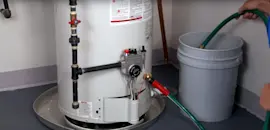
- Drain and flush the tank about every 6 months to reduce sediment
- Visually inspect burner and venting about every 3 months
- Test the temperature and pressure relief valve once a year
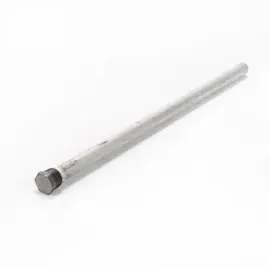
- Inspect the anode rod about every 3 years and replace if heavily depleted
If you are planning an anode replacement, use a model-compatible part such as the water heater anode rod 100109594.
Quick guide: repair vs. replace
| What you notice | More likely a repair | More likely replacement |
|---|---|---|
| Not enough hot water | Flush sediment, check settings | If tank is near end-of-life and performance keeps dropping |
| Water in drain pan | Valve or fitting leak | Tank corrosion leak (often terminal) |
| Rusty water or odor | Anode rod service | If corrosion is advanced and recurring |
| Frequent pilot/ignition issues | Pilot/igniter service | If multiple gas-control components are failing over time |
Why it matters
A water heater usually fails from internal tank corrosion. Staying ahead of sediment and keeping the anode rod in good shape can reduce corrosion risk, improve efficiency, and help avoid surprise leaks.
Last updated: January 2026
What is the most common problem with a gas hot water heater?
The most common issue we see with gas water heaters like the American Water Heaters FG1F4040S3NOV is sediment buildup in the bottom of the tank, which can reduce heating efficiency, cause popping or rumbling noises, and contribute to premature wear. See the maintenance guidance in the FG1F4040S3NOV use & care manual.
What sediment buildup looks like (and what you may notice)
Sediment is usually mineral scale that settles out of the water as the heater runs. Common symptoms include:
- Popping, crackling, or rumbling sounds during burner operation
- Hot water that runs out faster than it used to
- Longer recovery time (water takes longer to reheat)
- Higher gas bills for the same hot water use
- Lukewarm water even when the thermostat is set correctly
What to do first on FG1F4040S3NOV
Your manual recommends draining and flushing the tank periodically to remove sediment. If you are comfortable doing basic maintenance, start with these steps:
- Turn off gas at the manual shut-off valve
- Close the cold water inlet valve
- Open a nearby hot water faucet to relieve pressure
- Connect a hose to the drain valve and route it to a safe drain
- Drain and flush until water runs clearer, then refill and relight per the manual
If the drain valve is leaking, clogged, or will not operate smoothly, replacing it can make routine flushing much easier; the compatible part for this model is the drain valve 100109106.
Why it matters
Sediment acts like an insulating layer between the burner heat and the water. That forces longer burner run times, increases operating cost, and can overheat the tank bottom, which can shorten the life of the water heater.
Quick guide: symptom to likely cause
| What you notice | Common cause | Typical next step |
|---|---|---|
| Popping/rumbling | Sediment on tank bottom | Drain and flush tank |
| Not enough hot water | Sediment, thermostat setting, or gas/airflow issue | Flush tank; verify settings and venting |
| Water smells like sulfur | Anode rod reaction with water | Inspect/replace anode rod |
| Relief valve dripping | Thermal expansion or high pressure | Check expansion control and pressure |
Last updated: January 2026
How much should a 40 gallon gas hot water heater cost?
For American Water Heaters model FG1F4040S3NOV, we can’t price the exact unit from the model number alone because retail pricing varies by seller, region, and availability; however, a typical 40-gallon atmospheric-vent gas water heater often lands around $500 to $2,000 for the tank and $900 to $3,000+ installed depending on the job.
What changes the installed price most
- Venting work: replacing vent connector, correcting slope, adding a chimney liner (if needed)
- Gas line updates: adding a shut-off valve, drip leg, union, or resizing pipe
- Water piping and safety items: expansion tank for closed systems, pressure-reducing valve, drain pan, seismic strapping (where required)
- Access and removal: tight closets, attic installs, stairs, haul-away fees
- Permits and inspection: required in many areas
Typical cost ranges (quick comparison)
| Scenario | What’s usually included | Common total range |
|---|---|---|
| Basic replacement | Swap tank, reconnect existing vent and lines with minimal changes | $900 to $1,800 |
| Standard replacement | Permit, some vent or piping updates, haul-away | $1,200 to $2,500 |
| Complex replacement | Significant venting or gas-line changes, difficult access, multiple code upgrades | $2,000 to $3,000+ |
Model-specific notes for FG1F4040S3NOV
This model is a gas water heater, so the quote should include safety steps like gas leak testing and draft verification. We recommend reviewing venting, combustion air, and piping requirements in the FG1F4040S3NOV use & care manual so you can confirm the installer’s scope matches the unit’s needs.
Why it matters
A low quote sometimes excludes critical items (proper venting, combustion air, expansion control, or a correctly installed T&P relief valve). Those details affect safety, nuisance shutdowns, and long-term reliability.
How to compare quotes (fast checklist)
- Ask for line-item pricing (tank, labor, permit, haul-away, parts)
- Confirm whether venting or gas piping will be modified
- Verify they will leak-test gas connections and check draft
- If the T&P valve is being replaced, match it to a compatible part such as t&p valve 100108279
Last updated: January 2026