



What's the average lifespan of a Goodman furnace?
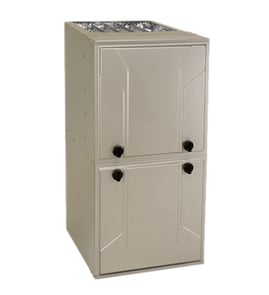
A Goodman gas furnace like model GMP150-5 typically lasts 15 to 20 years with normal use and routine maintenance. In cleaner installations with consistent filter changes and correct airflow, it’s common to see 20+ years before major repairs become frequent.
Typical lifespan ranges (what to expect)
- Average: 15 to 20 years
- Shorter lifespan (often 10 to 14 years): poor maintenance, overheating, dirty burners, restricted airflow
- Longer lifespan (often 20 to 25 years): annual service, correct duct sizing, stable gas pressure, clean combustion
What usually ends a furnace’s life first
Many furnaces still “run” past 15 years, but the cost and frequency of repairs rise. Common end-of-life drivers include:
- Heat exchanger deterioration (safety-related, usually not economical to address)
- Repeated ignition failures or control issues (sometimes tied to the control board)
- Blower motor wear (often starts as noise, weak airflow, or intermittent operation)
- Chronic high-limit trips from overheating (airflow or limit switch problems)
Maintenance that most improves lifespan
- Replace or clean the air filter on schedule (monthly to quarterly is typical)
- Keep supply and return vents open and unobstructed
- Have burners and flame sensor inspected and cleaned during annual service
- Confirm proper airflow and temperature rise to prevent overheating
- Address nuisance shutdowns early (don’t keep resetting and running)
Quick “repair vs replace” guide
| If your GMP150-5 is… | Usually makes sense to… |
|---|---|
| Under 10 years old | Repair (unless damage is severe) |
| 10 to 15 years old | Repair if the fix is straightforward |
| 15+ years old | Compare repair cost vs replacement value |
Why it matters
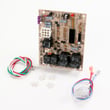
A furnace near the end of its expected lifespan is more likely to short-cycle, trip the limit switch, or have ignition problems, which can reduce comfort and increase energy use. If you’re troubleshooting repeated ignition or shutdown issues, the board B1809913S is one of the model-specific parts we commonly see involved in hot-surface ignition control.
Last updated: January 2026
Why is my Goodman furnace not putting out heat?
If your Goodman GMP150-5 gas furnace runs but does not produce heat, the most common causes are an ignition failure (no flame), a safety limit opening due to overheating, or a control problem that stops the heating sequence. Start with thermostat settings, airflow, and the ignition cycle.
Quick checks we recommend first
- Set the thermostat to HEAT and raise the setpoint 5 to 10 degrees above room temperature.
- Replace or remove a clogged air filter (restricted airflow can trip a limit switch).
- Confirm the furnace switch is ON and the circuit breaker is not tripped.
- Make sure the gas shutoff valve is open (handle parallel to the gas pipe).
- Listen for the sequence: inducer starts, ignitor heats, gas valve clicks, burners light.
What the symptoms usually mean
| What you see | What it often points to | What to do next |
|---|---|---|
| Blower runs, no burners | Ignition or control issue | Watch for ignitor glow; check wiring and connections |
| Burners light then shut off quickly | Flame sensing problem | Clean flame sensor; verify good ground |
| Furnace starts then stops, repeats | Overheat or safety trip | Check filter, vents, blower operation, and limit switch |
| Nothing happens when calling for heat | Thermostat/power/control | Verify 24V call for heat; inspect control board status |
Parts that commonly affect “no heat” on this model
If testing points to a failed component, these are common suspects for the GMP150-5:
- Board B1809913S (ignition control board that manages the heat sequence)
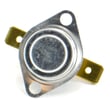
- Limit switch 1370914S (opens if the furnace overheats and can stop burner operation)
- Capacitor 15 12910 (supports motor operation; a weak capacitor can contribute to airflow problems)
Why it matters
A furnace that runs without heat is often failing a safety check (flame proving or temperature limit). Fixing airflow and ignition issues restores safe burner operation and prevents repeated cycling that can stress the control board and motors.
Last updated: January 2026
How much does it cost to replace a Goodman furnace?
Replacing a Goodman gas furnace typically costs about $2,100 to $6,300 installed, while the furnace unit alone is often about $900 to $3,100. For a Goodman GMP150-5, your final price mainly depends on efficiency level, venting changes, and any ductwork or electrical updates needed.
What drives the total replacement cost
- Furnace efficiency (AFUE): higher-efficiency models usually cost more up front.
- Installation complexity: venting, gas line changes, condensate drain (for high-efficiency), and code requirements.
- Blower motor type: ECM variable-speed systems typically cost more than standard PSC motors.
- Home factors: duct condition, return air sizing, and accessibility of the furnace location.
- Add-ons: thermostat upgrades, air filtration, humidifier, or zoning.
Typical cost ranges (what you can expect)
| Cost item | Typical range | Notes |
|---|---|---|
| Furnace unit (Goodman) | $900 to $3,100 | Varies by size, features, efficiency |
| Installed total | $2,100 to $6,300 | Includes labor and common materials |
| Common “extras” | Varies | Venting, duct repairs, electrical, permits |
Repair vs replace: a quick way to decide
If your GMP150-5 is still heating but needs a repair, we usually recommend comparing the repair cost to replacement when:
- The furnace is 15 to 20 years old (typical gas furnace lifespan).
- You have repeated no-heat calls (ignition, limit trips, blower issues).
- The repair involves major electrical controls or safety-related shutdowns.
If you are troubleshooting a no-heat issue before replacing the whole furnace, checking the ignition/control system and safety limits is a common starting point. Parts that often come up in diagnosis include the board B1809913S and the limit switch 1370914S.
Why it matters
A furnace replacement quote can look high because it often includes more than the box itself; venting, safety controls, airflow setup, and code-compliant installation directly affect comfort, reliability, and operating cost.
Last updated: January 2026
How to fix furnace pressure switch stuck open?
On a Goodman GMP150-5 gas furnace, a “pressure switch stuck open” condition is usually caused by a venting or inducer airflow problem, a blocked pressure hose/port, or a failed pressure switch. We fix it by restoring proper draft first, then testing the switch circuit.
Safety first
- Turn off electrical power at the furnace switch or breaker.
- Shut off the gas valve if you will open the burner compartment.
- If you smell gas, stop and have the system checked.
Step-by-step checks that solve most “stuck open” issues
- Check the vent and intake (if equipped): look for snow, leaves, nests, sagging pipe, or water in the vent.
- Inspect the inducer area: confirm the inducer starts and runs smoothly during a heat call.
- Inspect the pressure hose: remove it and check for cracks, soft spots, kinks, or water; clear any blockage.
- Clear the pressure port: the small nipple/port on the inducer or collector box can plug with debris; clean it carefully.
- Check wiring and connectors: reseat spade terminals at the pressure switch and control board.
- Test the switch with a meter: verify the switch closes when the inducer is running (continuity changes when draft is present).
Quick diagnosis table
| What you observe | Most likely cause | What to do next |
|---|---|---|
| Inducer never starts | Control or power issue | Check thermostat call, door switch, and control outputs; inspect board B1809913S |
| Inducer runs, switch never closes | Vent/port/hose restriction or weak inducer | Clear vent, hose, and port; verify inducer wheel is clean and not dragging |
| Switch closes only sometimes | Water in hose/vent, loose wiring, marginal switch | Drain/repitch venting, replace hose if soft, tighten terminals |
| Furnace trips after running | Overheat or airflow issue | Check filter, blower, registers; test limit switch 1370914S |
Why it matters
The pressure switch is a safety device that proves the inducer is creating draft before ignition. If it stays open, the furnace will not light because the control board is preventing unsafe combustion.
Last updated: January 2026