Owner’s manual
 Error Codes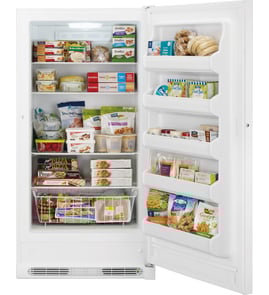

How to tell how big a freezer is upright?
To tell how big an upright freezer is, we look at two things: its capacity (cubic feet) and its physical size (height, width, depth). For Kenmore model 11121202910, the Use & Care Guide lists it as a 21 cu. ft. upright freezer/refrigerator; use the 11121202910 owner's manual to confirm capacity and operating details.
Measure the outside size (fits your space)
Use a tape measure and record:
- Width: left to right across the front
- Height: floor to top (include hinge cover if it sticks up)
- Depth: front to back (include the handle if it protrudes)
- Door swing clearance: space needed for the door to open fully
- Ventilation clearance: space behind and around the cabinet for airflow
Understand capacity (how much food it holds)
Capacity is measured in cubic feet (cu. ft.) and is the standard way to compare “how big” freezers are.
For this Kenmore convertible freezer/refrigerator:
- Model 11121202910 is 21 cu. ft. (as listed in the guide)
- A common loading guideline is about 3 lb of fresh food per cubic foot at one time when freezing new items
Quick reference table
| What you’re measuring | Unit | What it tells you |
|---|---|---|
| Capacity | cu. ft. | Storage volume for food |
| Width/height/depth | inches | Whether it fits your location |
| Clearances | inches | Whether it can breathe and the door can open |
Why it matters
Capacity helps you compare models fairly, but the outside dimensions and clearances determine whether the upright freezer will install correctly and run efficiently. Overcrowding the space around the cabinet can reduce airflow and performance.
Ordering parts and confirming model details
When you need replacement parts for Kenmore 11121202910, start with the parts list for this model; you can also search by model number on Sears PartsDirect.
Last updated: February 2026
What's the average lifespan of an upright freezer?
Most upright freezers last 10 to 15 years. With steady temperatures, good airflow around the cabinet, and routine cleaning, many units run closer to 15 years before major sealed-system or compressor repairs become more likely. For care details specific to Kenmore model 11121202910, use the 11121202910 owner's manual.
Typical lifespan and what usually fails first
In our experience, upright freezers most often need attention in these areas as they age:
- Door gasket wear that causes warm air leaks and frost buildup
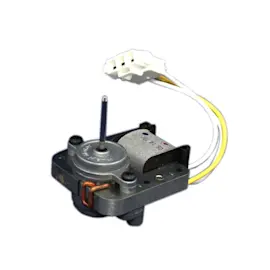
- Evaporator fan noise or failure (poor airflow, warm spots)
- Defrost system issues (heavy frost, reduced cooling)
- Temperature control or sensor problems (inconsistent temps)
- Compressor or sealed system wear (less common, but most expensive)
Maintenance that helps you reach the high end of the range
The Kenmore Use and Care guidance emphasizes cleaning and energy-saving habits that reduce run time and stress on the system.
- Keep the unit in a cool, dry location away from heat sources and direct sun
- Limit door openings and close the door promptly
- Let hot foods cool to room temperature before loading
- Keep packages organized to reduce “door-open” time
- Clean interior and removable parts with mild detergent and warm water; wipe dry
Quick checklist: repair vs. replace
| What you notice | What it often means | What we recommend |
|---|---|---|
| Runs constantly, temps still rise | Air leak, airflow issue, or sealed-system wear | Check gasket and airflow first; then consider service |
| Heavy frost on interior panels | Defrost problem or door not sealing | Inspect door seal and loading habits; troubleshoot defrost |
| Loud new buzzing/clicking | Fan issue or compressor start components | Identify noise source before buying parts |
| Cabinet sweating or ice around door | Door seal leak | Clean and inspect gasket; confirm door alignment |
Why it matters
A freezer that is struggling to hold temperature can shorten food storage time and increase energy use. Following the operating and cleaning practices in the 11121202910 owner's manual helps stabilize temperatures and can extend the service life.
If you need replacement parts for Kenmore 11121202910, start with the model-based parts list, or search by model number on Sears PartsDirect.
Last updated: February 2026
What is the disadvantage of an upright freezer?
The main disadvantage of an upright freezer like the Kenmore 11121202910 is that it loses cold air faster when the door opens, so the compressor often runs more and temperatures can fluctuate more than in a chest freezer. Uprights also rely heavily on good door sealing and can be less forgiving during long power outages.
Common disadvantages (and what you can do)
- More cold-air loss when opened: Cold air spills out when you open the door; keep door-open time short and plan what you need before opening.
- Can use more energy than a chest freezer: Frequent openings and warm-air intrusion can increase run time; follow the energy-saving tips in the 11121202910 owner's manual.
- Less ideal for very bulky items: Fixed shelves and bins can limit tall or awkward packages; reorganize to keep high-use items at eye level.
- Door seal matters more: A weak gasket can cause frost, warmer temps, and longer run times; keep the gasket clean and make sure the door closes fully.
- Temperature recovery after openings: Uprights can take longer to recover if the door is opened repeatedly; remove multiple items at once and close the door promptly.
Upright vs. chest freezer: quick comparison
| Feature | Upright freezer | Chest freezer |
|---|---|---|
| Organization | Easier (shelves, bins) | Harder (stacking) |
| Cold retention when opened | Lower | Higher |
| Power outage performance | Typically shorter hold time | Typically longer hold time |
| Bulky item storage | More limited | More flexible |
Why it matters for food quality and operating cost
Every time warm air enters, the freezer has to pull that heat back out. That can mean more compressor run time (higher operating cost) and more temperature swings that can affect long-term food quality, especially if the door is opened often.
Model-specific tips for the Kenmore 11121202910
These habits match the operating guidance and energy-saving ideas in the manual:
- Let hot foods cool to room temperature before loading.
- Avoid overloading; freeze fresh food in smaller batches.
- Do not line shelves or bins with foil, wax paper, or paper towels (it restricts airflow).
- Organize and label food to reduce door openings.
- During a power failure, keep the door closed as much as possible.
For parts and diagrams for this model, start with the model parts list; for broader model searches, use Sears PartsDirect.
Last updated: February 2026
Where is the model number on a Kenmore upright freezer?
On Kenmore model 11121202910, the model and serial number information is on the identification label inside the cabinet; for this model, it is on the lower left wall inside the appliance. The exact wording and location are shown in the 11121202910 owner's manual.
Where to look on model 11121202910
Check these spots in order (starting with the documented location):
- Lower left interior wall of the cabinet
- Left or right interior side wall near the front opening
- Upper interior wall or ceiling area (common on some uprights)
- Behind the lower kick plate or front grille area
- Rear exterior panel (less common)
What you are looking for
The label is typically a small sticker or plate that includes:
- Model number (example: 11121202910)
- Serial number
- Electrical ratings (voltage, amps)
- Manufacturing information
Quick care tip for the label
Clean the serial plate using mild soap and water so the printing stays readable.
Why it matters
Using the exact model number helps us match the correct Kenmore parts diagrams and compatible components for your convertible freezer/refrigerator; small model differences can change shelves, door bins, controls, and wiring.
| Item on the label | How we use it |
|---|---|
| Model number | Matches the correct parts list and diagrams |
| Serial number | Helps identify production variations when parts change |
| Electrical ratings | Confirms safe replacement of electrical components |
If you are searching for parts by model number, start with the parts list for 11121202910, or search by model on Sears PartsDirect.
Last updated: February 2026
What are the common problems with Kenmore Elite refrigerators?
Common Kenmore Elite refrigerator complaints are warm temperatures, frost buildup, unusual noises, and water leaks. For Kenmore model 11121202910 (a convertible freezer/refrigerator), the most common real-world causes are power or control settings, door sealing and leveling, and blocked airflow; use the troubleshooting section in the 11121202910 owner's manual to match your symptom to the right checks.
Common problems and the most likely causes
- Not cooling or too warm: temperature control set incorrectly, airflow blocked by frost or overpacked shelves, fan or sealed-system issue
- Frost or ice buildup: door not closing fully, gasket not sealing, frequent openings, defrost-related airflow restriction
- Runs too long: hot room conditions, door seal leak, unit not level, heavy loading after restocking
- Noise or vibration: cabinet not level, items touching interior panels, fan noise, normal refrigerant flow sounds
- Moisture or water on the floor: door left ajar causing condensation, drain or pan issues, humid conditions
Quick checks we recommend first (safe and high impact)
- Confirm the unit has steady power; plug fully seated, breaker not tripped.
- Make sure the temperature control is not set to OFF.
- Check for packages preventing the door from closing.
- Inspect the door gasket for gaps, tears, or debris.
- Level the cabinet; the manual specifies setting the front about 1/4 inch higher than the back to help the door stay closed.
Symptom-to-action guide
| Symptom | Check first | Next step |
|---|---|---|
| Won’t run | Control OFF, loose plug, tripped breaker | Try a different circuit; verify outlet condition |
| Frost buildup | Door closing, gasket seal, leveling | Re-level; reduce openings; avoid blocking vents |
| Runs constantly | Room temp, door seal, loading | Improve ventilation space; confirm door closes firmly |
| Rattling/buzzing | Leveling feet, items touching panels | Stabilize on solid floor; reposition items |
Why it matters
On model 11121202910, a door that does not seal (often from poor leveling or packages pressing on the door) drives frost and moisture, which restricts airflow and leads to warm temps and long run times.
Parts and ordering
When a check points to a failed component, use the model diagrams and parts list for 11121202910 to identify the correct replacement, then order through the model page or search by model number on Sears PartsDirect.
Last updated: February 2026