Owner’s manual
 Error Codes





What is the typical lifespan of a gas hot water heater?
A typical gas water heater lasts 8 to 12 years. For your American FG6140T403NO gas water heater, regular maintenance (especially flushing and anode rod inspections) helps you reach the upper end of that range and reduces tank corrosion.
What affects lifespan the most
- Water quality: hard water and sediment buildup accelerate wear
- Anode rod condition: a depleted rod allows faster tank corrosion
- Water softener use: softened water can be more corrosive to the tank
- Temperature setting: higher temps increase stress and scale formation
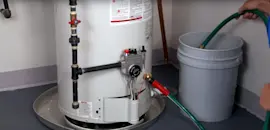
- Maintenance frequency: periodic draining and flushing slows sediment damage
Maintenance schedule we recommend
The manual guidance for this model includes inspecting the anode rod about every 3 years and replacing it when it is more than 50% depleted. Use your FG6140T403NO owner's manual for the exact procedure and safety steps.
| Maintenance item | Typical interval | What it helps prevent |
|---|---|---|
| Drain and flush tank | Every 6 to 12 months | Sediment buildup, rumbling, reduced efficiency |
| Inspect anode rod | About every 3 years | Premature tank corrosion |
| Check T&P relief valve | Yearly | Overpressure risk, nuisance leaking |
Parts that commonly extend service life
If you are doing maintenance on FG6140T403NO, these are common wear items to check or replace when needed:
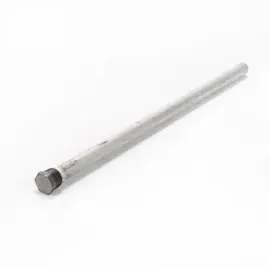
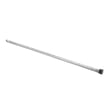
- Water heater anode rod 100109594 (protects the tank from corrosion)
- Drain valve 100109106 (helps you flush sediment; replace if it leaks or won’t close)
- T&p valve 100108279 (replace if it drips continuously or won’t reseat)
Why it matters
Most “end of life” failures on gas water heaters are tank-related (corrosion or leaks). Staying ahead of sediment and keeping a healthy anode rod is the most practical way to get full life from the tank.
Last updated: January 2026
What is the average cost to install a 40 gallon gas water heater?
For an American FG6140T403NO 40-gallon gas water heater, a typical installed price for a straightforward replacement is about $1,650. Your total can run lower or higher depending on venting changes, gas line work, permits, and whether the installer adds safety items like a drain pan or expansion tank.
What usually changes the price
- Direct replacement vs. rework: swapping an existing similar unit costs less than relocating or re-venting.
- Venting and combustion air: longer vent runs, more elbows, or vent upgrades add labor and materials.
- Gas piping: extending or upsizing the gas line can add significant cost.
- Code-required add-ons: drain pan, seismic strapping (where required), shutoff valves, drip leg, and discharge piping.
- Water conditions and maintenance: heavy sediment or corrosion can mean extra cleanup or valve replacement.
Typical cost ranges (what you can expect)
| Installation scenario | Typical total cost | What it includes |
|---|---|---|
| Basic direct replacement | $1,200 to $2,000 | Remove old unit, set new unit, reconnect water and gas, basic start-up |
| Replacement with venting or gas line updates | $2,000 to $3,500+ | Vent modifications, gas piping changes, added fittings and labor |
| First-time install or relocation | $3,000+ | New vent route, new gas line, more carpentry and permitting |
Model-specific installation details to confirm
We recommend checking the FG6140T403NO owner's manual for requirements that can affect labor and materials, including:
- Indoor, vertical installation on a level surface
- Venting layout guidance (keep runs as short and straight as practical)
- Gas supply sizing guidance (pipe capacity tables and input rating references)
Why it matters
Gas water heater installation cost is driven by safety-critical work (venting, combustion air, and gas supply). Getting those details right helps prevent nuisance shutdowns, poor performance, and premature part wear.
Last updated: January 2026
Why do plumbers not recommend tankless water heaters?
Plumbers often don’t recommend tankless water heaters because they’re rarely a simple swap for a tank unit; they commonly require gas line sizing changes, venting upgrades, and ongoing maintenance (especially in hard-water areas). For many homes, a standard tank water heater like the American FG6140T403NO is simpler to install and service using the FG6140T403NO owner’s manual.
The most common reasons plumbers push back
- Installation complexity: Tankless units frequently need larger gas supply, new venting, and sometimes electrical upgrades.
- Higher upfront cost: Equipment plus labor is typically higher than a tank replacement.
- Maintenance requirements: Annual descaling and inlet screen cleaning are common to prevent performance loss.
- Flow-rate limits: Multiple simultaneous fixtures can exceed the unit’s capacity, causing temperature drop.
- Delayed hot water: You can still wait for hot water at the tap (and recirculation adds cost and complexity).
- Serviceability: More sensors and controls can mean more diagnostic time and higher repair costs.
How this compares to a tank-style gas water heater
A tank unit stores hot water, so it handles short bursts and multiple draws more predictably. Your American FG6140T403NO manual also notes normal operating conditions like condensation that can sound like sizzling or frying and is not a tank leak (it typically stops after the tank warms up). That kind of “what’s normal” guidance is often simpler with tank systems.
| Topic | Tankless water heater | Tank-style gas water heater (like FG6140T403NO) |
|---|---|---|
| Upfront install | Often higher, more upgrades | Often straightforward replacement |
| Maintenance | Descale regularly | Flush sediment periodically |
| Hot water delivery | Unlimited in theory, limited by flow | Limited by tank size, strong short-term delivery |
| Repairs | More electronics and sensors | More mechanical, often simpler |
Why it matters
Choosing tankless when your home is not set up for it can lead to nuisance issues (temperature swings, shutdowns, callbacks) and higher lifetime cost. Choosing a tank unit can reduce installation risk and keep service parts more familiar.
If you’re deciding between tankless and tank
- Compare total installed cost, not just the unit price.
- Consider your simultaneous hot-water demand (showers, laundry, dishwasher).
- If you keep a tank heater, protect it with routine maintenance; replacing a worn anode rod helps slow tank corrosion (see water heater anode rod 100109594).
Last updated: January 2026