Owner’s manual
 View engine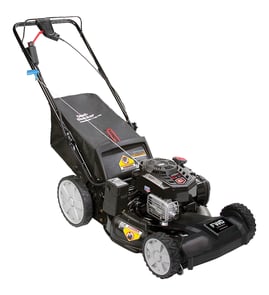



Should I use 87 or 89 gas for lawn mower?
For the Craftsman rotary lawn mower model 917387350, use fresh, clean regular unleaded gasoline with a minimum of 87 octane. Using 89 octane is fine, but it does not improve normal operation on this mower; 87 meets the fuel requirement in the owner's manual.
- Use 87 octane or higher regular unleaded.
- Buy only what you can use in about 30 days to keep fuel fresh.
- Do not mix oil with gasoline.
- Avoid storing the mower with fuel for 30 days or longer; drain the tank and run the engine until the carburetor is empty.
- Be cautious with alcohol-blended fuels (ethanol/methanol blends); they can attract moisture during storage and contribute to fuel system issues.
| Fuel choice | Works in 917387350? | When it makes sense | What to expect |
|---|---|---|---|
| 87 octane (regular) | Yes | Everyday mowing | Correct performance for this engine |
| 89 octane (mid-grade) | Yes | If 87 is unavailable | No meaningful power gain in normal use |
Using the correct octane and keeping fuel fresh helps prevent hard starting, rough running, and storage-related carburetor problems. Fresh 87 octane regular unleaded is the simplest way to keep your Craftsman walk-behind mower running reliably.
Last updated: February 2026
How much does it cost to repair a hydrostatic transmission on a lawn mower?
Hydrostatic transmission repairs are typically a riding-mower cost; your Craftsman 917387350 walk-behind mower normally does not use a hydrostatic transmission. For riding mowers that do, repairs commonly run from a few hundred dollars for minor service up to $1,000+ for major work or replacement, depending on parts and labor.
Hydrostatic drive costs vary because the “transmission” is a system (pump, motor, belt/drive parts, fluid, and linkages), and the fix can be simple or a full replacement.
Common cost drivers include:
- Whether the unit is serviceable (fluid/filter) or sealed (replacement only)
- Labor time to remove the transaxle and reinstall it
- Related wear items (belts, pulleys, idlers, hardware)
- Damage from running low on oil or overheating
Most walk-behind mowers like model 917387350 are blade-and-engine focused; drive issues are usually cable, belt, wheel, or height-adjust hardware, not a hydrostatic transaxle.
| Mower type | Typical drive system | “Transmission” repair expectation |
|---|---|---|
| Walk-behind (like 917387350) | Belt/cable/self-propel components | Usually lower cost; often a cable or hardware fix |
| Riding mower with hydrostatic | Hydrostatic transaxle | Higher cost; may involve major parts and labor |
If the mower is self-propelled but will not drive, we check these first:
- Zone control or drive cable adjustment and condition
- Wheels and wheel brackets for binding or damage
- Loose or missing fasteners on the handle and drive controls
- Blade area damage that is causing drag (bent blade or adapter)
Helpful model-related parts to inspect/replace:
Getting the drive system diagnosis right prevents overpaying for a “transmission” repair when the real issue is a cable, bracket, or worn hardware. For maintenance intervals and adjustment guidance, we follow the schedule and procedures in the 917387350 owner’s manual.
Last updated: February 2026
What are the common problems with Craftsman lawn mowers?
Common problems on a Craftsman walk-behind mower like model 917387350 include no-start conditions (fuel, spark, air), loss of power from a dirty deck or air filter, poor or uneven cutting from a dull/bent blade, excessive vibration, and a starter rope that is hard to pull. Use the owner's manual troubleshooting chart to match symptoms to fixes.
- Won’t start: stale fuel, spark plug issues, dirty air filter, fuel valve OFF (if equipped)
- Starts then dies / loss of power: grass buildup under the deck, cutting height too low, air filter restriction
- Poor cut or uneven cut: worn/bent/loose blade, uneven wheel height settings, deck packed with clippings
- Excessive vibration: worn/bent/loose blade, damaged blade adapter, bent crankshaft
- Starter rope hard to pull: blade dragging in grass (cutting height too low), blade adapter problems, brake engaged when control bar is released
The manual calls out blade condition and debris buildup as top causes of poor cut, vibration, and power loss. If the blade is worn or bent, replace it and inspect the adapter at the same time.
Helpful parts for this model:
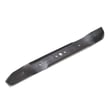
- Lawn mower blade 532406713 (replace if bent, cracked, or badly worn)
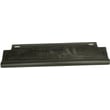
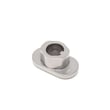
- Lawn mower blade adapter 532418373 (replace if broken or slipping)
- Disconnect the spark plug wire before servicing.
- Tip the mower with the air filter and carburetor facing up.
- Block the blade with a wood block before loosening the blade bolt.
| Symptom | Most likely causes | What to do |
|---|---|---|
| Won’t start | Fuel, spark, air | Refresh fuel, check spark plug, clean/replace air filter |
| Poor cut | Blade, wheel height, deck buildup | Sharpen/replace blade, level wheel heights, clean underside |
| Vibration | Blade or adapter damage | Replace blade; inspect/replace adapter |
| Rope hard to pull | Blade dragging, adapter issue | Raise cutting height; check blade/adapter |
Catching blade, adapter, and deck-buildup problems early prevents hard starting, reduces vibration, and protects the engine crankshaft and bearings from impact loads.
Last updated: February 2026
Which lawn tractor has the tightest turn radius?
The Craftsman 917387350 is a walk-behind rotary lawn mower, not a lawn tractor, so it does not have a “turn radius” spec like a riding tractor. For this model, turning is controlled by how you pivot the mower at the handle and by wheel height settings; see the owner's manual for operating guidance.
A lawn tractor’s turn radius is a published measurement (often in inches or feet). A walk-behind mower like the Craftsman 917387350 turns by lifting slightly on the handle and pivoting the deck around the wheels.
- You can make tighter turns by slowing down and pivoting gradually
- Keep all wheels set to the same cutting height for predictable handling
- Avoid sharp pivots on slopes; turn across flat ground when possible
- Clear grass buildup under the deck to reduce drag while turning
If the mower feels hard to steer or “pushes” wide in turns, these are the most common causes.
- Set all four wheels to the same height setting
- Raise cutting height if the deck is dragging in tall grass
- Clean packed grass from the underside of the mower housing
- Inspect the blade and blade adapter for damage after impacts
| Symptom | Most likely cause | What to do |
|---|---|---|
| Hard to push in turns | Cutting height too low or grass too tall | Raise cutting height and slow down |
| Pulls to one side | Wheel heights uneven | Match wheel settings |
| Feels “grabby” on grass | Buildup under deck | Clean underside of deck |
| Excess vibration | Worn/bent blade or adapter issue | Inspect blade and adapter |
A damaged blade or adapter can increase vibration and make the mower harder to control.
- Consider inspecting the lawn mower blade 532406713
- Check the lawn mower blade adapter 532418373 if the blade won’t stay tight or the mower vibrates after striking debris
Good maneuverability is a safety and cut-quality issue. When the deck drags or the blade system is damaged, the mower can be harder to control and may leave an uneven cut.
Last updated: February 2026
Why is my self-propelled lawn mower pulling to one side?
If your Craftsman 917387350 self-propelled mower pulls to one side, the most common causes are uneven tire condition/pressure, a dragging wheel, or a drive/control issue that is not engaging evenly. Start with the tires and wheels, then check the self-propel drive controls and deck for buildup.
- Check both rear wheels for equal tire pressure and similar tread wear.
- Spin each wheel by hand (engine off); one wheel that drags or wobbles can steer the mower.
- Look for grass and debris packed around the wheel area and under the deck.
- Confirm you are walking at a steady pace with the self-propel engaged (do not push hard against it).
- If the mower recently hit a curb, root, or rock, inspect for a bent wheel bracket or misaligned height adjuster.
A mower that “drives” harder on one side can feel like it is steering itself.
- Make sure the drive/zone control is operating smoothly and returning fully.
- Inspect the control cable routing for kinks or binding; replace a stretched or sticky cable if needed.
- Check that both rear wheels are set to the same cutting height position.
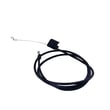
If your control cable is damaged or not moving freely, the husqvarna poulan lawn mower zone control cable 532168552 is a common replacement part for this model.
Heavy grass buildup or a blade problem can create uneven resistance that feels like the mower is “tracking” sideways.
- Tip the mower safely and clean packed clippings from the deck.
- Inspect the blade for bends and keep it sharp.
- If you remove the blade, follow the safety steps in the owner's manual (disconnect the spark plug wire first).
| What you’re checking | What to look for | Part that may help |
|---|---|---|
| Blade condition | Bent, cracked, badly worn | Lawn mower blade 532406713 |
| Blade mounting | Slipping, damaged hub/key | Lawn mower blade adapter 532418373 |
Pulling to one side increases fatigue, can scalp the lawn from uneven height control, and can be an early sign of wheel, bracket, or drive wear that gets worse over time.
Last updated: February 2026