Error Codes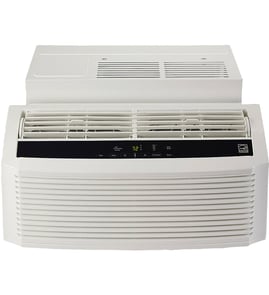



What is the average cost of replacing an air conditioning unit?
Replacing an air conditioning unit ranges widely by type: a new window (room) air conditioner like the GE AWFS10WWL1 is typically a few hundred dollars plus basic installation, while central AC replacements commonly run several thousand dollars because they include major equipment and labor.
- Window/room air conditioner: about $150 to $800+ (unit only; higher for larger BTU and premium features)
- Ductless mini-split (single zone): about $2,000 to $6,000+ installed
- Central air conditioner: about $5,000 to $12,000+ installed (equipment + labor)
- High-end or complex central installs: can exceed $15,000
- System type: window unit vs. mini-split vs. central AC
- Capacity and efficiency: BTU size (window) or tonnage and SEER2 (central)
- Installation complexity: electrical work, pad/stand, line set, condensate routing
- Ductwork condition (central): repairs, sealing, or replacement
- Controls and features: inverter/variable-speed, Wi-Fi, advanced dehumidification
- Local labor rates and seasonality: peak summer demand often costs more
If your GE AWFS10WWL1 is not cooling well, compare the cost of a new unit to common maintenance and part replacements.
| Situation | Usually makes sense to | Why |
|---|---|---|
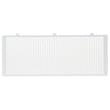
| Dirty or damaged air filter | Replace the filter | Restores airflow and cooling performance |
| Cosmetic or airflow issues at the front | Replace the front panel | Helps proper air direction and fit |
| Unit responds poorly to remote commands | Replace the remote control | Restores normal operation without opening the unit |
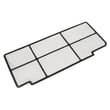
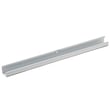
Helpful model-matched parts include the filter WJ85X27953, front panel WJ71X27810, and remote control WJ26X33654.
Choosing the right replacement path prevents overspending. For a room air conditioner, a low-cost fix (like a filter) can restore cooling, while major sealed-system problems often make full replacement the better value.
For troubleshooting before you replace, use GE error codes to identify control or sensor issues that can change the repair decision.
Last updated: January 2026
Which AC is suitable for a 10 * 10 room?
For a 10 x 10 room (about 100 sq. ft.), we typically recommend a small room air conditioner in the 5,000 to 6,000 BTU range. Your GE AWFS10WWL1 is a higher-capacity window unit, so it can cool that space quickly but may short-cycle if the room is well-sealed.
Use these practical sizing checks before you buy or install:
- Start with 5,000 to 6,000 BTU for a typical 100 sq. ft. bedroom or office
- Add capacity if the room has strong sun exposure (south or west-facing windows)
- Add capacity if the ceiling is taller than 8 ft
- Add capacity if there are multiple people in the room often
- Add capacity if the room has heat-producing equipment (PCs, gaming consoles)
An air conditioner that is too large for the room often cools the air fast and shuts off before it runs long enough to remove humidity.
- The room can feel cool but clammy
- Temperature may swing more noticeably
- The unit may cycle on and off frequently
For comfort, humidity control matters almost as much as temperature.
| Room size | Typical BTU range | Best fit |
|---|---|---|
| 100 sq. ft. (10 x 10) | 5,000 to 6,000 | Small bedroom/office |
| 150 to 250 sq. ft. | 6,000 to 8,000 | Larger bedroom |
| 250 to 350 sq. ft. | 8,000 to 10,000 | Small living room |
We focus on improving comfort and reducing short-cycling:
- Use Eco or Energy Saver mode if available
- Set the fan to low for longer run time and better dehumidification
- Keep the air path clear; clean or replace the filter WJ85X27953
- Make sure the front grille and louvers are seated correctly; replace a damaged front panel WJ71X27810
Correct BTU sizing helps your GE room air conditioner cool evenly, control humidity, and run efficiently. A clean air filter and unobstructed airflow also reduce icing, noise, and “running but not cooling” complaints.
Last updated: January 2026
How do I find the model number on my AWFS10WWL1?
The model number for your GE room air conditioner is printed on the appliance’s rating label. On AWFS10WWL1 units, that label is typically on the side of the cabinet, behind the front panel, or near the air filter area.
Check these common label locations (start with the easiest):
- Behind the front grille or front panel WJ71X27810
- Along the left or right side of the cabinet (visible when you slide the unit out slightly)
- Near the air filter compartment, behind the filter WJ85X27953
- On the back of the unit near the power cord entry
- On the indoor face frame near the control area
- Turn the unit off and unplug it.
- Remove the front grille or front panel if needed.
- Slide out the filter and look for a sticker or metal tag nearby.
- Write down the full model number and any serial number.
| Label item | What it’s used for |
|---|---|
| Model number (AWFS10WWL1) | Matching diagrams and parts |
| Serial number | Identifying production run |
| Electrical ratings | Verifying power requirements |
Using the exact model number ensures you get the correct GE replacement parts (like a remote control, filter, or front panel) and avoids ordering a similar-looking part that will not fit.
For more help identifying the label, use how to find your appliance model number (and what it means for parts).
Last updated: March 2026